Made to Vanish: A Museum for the Molds of Las Pozas
The wood molds that shaped Edward James’s Surrealist garden were meant to be thrown away. In the studio “Architecture Before Form,” Juan Sala and Douglas Harsevoort ask students to design a home for the 372 that survive.
In 1962, an unprecedented frost swept through Xilitla, a Mexican town high in the Sierra Huasteca of San Luis Potosí, killing thousands of orchids that Edward James—the British poet and Surrealist patron—had spent years cultivating. James channeled his grief into invention: he began rebuilding his garden, repopulating it with concrete flowers and a sprawl of architectural fantasies.
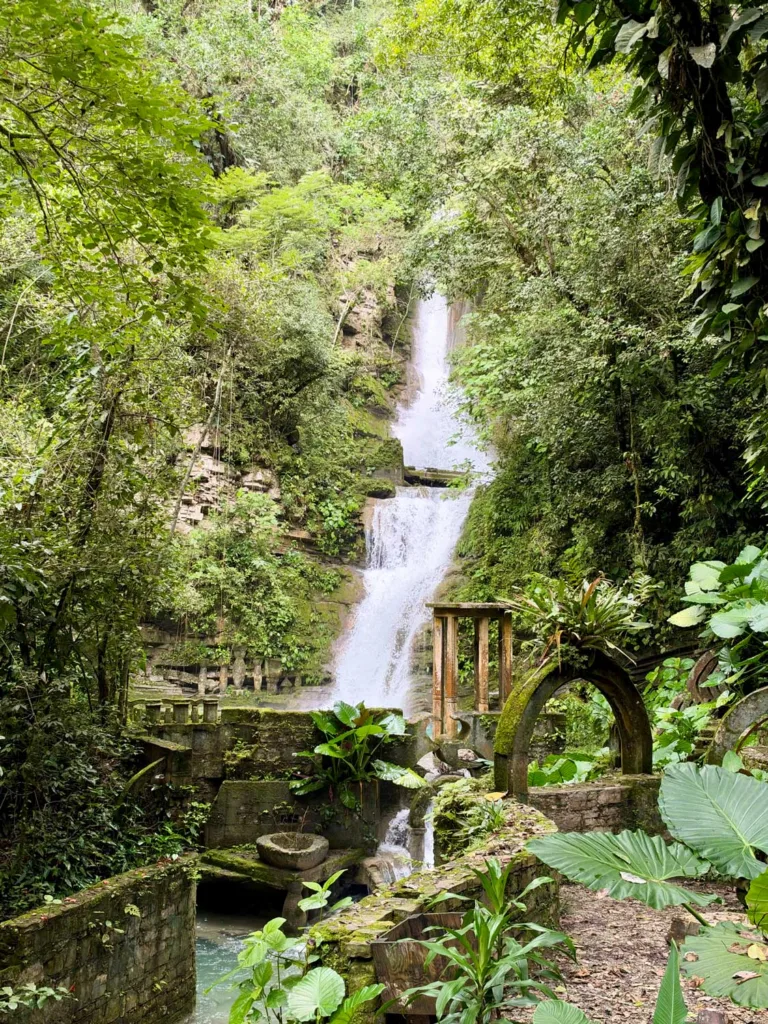
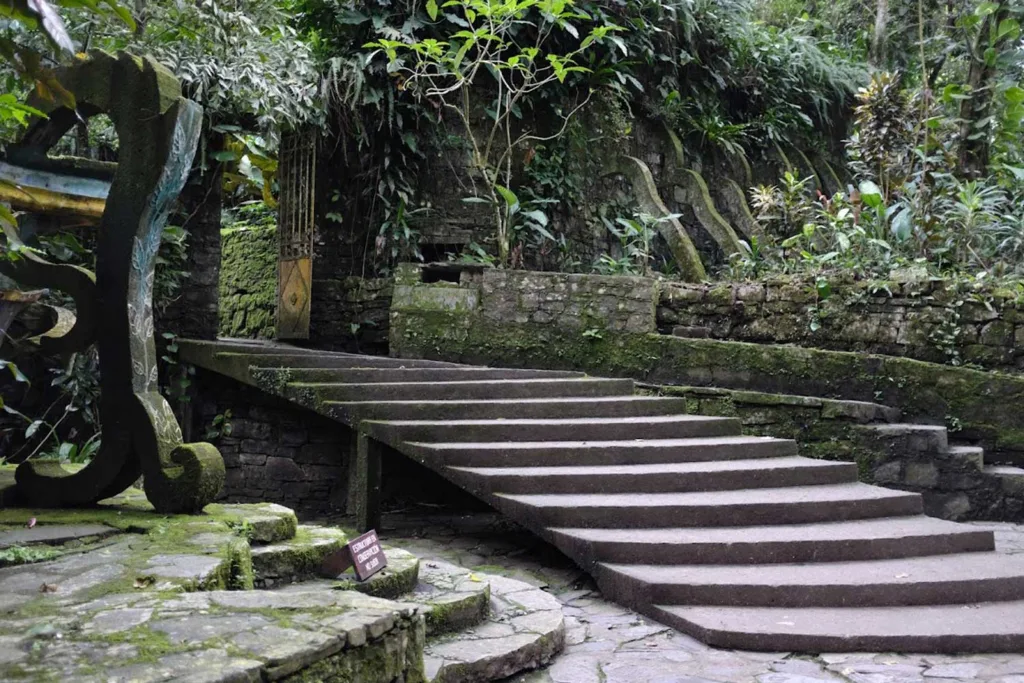
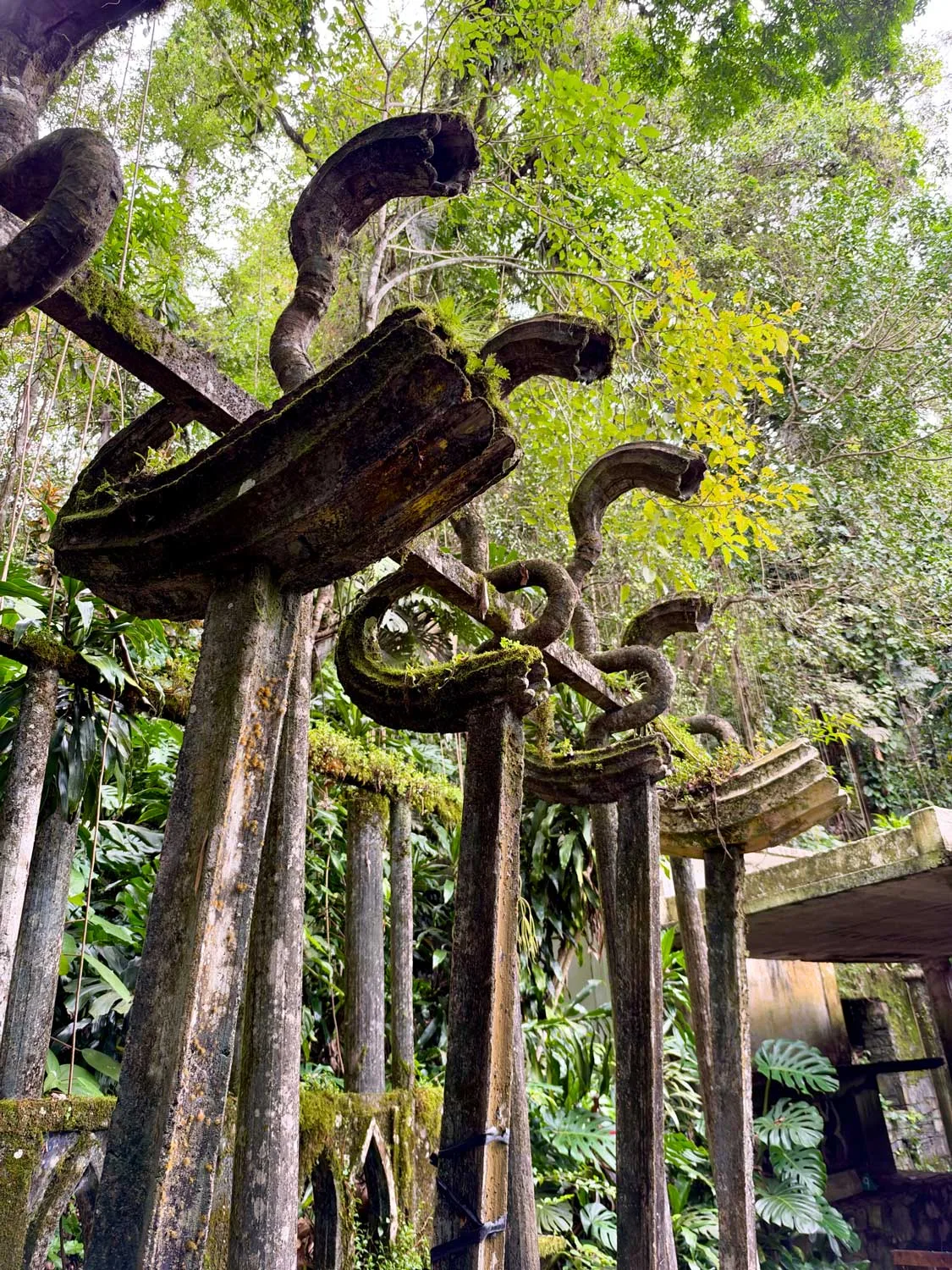
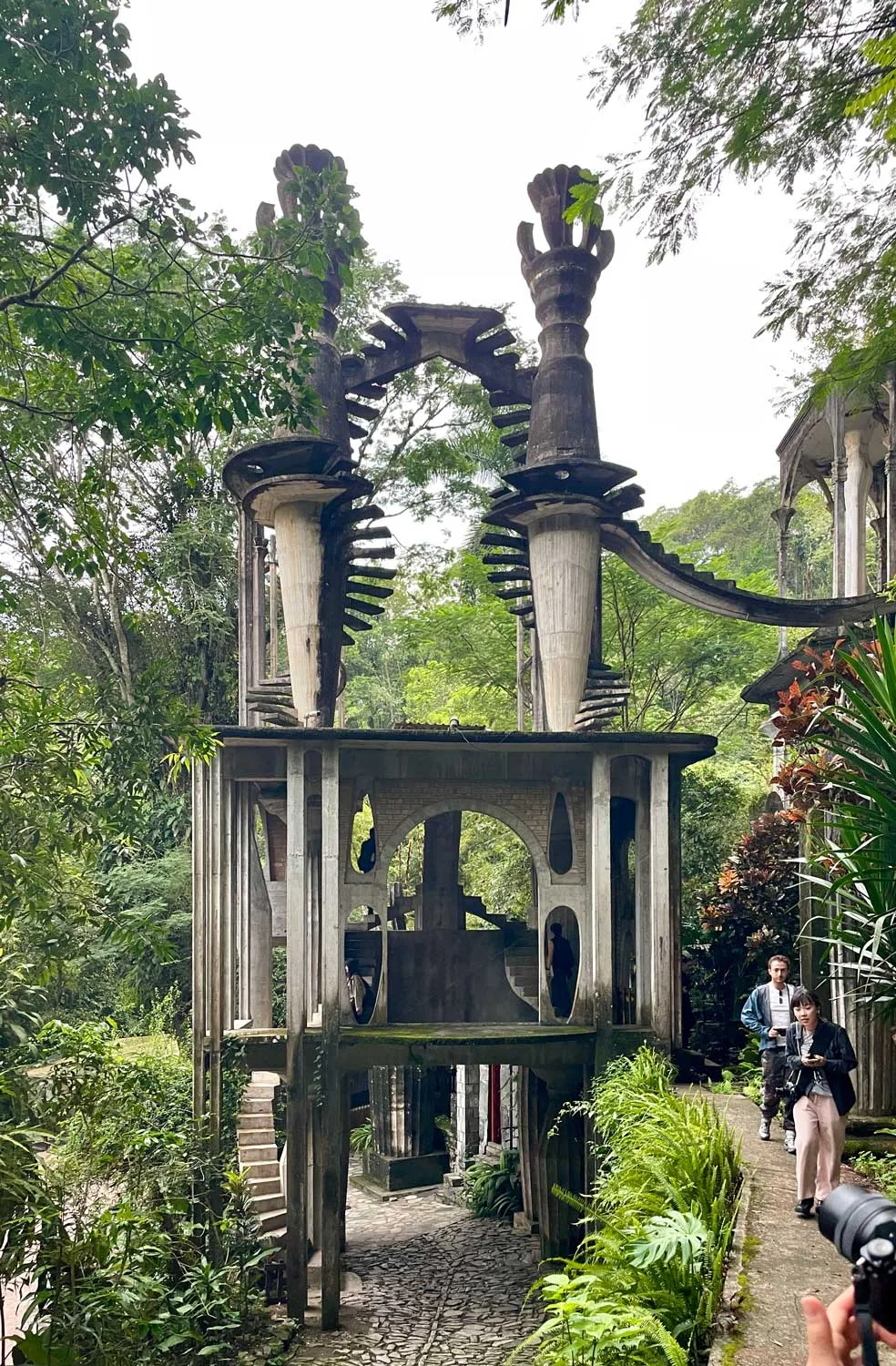
The result, Las Pozas—named for its many waterfalls and pools—is an extraordinary architectural landscape: dozens of concrete follies that rise from the jungle but were never meant to stand apart from it. “The idea of these structures, the way they were conceived, was that nature would take them over and you would have this symbiotic relationship between the two.” Even today, despite a 60-person team working to keep the vegetation at bay, “you often don’t know where building ends, where nature begins,” says architect Juan Sala (MArch ’18), who leads the Mexico City–based firm Sala Hars with Douglas Harsevoort (MArch ’18).
This semester, Sala and Harsevoort are asking Harvard Graduate School of Design (GSD) students to look past the concrete creations to something rarely considered at all: the wood molds that made them. In “Architecture Before Form,” a fall 2026 studio in the Department of Architecture, students are designing proposals for a Museum of Formwork for Xilitla, pairing galleries for the original formworks with conservation facilities, research spaces, educational workshops, and artist residencies.
Invisible Hands
An eccentric with a collector’s eye, James was no builder. He sent sketches inspired by his wide-ranging travels—an Indian temple, an intricately carved Gothic capital, a pre-Hispanic motif—rich in vision but with little sense of structure. It fell to a team of roughly 60 local craftsmen, led by the Xilitla carpenter José Aguilar, to translate those drawings into reality. That meant building each folly first in wood, as formwork that held the concrete while it cured. Just one formwork can contain hundreds of nails and hand-cut pieces of wood, metal, and fiberboard components.
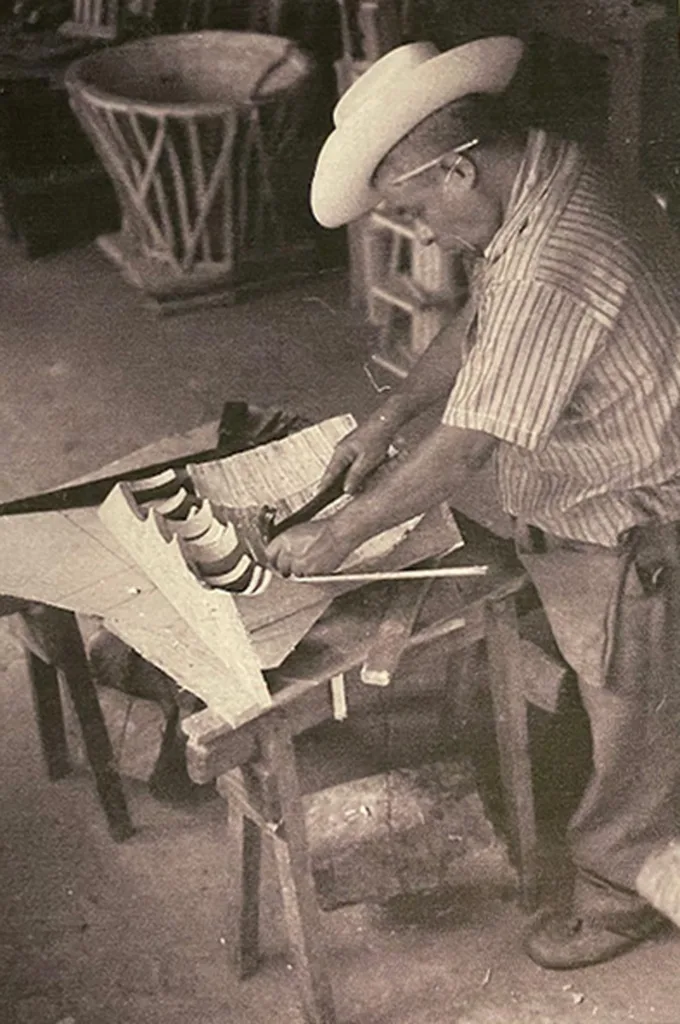
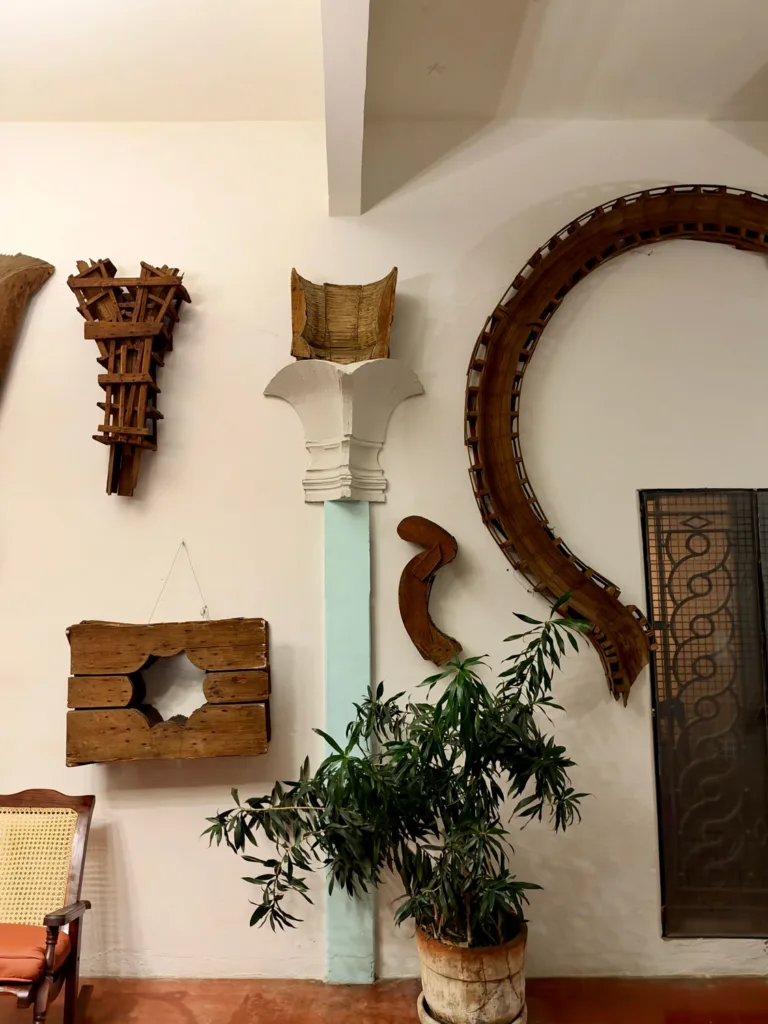
Mere instruments of production, the molds were never meant to be celebrated. Yet the town embraced them—perhaps because neighbors had built them, or because residents saw them as works of art in their own right—and folded them into daily life. For decades after the garden’s creation, formworks turned up all over Xilitla: in restaurants, sheds, a hotel lobby. As Sala tells it, townspeople moved them at will; a mold spotted around town might end up in someone’s living room.
Following James’s death in 1984, building ceased and the property passed to Plutarco Gastélum, a former telegraph worker who had overseen the creation of Las Pozas. Upon his death, the estate passed down to his son, of the same name. In 2007, with the purpose of preserving the garden structures and its ecosystem, the Pedro and Elena Hernández Foundation purchased Las Pozas, and then collected many of the original molds that Gastélum had protected. In all, 372 survive, in varying states of repair. Today they rest in a shed on Xilitla’s outskirts, about ten minutes from Las Pozas, where town gives way to jungle. This is where Sala and Harsevoort have sited the Museum of Formwork.
The museum, Sala says, “almost becomes a way to celebrate the invisible hands that created these molds.” The project honors not only the people who built the garden but also, in his words, “what we typically disregard as not art.”
Beyond the White Box
Rethinking what counts as art also means rethinking how it is shown, so the studio doubles as a critique of the contemporary museum. “I understand why you build a white box if you’re going to show a Francis Bacon,” says Sala. “But if you’re going to show the instruments of architectural production, I think the building has to somehow evolve, react, transform.” He points to buildings that blur the line between storage and display, such as Herzog & de Meuron’s Schaulager (2003) near Basel, Switzerland, and Diller Scofidio + Renfro’s V&A East Storehouse (2025) in London.
Sala and Harsevoort want students to go further, questioning the nature of display when the object is not a canonized example of high design, but a tool made to build something else. What does it mean to preserve things that were never made to last? The formworks reveal the hands of their makers: the pencil marks, notches, and joints that brought them into being. And they exist in the shadow of the jungle, an ever-changing landscape that is slowly enveloping the sculptures the molds themselves shaped.
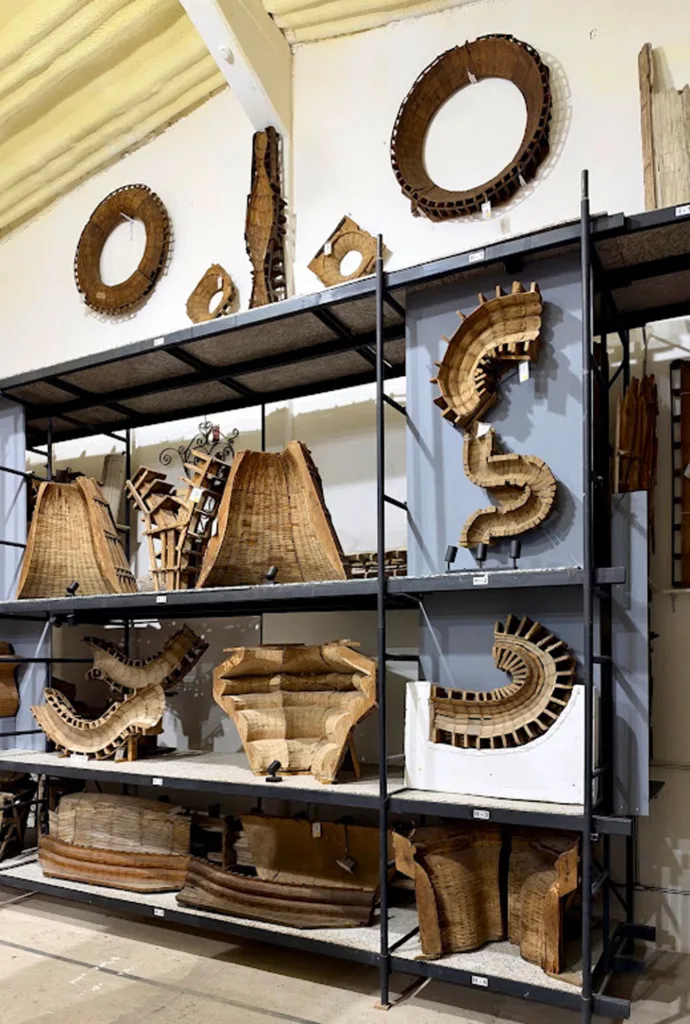
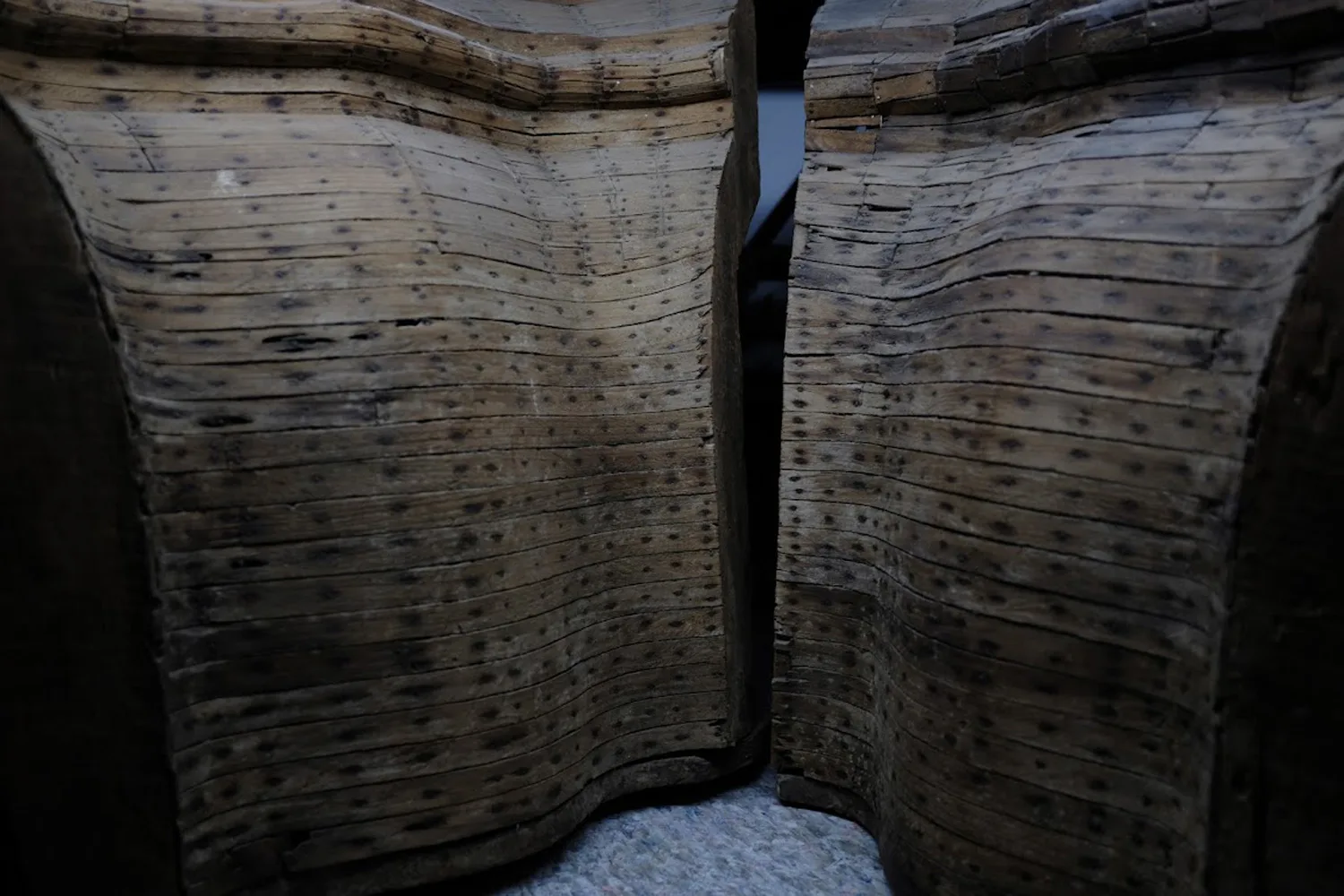
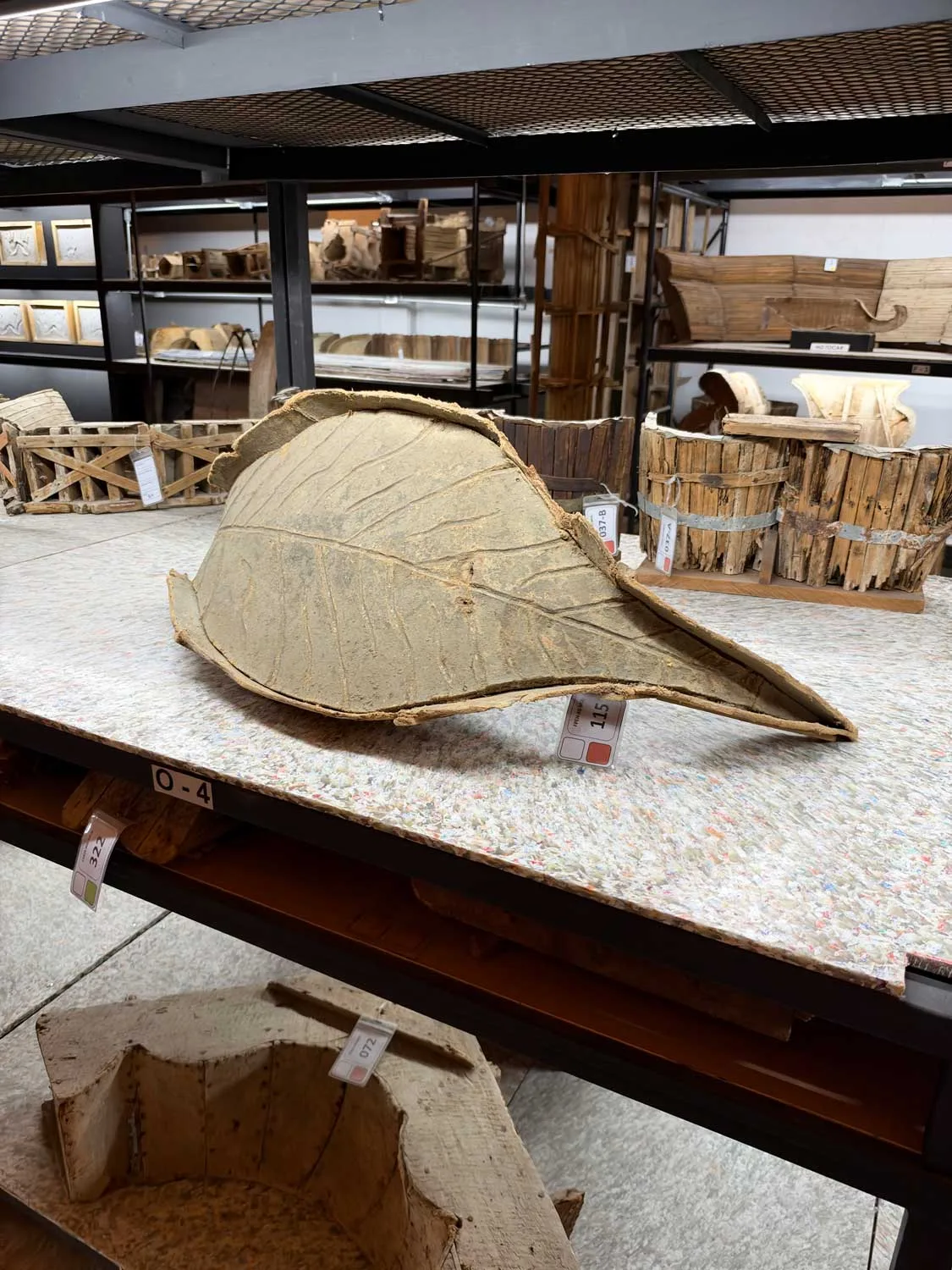
Their materiality and fabled history set the formworks apart, inviting—or even requiring—a different kind of museum. Sala argues that wood molds that once sat in private homes likely do not need the tightly controlled climate a canvas does, and that in a region of near-constant humidity and heat, a sealed building would fight the very environment that defines Las Pozas. “It’s a museum that naturally calls for an openness,” Sala says, “that has to give up this closed armature.”
Openness, though, brings a productive friction. The beauty of Las Pozas lies in its decay: staining, erosion, spalling, the creep of vegetation, the inseparability of the artificial and the natural. But decay is precisely what a conventional museum guards against. Students are negotiating this tension through a sharp contrast between conditioned and unconditioned space. The unconditioned spaces, as Sala describes them, will be where architecture and the jungle become inseparable, open to the same forces that shaped the garden. The conditioned spaces are more pragmatic, meeting what Sala calls “the minimum requirements under which these formworks could be kept.” Exactly where the line between them falls is a central question in the studio’s investigation.
Making Sense of Nonsense
Then there is the question of legibility. Formwork is, by nature, a disappearing art: to build in concrete, one first builds a wood mold, then pours the concrete, and finally strips away the mold. Most of us see only the finished result. For architects, the molds hold an obvious beauty, but how might they read to laypeople who come to Las Pozas for its Surrealist spectacle? “How do you give relevance to that which is not relevant for an outsider?” Sala asks. The museum must reveal—and garner appreciation for—what was meant to vanish.
Sala and Harsevoort see two hooks for drawing visitors in and one strategy for holding them. The first hook is community. Because the formworks are the physical testament of a collective effort that transformed a town, the museum’s interface with Xilitla is, for Sala, “nonnegotiable.” Residencies, workshops, and community rooms are as essential as the galleries. The formworks, he notes, “can be the absolute protagonist, but in a way they could be the residue”—the leftover evidence of that collective work. To understand the molds, in other words, is to understand the people who made them.
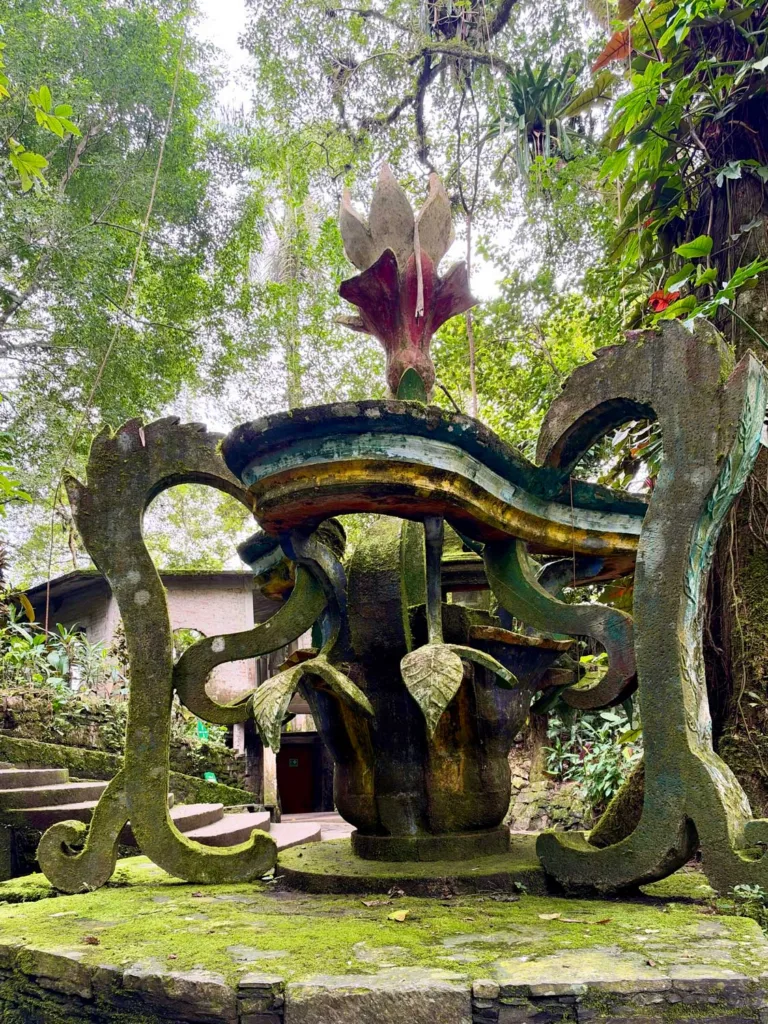
The second hook is Surrealism, the reason people trek to Las Pozas in the first place. The museum’s job, as Sala explains it, is “to give sense to the nonsense,” leading visitors from James’s follies back to the molds and hands that made them.
What keeps visitors there, Sala suggests, is display. “Through a display strategy,” he says, “you can make something that’s kind of irrelevant be relevant.” The students have studied Sir John Soane’s Museum in London, where classical fragments crowd every surface—a density that can move even the most indifferent visitor. They have also looked at Maurizio Cattelan’s 2011 Guggenheim retrospective, “All,” which left the walls bare and suspended virtually his entire body of work in the rotunda. Both rely on sheer accumulation; at the other extreme is a single object, isolated and at rest. Students will find their own place between the two. And if display is the strategy, it cannot be confined to the galleries: the distinction between gallery and non-gallery space starts to dissolve, and the whole building becomes a kind of exhibit.
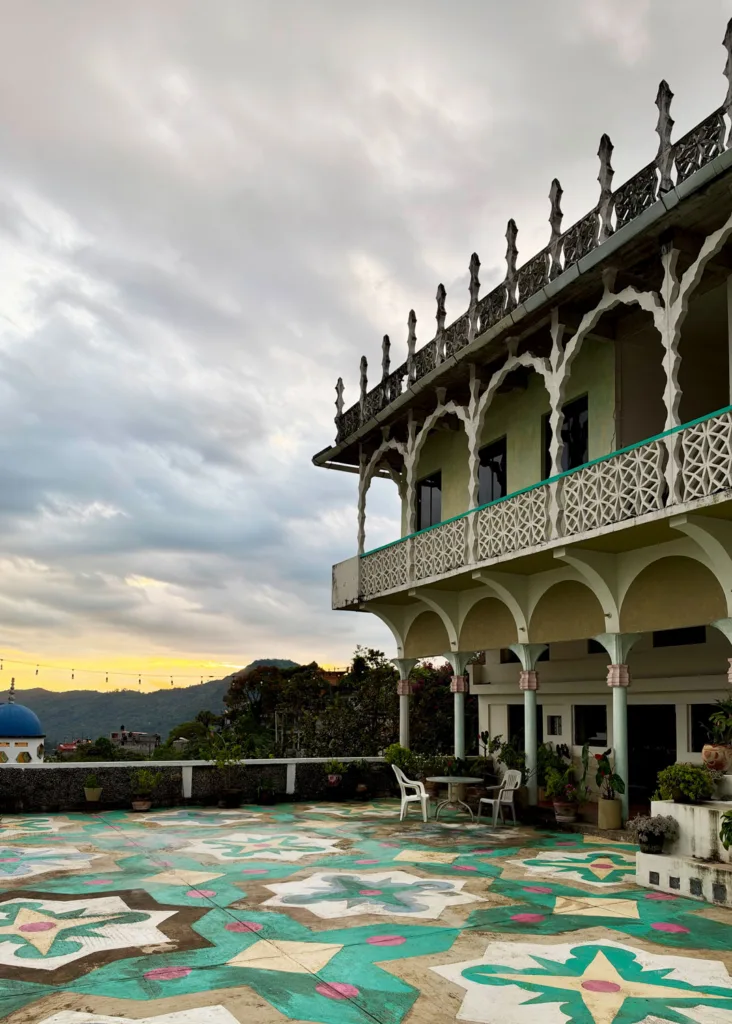
In early October, after researching Surrealism, the history of museum display conventions, the natural forces that act on buildings, and casting techniques, the group traveled to Xilitla, a seven-hour drive from Mexico City. They saw the formworks first and toured Las Pozas the next day, turning the visit into a game of sorts: matching concrete leaves to the molds that cast them. It was James’s process in reverse, tracing the garden back to its timber, and to the craftsmen that shaped it.
They also met the families of the carpenters who built the formworks as well as Gastélum’s descendants, who now run a hotel built by their patriarch as their family home. James was hosted here decades ago, as were the students on this visit to Xilitla.
The encounters raised questions the studio means to keep in view. “There are many topics that are very interesting for us to judge with distance,” Sala says, “to either celebrate or criticize or ignore, if we decide to, but at least with awareness of them.” Chief among them is the reality of a wealthy British patron arriving in a Mexican town and enlisting its residents to construct his vision.
James built Las Pozas so his flowers could live on. Today the concrete is slowly giving way to the jungle, just as he intended, while the wood molds—made to be discarded—have endured. Long before anyone thought to design one, the town of Xilitla had built its own museum of formwork, one living room at a time.