Where There Are Sounds, There Are Relations: Why Designers Must Become Better Listeners

Published
December 18, 2025
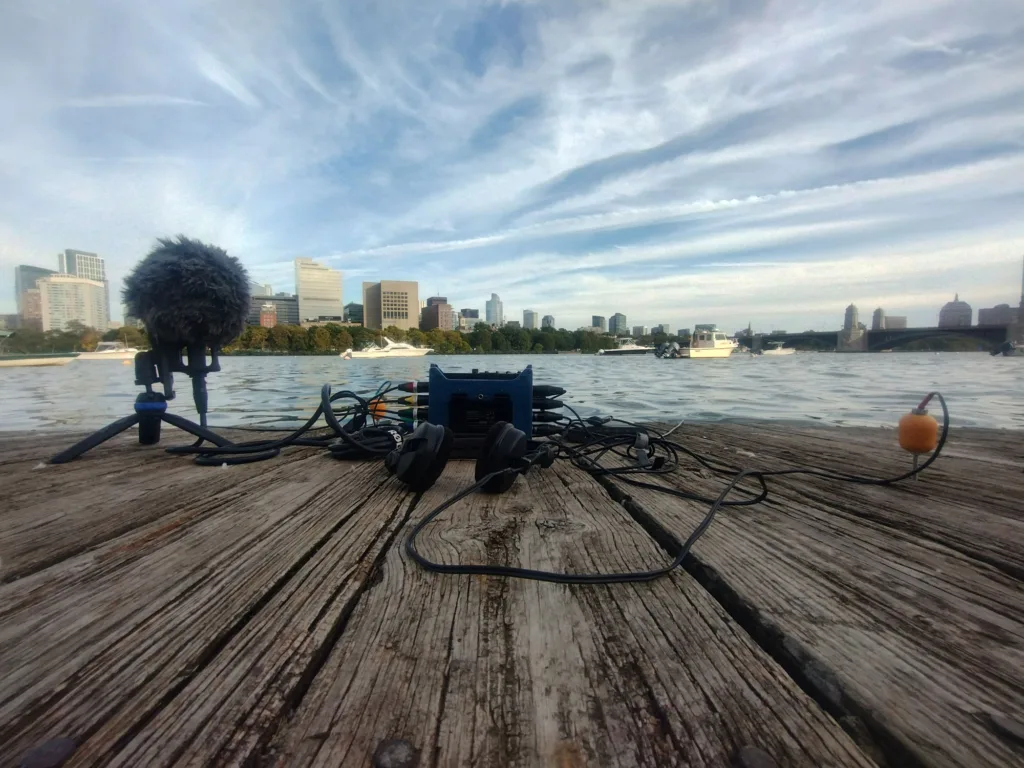
After arriving in Cambridge in late August to begin the Loeb Fellowship at the Graduate School of Design (GSD) and Harvard ArtLab, I began getting to know my new neighborhood by walking and listening to its soundscapes. Soundwalking, the act of combining walking and heightened aural perception, is how I usually begin and sustain my relationship with the places I visit or inhabit. When regularly ambling along the Charles River near Memorial Drive, two dominant sounds would typically accompany me: the hiss of car traffic and the chirping of crickets and annual cicadas.1 While the former seemed inexhaustible and constant, the latter oscillated and filled the space in a variable manner, depending on the time of the day and weather. I kept thinking back to the origins of these acoustic events. While automobile traffic sounds have existed for only a little more than 100 years, the acoustic environments akin to those of crickets we hear today have been on our planet for about 270 million years.2
Encountering these dialectical sounds, to paraphrase Walter Benjamin’s description of contrasting or even shocking effects that the intensifying circulation of images caused among people in the age of mechanical reproduction, I was quickly reminded of Henri Lefebvre’s book Rhythmanalysis.3 In it, this French sociologist and philosopher of modernity proposed a theoretical framework for analyzing the interplay of space, environment, time, and social life by paying close attention to the rhythms that structure daily existence in industrial and capitalist societies. Modernity, he argued, has radically jeopardized and ruptured the cyclical, natural rhythms to which humans were once much more attuned, by enforcing linear, mechanical patterns onto our lives. Consider the reverberation of these patterns in everyday soundscapes: the continuous hum of electric infrastructure; the repetitive announcements of transit schedules and timetables; and the mechanical segmentation of the day into work shifts, reflected in the noise of roadwork machinery, the buzz of office equipment, electronic notifications, and the ringing of mobile phones.
While these two soundscapes—traffic hiss and insect stridulation—may serve as an illustration to Lefebvre’s critique, they are also a reminder of the entanglement of rhythms today. This disjunction and co-existence of human and other-than-human rhythms might be best addressed if we focus carefully and thoughtfully on balanced co-existence, relationships, and resonances between them, rather than putting them in opposition (and hence sustaining the culture/nature divide).
Designers, artists, policy makers and city activists can claim an active role here, if they begin to take soundscapes seriously and consider them from the beginning of the design process, not as mere byproducts of more important planning decisions (that are then addressed through masking techniques or architectural amendments). This shift can start simply from deep listening, acknowledging one’s position, privileges, and limitations, and, more importantly, by including in their planning the positionalities of others, those who will or may inhabit the designed places, humans, and other species.4
My interest began early: even as a child, I loved wandering through my neighborhood, listening to the species that co-inhabited it, noting their presence, and observing how their cycles shifted over time.
At the cusp of the smartphone era and the visual screen regime it inaugurated around 2007, I began designing my first interactive sound maps to help people engage with their sonic environments. My growing fascination with space, soundscapes, environment, and memory later resulted in my designed audiowalks—or, as I prefer to call them, soundwalk compositions—developed for places such as the Vancouver shoreline and the Canaveral National Seashore. Designed to be listened to by the visitors of those places, often at a specific time of the day, these compositions weave together extensive field recordings I made during my field work, interviews, historical and archival research, and, at times, creative reconstructions of soundscapes that no longer exist. The intention with this approach was not to represent the past soundscapes in any complete or authentic way, which is impossible, but rather to work with fragments, indirect clues, and absences, to prompt listeners to imagine how those places might have sounded.
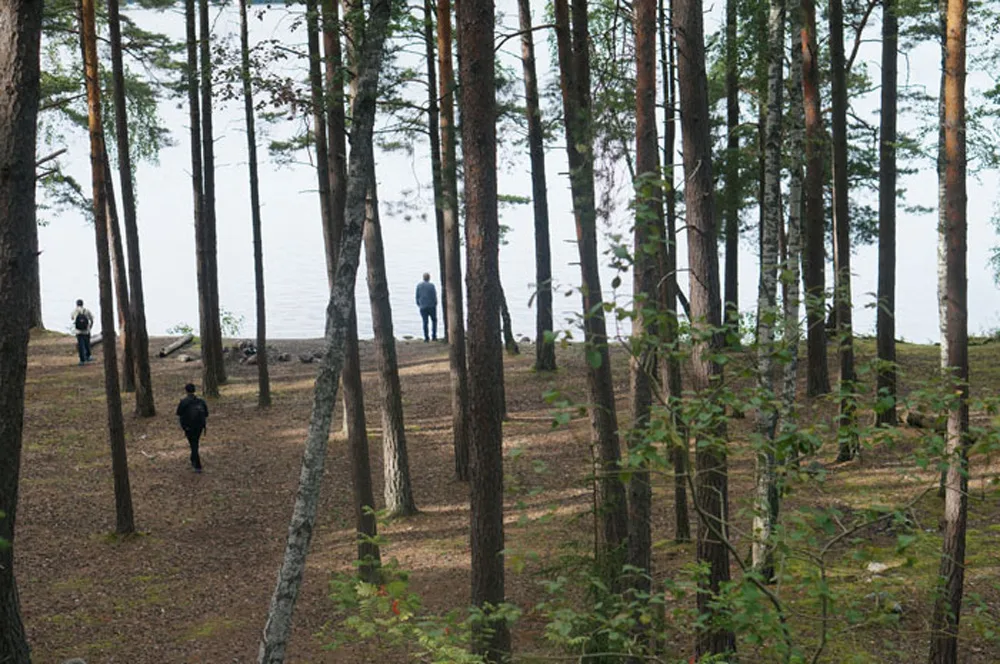
In 2019, together with Tim Shaw, a sound artist I first met on a soundwalk in Vancouver, I founded what was, to my knowledge, the world’s first soundwalking festival. Since then, the Walking Festival of Sound has grown into a nomadic platform that brings together artists, researchers, community leaders, and designers to share their work with the public through soundwalks, listening and storytelling sessions, sound installations, and walking seminars. Editions of the festival have taken place in Stockholm, Newcastle, Kraków, Edinburgh, Seoul, Vancouver, and Zurich.5 I am currently developing a new edition in collaboration with Harvard ArtLab, the Loeb Fellowship at the GSD, and other local institutions. Scheduled for April 17–May 3, 2026 in Cambridge and Boston, this edition will feature a range of artists, scholars, and community leaders who will activate various places in the city by drawing attention to their soundscapes, underheard stories, and voices. The festival will also be an occasion to bring together members of the Harvard community who work with sound and create an opportunity for them to exchange their work while opening it up to a broader audience.
Nature and Culture in Soundwalks
As part of my Loeb and ArtLab fellowship, I have been mapping and field-recording the soundscapes of Cambridge while offering soundwalks as a way for people to attune themselves to their sonic environments. One expression of this was Inaudible Cities: Here, Now, There and Then, a soundwalk I designed in early November in conjunction with the visit of Annea Lockwood, the composer recently described by The New York Times as “one of insatiable curiosity and a singular ear for the music of the natural world.” 6
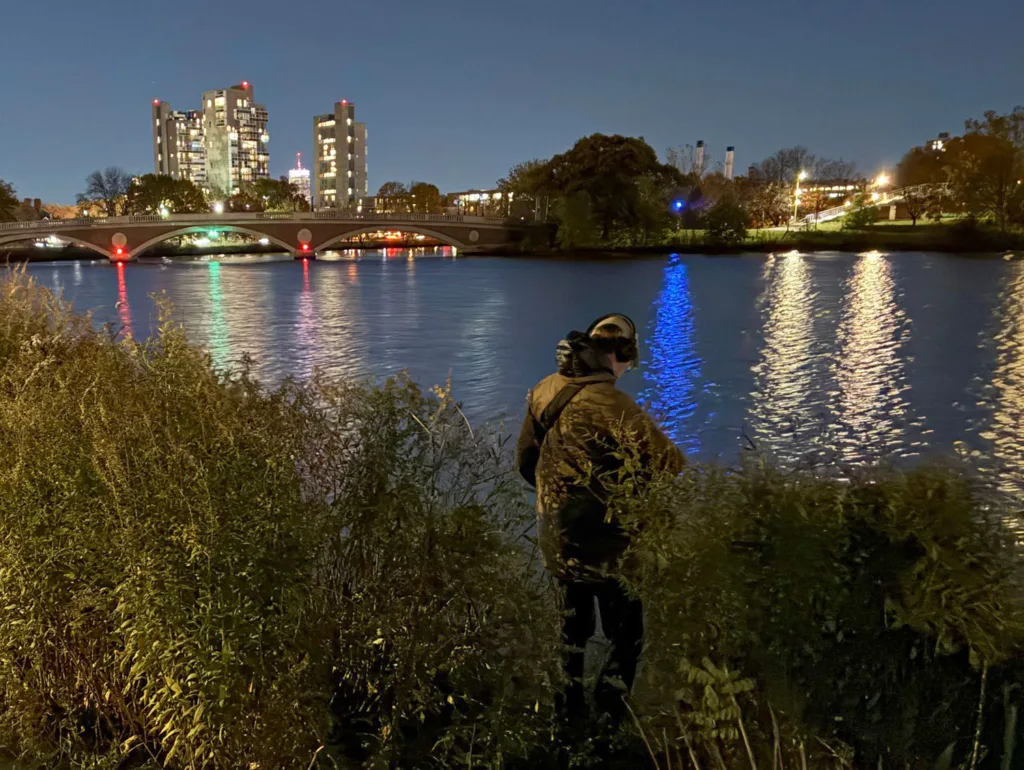
As a gesture of acknowledgment of Lockwood’s work, often centered on the sounds of water bodies, rivers in particular, the soundwalk began at the bank of the Charles River near the Weld Boathouse. The guiding question for the walk was simple yet provocative: To what extent can we hear expressions of the classical elements in our cities, especially water? How are they mediated by human infrastructures, and what does their presence or absence reveal about the processes shaping urban life and our daily experience of it?
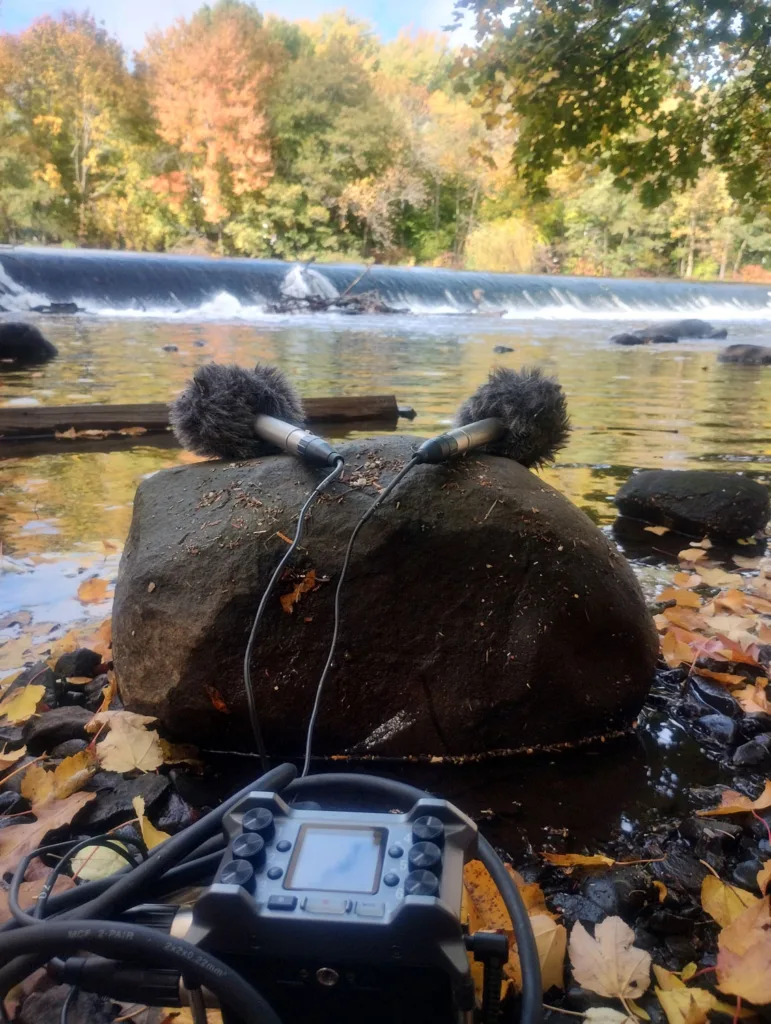
To start, I lowered hydrophones into the Charles River, transmitting its subdued, resonant underwater textures directly into participants’ headphones. Traffic vibrations sank through the bridge pillars into the water. Its density carries sound so well that subtle currents disappeared. What began as listening to water became listening to its pollution.
Some of my soundwalks, including this one, involve using a range of special microphones designed to capture sounds we typically do not register, for example low-frequency vibrations, underwater acoustics, and electromagnetic fields. These signals are then sent through a transmitter to a set of receivers and headphones, allowing participants to listen to these evolving soundscapes in real time as we walk. Simultaneously, I fade in fragments of earlier field recordings captured in the same locations at different times of day and across seasons. At certain moments, I also weave in voices, stitching them into a subtle narrative that prompts the listeners to pay attention to dimensions of places we walk through that would otherwise remain imperceptible.
The soundwalk combined sounds of the Charles River, including recordings I made at its source in Hopkinton near Echo Lake, with other, over- and underwater soundscapes I captured along its banks while regularly walking along them. These included the varying activity of insects and the lingering din of nearby social events, such as those accompanying the Head of the Charles Regatta.
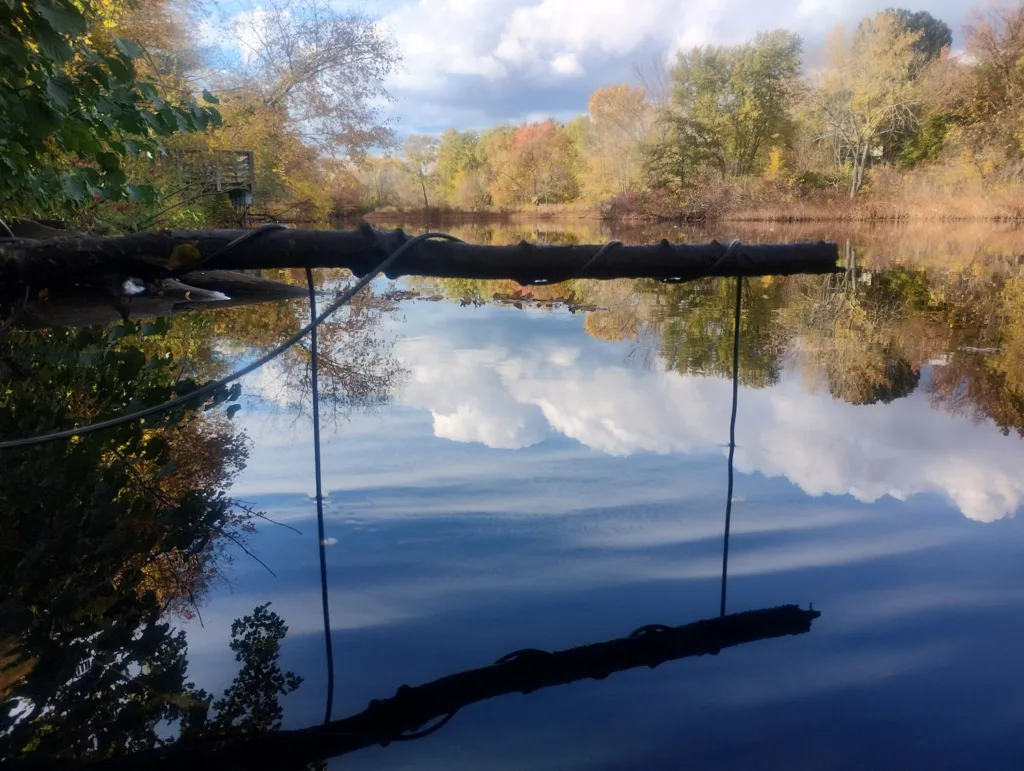
Crossing the bridge to the other side, we listened to the traffic and reflected on the air quality. On the other shore, we stopped at a massive exhaust fan and stood to observe it, attuned to the workings of the air-ventilation infrastructure, an aural reminder that air, its quality, and its distribution are conditioned by urban processes and decision making. The persistent hum of the ventilation shafts, recorded and looped as we moved, accompanied us for a good stretch of the walk, revealing how certain layers of the city’s soundscape become more perceptible at specific times of day, in this case when the usually vibrant rhythms of student life had temporarily subdued.
Soon after, we passed a construction site at the Business School campus, quiet at the moment, yet sonically invoked through recordings I had made there earlier, capturing mechanical rhythms imposed on the soundscape by machines and vehicles used for earthmoving, lifting, and compacting soil. Construction sounds and our relationship to them are another often-overlooked presence in the city. This section also included sounds resulting from an improvisatory intervention with music students, whom I had invited to play their instruments along with the encountered soundscapes.
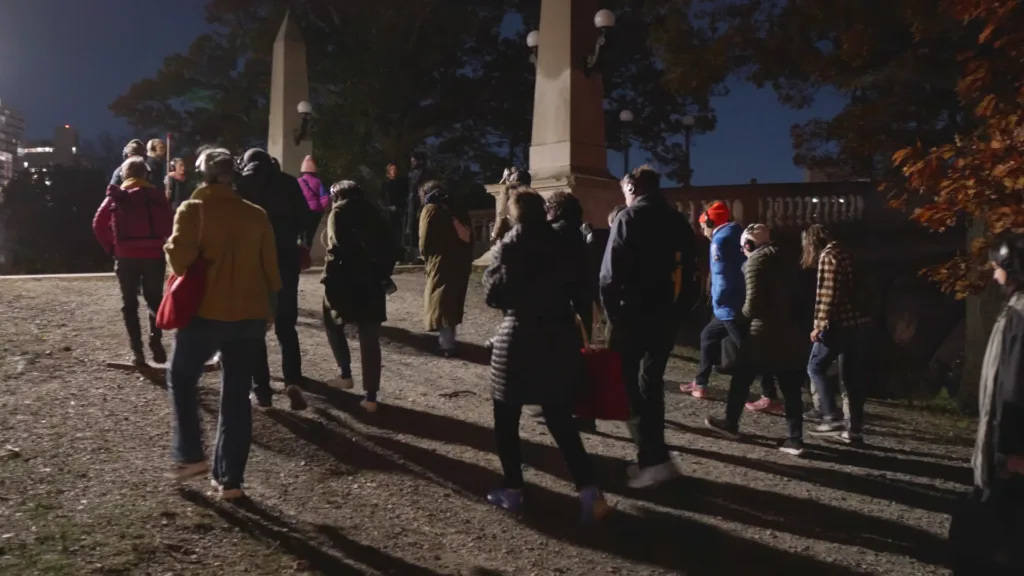
Towards the end of the walk, we entered a green area, now quiet but recently a gathering site for a murmuration of starlings. I had recorded their vocalizations by placing a microphone directly between them. The final stretch featured the amplification of electromagnetic fields, a specific emanation of the fourth Classical element, radiating along the road from utility poles, which also, unintentionally, functioned as radio masts and antennas, pulling random fragments of broadcasts into the soundscape and reminding us that the soundscapes often transgress the limits of our human hearing capacity. Some of the frequencies of the electrical buzzes from the utility poles, as well as from electric vehicles passing us as we approached the ArtLab, were strangely reminiscent of the crickets we had heard at the beginning of the walk along the riverbank. Their uncanny similarity seemed to temporarily blur the boundary between the human and the non-human, or perhaps, for some listeners, made that boundary even more vivid.
When Nature Goes Silent
During my later, solitary soundwalks near Charles River, as the months passed and mid-November arrived, I was surprised to hear crickets still, less intense, yet continuously active. Could their presence, despite the late fall, be explained by the warmer microclimates around well-heated buildings, or was it an effect of climate change, and a slower seasonal drop of temperature?7 While part of me was glad to witness the persistent calls of these well-camouflaged insects, I simultaneously wondered how Rachel Carson’s suggestive vision of a spring devoid of natural sounds such as those made by crickets and birds laid out in her Silent Spring seems to have transformed into a scenario of a “noisy autumn.”8
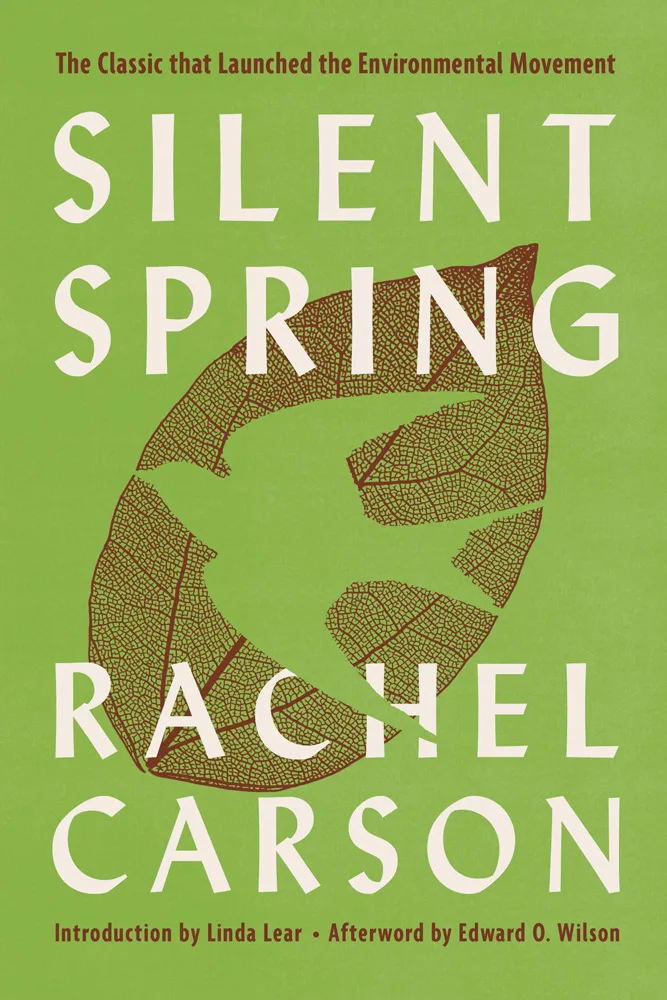
In the book, Carson imagines a fictional town, inspired by many small towns across the United States, that, affected by DDT and other chemical pesticides, eventually loses its wildlife and thus falls silent. Her poetic and political mobilization of environmental sounds (or, rather, their absence) renders perceptible an otherwise difficult-to-grasp ecological crisis. This literary strategy not only helped turn the book into a bestseller but also catalyzed the modern environmental movement and eventually contributed to the ban on DDT and the establishment of the U.S. Environmental Protection Agency.9 For Carson, soundscapes were a portal into understanding imperceptible ecological processes and the power imbalances that shape our lives. Environmental listening—much like the auscultation of a body to detect internal disorders—becomes a way of making declining biodiversity more tangible to the public and, ultimately, to decision-makers. While often directed outwards, towards other-than-human species and ecosystems, environmental listening doesn’t exclude humans.
Research consistently shows a direct correlation between heightened noise levels and increases in cardiovascular diseases (including high blood pressure, heart attacks, and stroke), sleep disturbances, stress, and metabolic disorders.10 Soundscapes, then, are not merely outcomes of environmental and social processes. They are also agents. They actively shape how we thrive or struggle, how we connect with others, and how ecosystems sustain themselves. Or decline. Despite the movement’s global reach and some achievements, the problems facing our acoustic environments in 2025 continue to intensify, which signals a decline in our health, as well. A recent report from the European Environment Agency reveals that more than 20 percent of Europeans—over one in five—are exposed to harmful noise levels. When measured against the stricter World Health Organization guidelines, this figure rises to over 30 percent, or nearly one in three.11
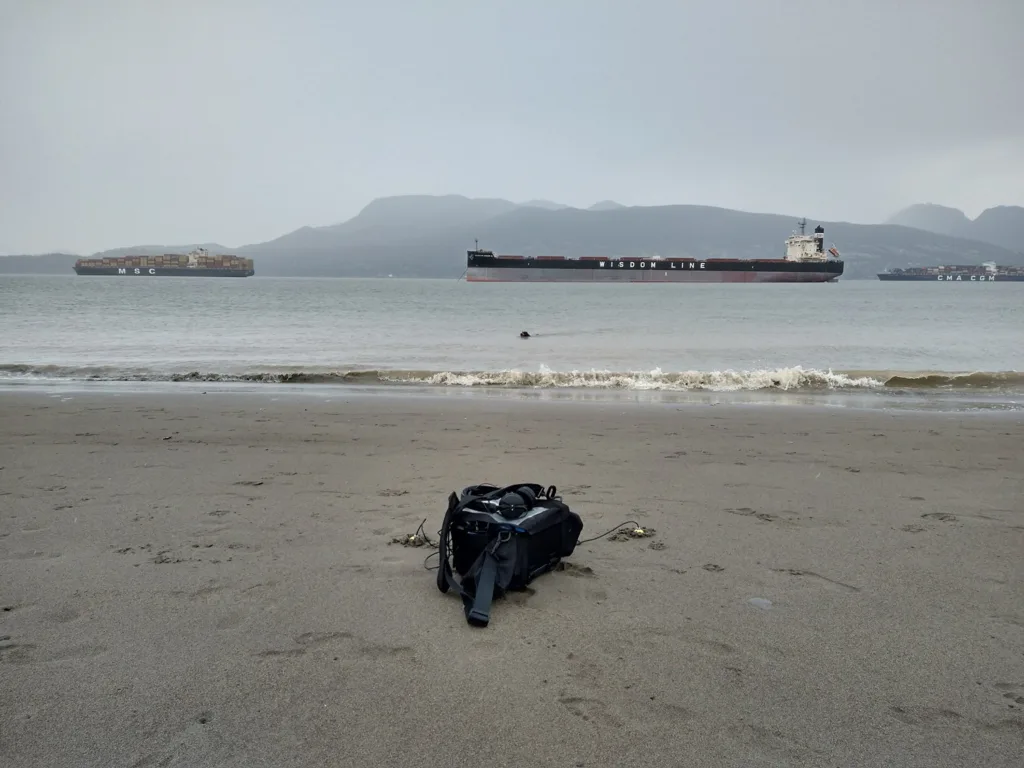
On the Vancouver shoreline, where I recorded in 2020, the sounds from oil tankers, cruisers, vessels’ engine propellers, and the overall intensification of marine traffic around the harbor shrank the acoustic communication space for marine organisms, such as orcas, a key apex predator in this region, by up to 80 percent. Noise pollution from shipping and seismic surveys harms Pacific Northwest mussels and oysters by causing cellular stress, reducing feeding, disrupting development, and impairing key functions. These impacts threaten their roles as filter feeders and ecosystem engineers. Luckily, recent efforts have helped to decrease underwater noise pollution, restoring some of that damaged acoustic space.
Rereading Carson’s introduction recently at the exhibition Urban Natures: A Technological and Political History, 1600–2030 in GSD’s Gund Hall,12 served as a provocation and a reminder of how many of us in Western societies, including designers, urban planners, architects, seem to need an extra push to connect with our environment through its sounds—an ability eroded over centuries of prioritizing sight as the primary sense.13 Could we call this condition “nature deafness,” a sonic equivalent to the “plant blindness” provocatively put forth by botanists Elisabeth Schussler and James Wandersee in the late 1990s, a tendency to take the presence of nature in urban spaces for granted?14
Nature’s Voice
Rights-of-nature activists and advocates—often working in tandem with representatives of First Nations—argue that nature not only expresses its condition through sound but also possesses voices (literal, legislative, and moral) equal to those of humans. In my work on soundscapes in the Pacific Northwest and Sápmi, I was fortunate to learn from members of the Squamish and Sámi communities. For the latter, for example, the loud roaring of the wind is not a disruption from which one should seek shelter, but the voice of the landscape—offering clues about climate shifts and guidance for both humans and non-humans, such as reindeer, on how to navigate their surroundings.
How, then, can we resist the rise of sonic monocultures—cars drowning out crickets with a single dominant hum, motorboat propellers overwhelming aquatic soundscapes, or one language displacing others amid anti-migration politics—and avoid sliding toward the scenario Robert Macfarlane envisions, echoing the sixth extinction: an Earth transformed into a silent planet?
More than 70 years ago, an influential moment in the history of sound studies took place not far from the banks of the Charles. In 1951, composer John Cage visited an anechoic chamber built for naval research at Harvard. Inside this exceptionally insulated space, the only sounds he could hear were those of his nervous and circulatory systems. The experience inspired Silent Prayer, the initial title of Cage’s composition, later known as 4’33’’. The work that radically redefined not only what counts as music but also how we understand sonic environments more broadly. The piece, along with Cage’s entire musical philosophy, was highly influential to Annea Lockwood, and they both belonged to the same avant-garde music community. In 4’33’’, the performer withdraws from playing their instrument for four minutes and thirty-three seconds, allowing the ambient sounds of the surrounding environment to become the composition itself. I often think: what would happen if designers similarly began by setting aside their instruments—both conceptual and practical—and allowed the ambience around them to guide their next steps? How would our cities sound?
Cage concluded that there is no such thing as silence and that where there is life, there is sound.15 If we agree that such intimate, inward-oriented listening can, paradoxically, open our acoustic and vibratory sensitivity outward toward the broader environment, beyond the walls of institutions, like concert halls, we have to acknowledge a range of responsibilities that it entails. In other words, where there is life, there is sound, and where there is sound, there are relations.
Therefore, I want us, designers, to consider another set of questions: of what environmental, social, and political relations are the surrounding soundscapes expressions? And, consequently, we might ask, who shapes them? How do they come about? Who is excluded, and who gets to participate in composing the thickness of our aural environments, to echo musicologist and sound scholar Nina Sun Eidsheim?16
These are some of the underlying concerns that the field of acoustic ecology has been grappling with since its emergence in the late 1960s, and, perhaps, even more critically today, through the work of a new generation of artists, activists, designers, and environmentalists.17
The disruptive mechanical din I encountered while listening through my hydrophones in Vancouver’s tidal zones came back to me vividly when recording underwater soundscapes of the Charles River in preparation for the soundwalk discussed earlier. Similar to Vancouver’s bay and multiple other bodies of water, the Charles River is also largely dominated by noises from motorboats, traffic and industry. In my regular walks along the river, I tried to find places where I can hear the water, which is an ever-bigger challenge in cities drowned in noise.
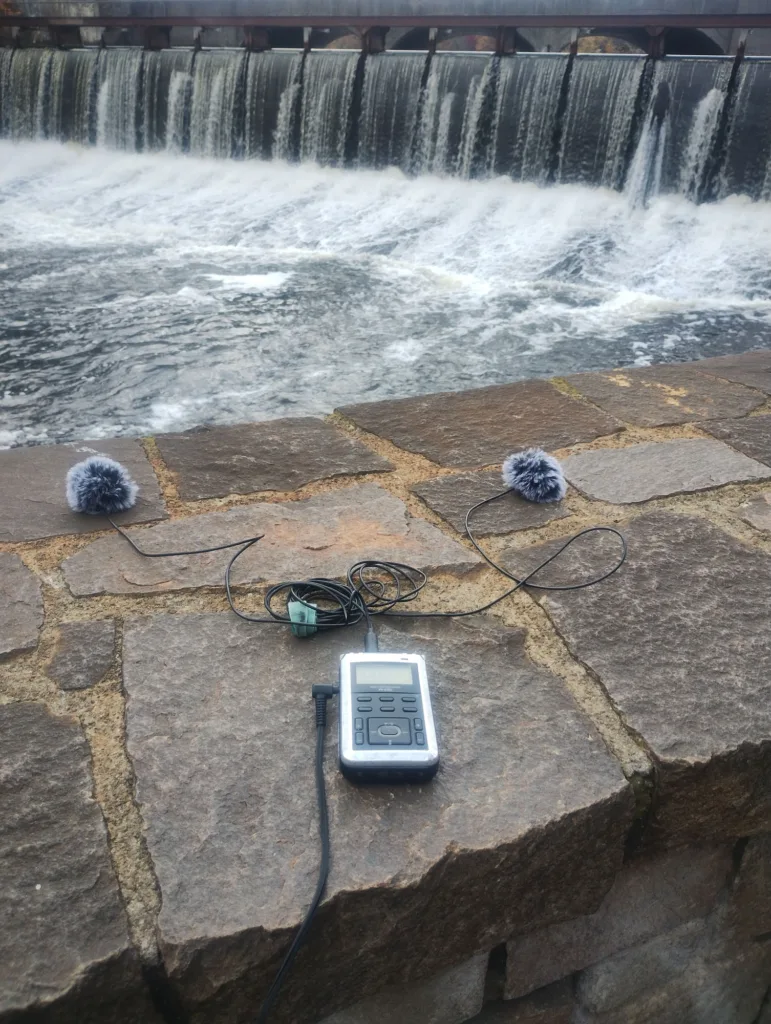
Although many cities sit beside rivers, it has become increasingly rare to encounter their sounds directly. In urban environments, rivers now “voice” their presence mainly through human-made infrastructures: rushing against engineered obstacles, spilling over dams, or resonating with the hum of nearby machinery. Their waters often amplify these anthropogenic noises (compared to air, water’s density allows vibrations to travel much faster and more efficiently). Moreover, today rivers’ condition is mediated through data streams generated by biosensing devices submerged within them, rather than in their own terms, through the sonic activity of their ecosystems. As Robert Macfarlane argues in his recent writing—echoing centuries of Indigenous knowledge—rivers are living entities and should be recognized as such. Their liveliness is jeopardized worldwide, imperiled by mining, pollution, and dams.18
Much of my recent work has, therefore, focused on drawing attention to the importance of water bodies—intertidal zones, lagoons, lakes, ponds, rivers—by amplifying the multitude of voices they still contain, despite the profound silencing imposed by human activity. My walks have expanded both upstream and downstream along the Charles River. Meandering backwards in time and forward into the future, the river has become my guide, leading me to histories and places where its vitality can be ear-witnessed more directly.
A sonic triptych emerging from these listening excursions—folding together the river’s present soundscape and its layered and mediated histories—is planned to premiere in April, alongside the festival. Yet these explorations, like the festival itself, are tributaries of a larger current directing my Loeb Fellowship: the idea of establishing a Center for Sound and Listening Studies, here, or elsewhere. In short, as we are reaching this article’s estuary, such a center would bring together interdisciplinary practices and perspectives, offering one of the first comprehensive approaches to understanding how sound practices and listening can help us meet the challenges of an increasingly complex world.
[1] Although, it needs to be noted that every Sunday from April until mid-November, a portion of Memorial Drive has been closed for traffic by The Department of Conservation and Recreation (DCR), which effectively decreased noise pollution in the vicinity.
[2] Haskell, David George. Sounds Wild and Broken: Sonic Marvels, Evolution’s Creativity, and the Crisis of Sensory Extinction. New York: Viking, 2022.
[3] The concept of “dialectical images” is discussed by Benjamin in his never finished study of French arcades. Benjamin, Walter. The Arcades Project. Translated by Howard Eiland and Kevin McLaughlin. Cambridge, MA: Harvard University Press, 2002. Lefebvre, Henri. Rhythmanalysis: Space, Time and Everyday Life. Translated by Stuart Elden and Gerald Moore. London: Continuum, 2004.
[4] Dylan Robinson, sound scholar and artist from xwélmexw (Stó:lō/Skwah) nation, reminds us of the critical importance of acknowledging diverse listening positionalities while working with sound. See: Robinson, Dylan. Hungry Listening: Resonant Theory for Indigenous Sound Studies. Minneapolis: University of Minnesota Press, 2020.
[5] “World Federation of Orthopterists.” http://www.wfos.net.
[6] Pogrebin, Robin. “Annea Lockwood, Composer.” New York Times, June 4, 2025. https://www.nytimes.com/2025/06/04/arts/music/annea-lockwood-composer.html.
[7] https://www.noaa.gov/education/explainers/can-crickets-tell-temperature-answer-is-in-their-chirp
[8] Carson, Rachel. Silent Spring. Boston: Houghton Mifflin, 1962.
[9] Brinkley, Douglas. Silent Spring Revolution: John F. Kennedy, Rachel Carson, Lyndon Johnson, Richard Nixon, and the Great Environmental Awakening. New York: Harper (HarperCollins), 2022.
[10] Münzel, Thomas, Tommaso Gori, Wolfgang Babisch, and Mathias Basner. “Cardiovascular Effects of Environmental Noise Exposure.” European Heart Journal 35, no. 13 (2014): 829–36. https://doi.org/10.1093/eurheartj/ehu030.
[11] European Environment Agency. Environmental Noise in Europe — 2025. https://www.eea.europa.eu/en/analysis/publications/environmental-noise-in-europe-2025.
[12] Harvard Graduate School of Design. “Urban Natures: A Technological and Political History, 1600–2030.” Exhibition page. https://www.gsd.harvard.edu/exhibition/urban-natures-a-technological-and-political-history-1600-2030/.
[13] Acoustemology is a concept proposed by Steven Feld, which prioritizes knowledge and experience gained through sound and how listening shapes understanding of the world, culture, and environment. Feld, Steven. “Waterfalls of Song: An Acoustemology of Place Resounding in Bosavi, Papua New Guinea.” Anthropological Theory 6, no. 1 (1996): 5–22.
[14] Wandersee, James H., and Elisabeth E. Schussler. “Preventing Plant Blindness.” The American Biology Teacher 61, no. 2 (1999): 82–86.
[15] Cage, John. Silence: Lectures and Writings. Middletown, CT: Wesleyan University Press, 1961.
[16] Eidsheim, Nina Sun. The Race of Sound: Listening, Timbre, and Vocality in African American Music. Durham, NC: Duke University Press, 2019.
[17] See: Schafer, R. Murray. The Soundscape: Our Sonic Environment and the Tuning of the World. Rochester, VT: Destiny Books, 1977.
[18] Macfarlane, Robert. Is a River Alive? New York: W.W. Norton, 2025.