Arrival Is an Infrastructure
Refugees and the Remaking of Urban Life in the Rust Belt
At a moment when forced displacement has reached historic levels worldwide, some of the most urgent urban questions are no longer confined to emergency response but instead concern what it takes to build a life after arrival. In this interview, Daniel D’Oca—an associate professor in practice of urban planning at the Harvard Graduate School of Design (GSD) who, this semester, is teaching the course “Refugees in the Rust Belt”—reflects on those questions through cities of Upstate New York’s Erie Canal corridor: Buffalo, Utica, and Albany.
The conversation focuses specifically on refugees, not on foreign-born residents or immigrant communities more broadly. That distinction matters. Under international and US law, refugees are people who have crossed an international border and cannot safely return to their country because of persecution, conflict, or a well-founded fear of persecution on protected grounds. They arrive, in other words, through a distinct legal and institutional process of resettlement—one that shapes everything from housing and employment to schooling, mobility, and access to services.
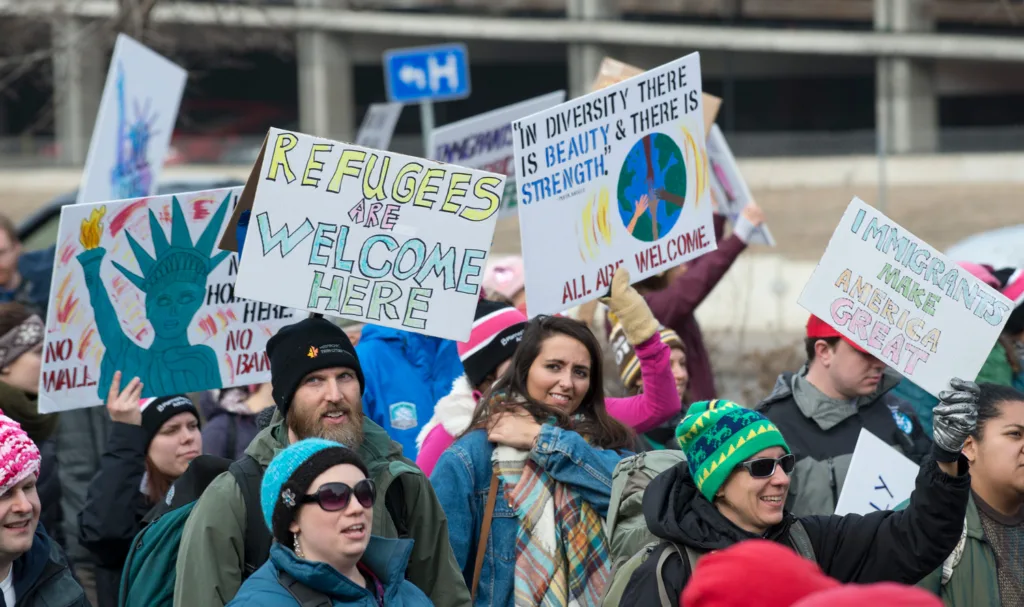
Upstate New York, in turn, becomes a revealing place from which to consider the future of postindustrial cities. Often grouped within the Rust Belt—the older manufacturing region marked by industrial decline, disinvestment, and population loss—these cities are also places where new settlement is becoming part of a wider story of urban reinvention. Here, revival signifies more than economic growth; it encompasses fuller neighborhoods, occupied housing, sustained schools, active commercial streets, stronger institutions, and a richer social and cultural life. Refugee communities contribute to that process not only as workers or tenants but as neighbors, entrepreneurs, students, congregants, and community builders.
These local dynamics have become even more consequential under a far more restrictive federal climate. Since refugee admissions were suspended under the US Refugee Admissions Program (USRAP) in early 2025, the flow of new arrivals has narrowed dramatically. The change is stark in numerical terms: after roughly 100,000 refugees were admitted in 2024, admissions fell to about 13,000 in 2025, with nearly all of those arrivals occurring before or just as the suspension took effect. In practice, that means the work of reception and long-term integration has continued locally even as the federal pathway for refugee entry has been sharply constricted.
Set against this backdrop, the conversation that follows explores how refugee resettlement reveals what designers, planners, and public officials can do to shape cities that are more welcoming, effective, and resilient places of arrival. In Upstate New York, these issues are deeply intertwined with the daily work of resettlement and belonging, and with the understanding that systems built to support refugee communities ultimately make cities better for everyone.
A. Krista Sykes
How are refugee communities bringing new life to Rust Belt cities—economically, socially, and culturally?
Daniel D’Oca
A deep body of scholarship suggests that immigrants and refugees have played a meaningful role in revitalizing many Rust Belt cities. Research shows that newcomers can help offset population loss, support local labor markets, and contribute to neighborhood reinvestment, even if migration alone is not a cure-all for structural economic challenges.
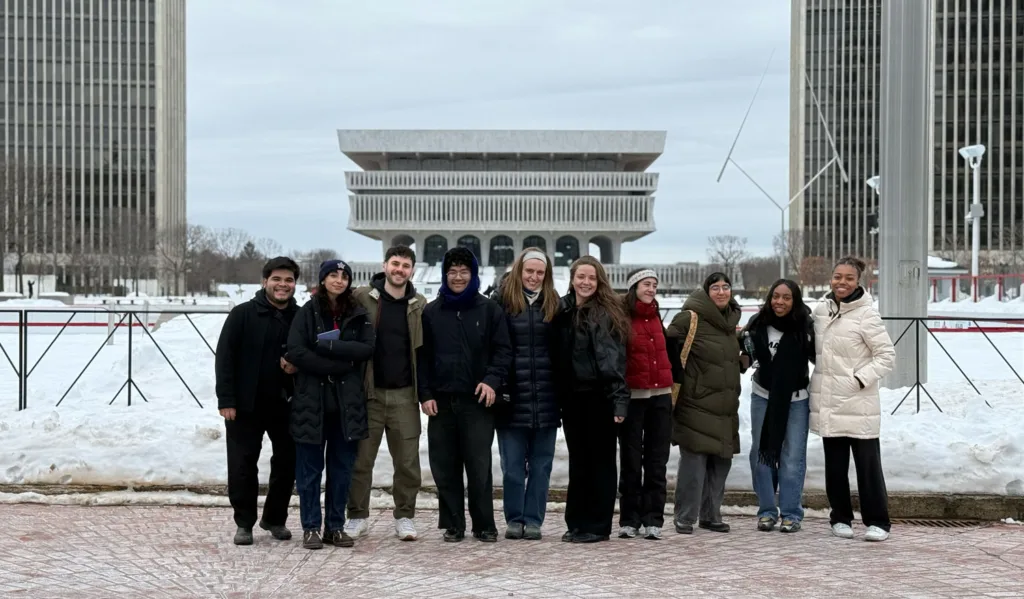
We also have anecdotal evidence from what we saw and heard on our field trip to Buffalo, Utica, and Albany.
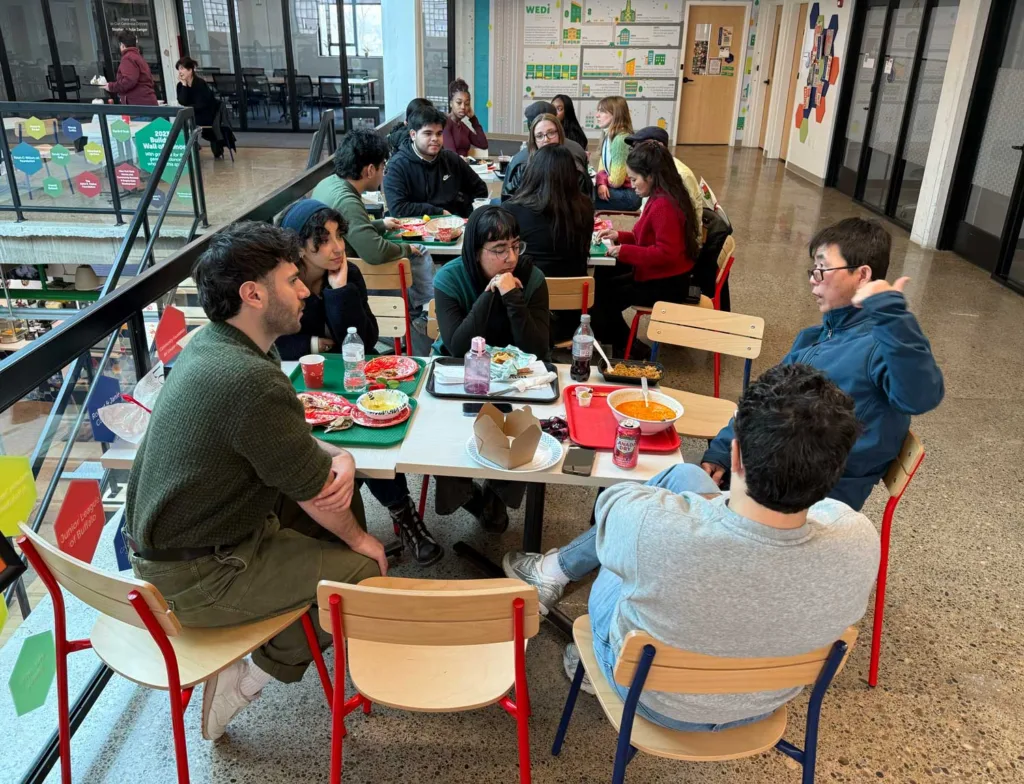
Economically, refugees are filling real gaps. In Utica, for example, staff at the Mohawk Valley Resource Center for Refugees told us that major regional employers depend heavily on refugee labor. That aligns with research showing that in places with labor shortages, newcomers are often essential to keeping key sectors running. At the same time, we saw that this economic contribution is not automatic; it depends heavily on transportation access, language training, employer relationships, and other factors.
Socially, refugees are repopulating and reactivating neighborhoods that had experienced long-term decline. In Utica, we learned that the city’s population might have dropped below a critical threshold without refugee resettlement.
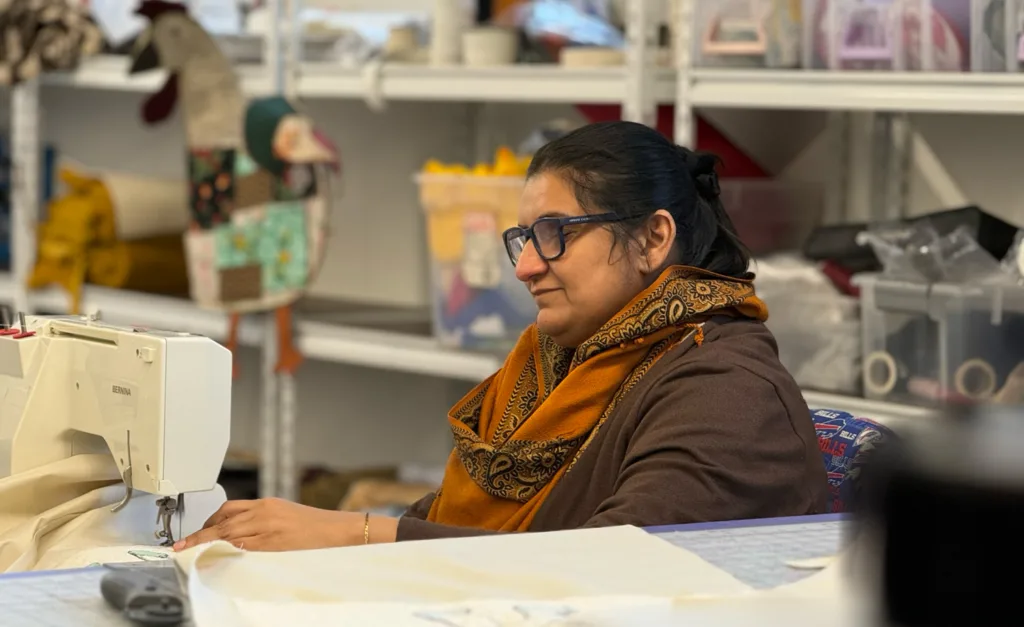
But it is not just about numbers. People rely heavily on each other—extended family, co-ethnic networks, and informal support systems—to navigate everyday life. In Buffalo, staff at Stitch Buffalo described how many women initially experience profound isolation, but that spaces for gathering, making, and working together can quickly become hubs of social life. That reinforces what researchers like Susanne Wessendorf have written: that integration often happens not through formal programs alone, but through everyday “social infrastructures” in libraries, shops, community spaces and other informal spaces where people meet, exchange information, and build relationships.
Culturally, refugees are reshaping these cities in ways that are sometimes subtle and other times very visible. In all three cities, we saw evidence of new religious institutions, markets, and community events that reflect the backgrounds of recently arrived populations. But what was equally important was how these cultural contributions are embedded in daily life. One of the most powerful things we heard was how younger generations are navigating multiple worlds at once: supporting their families, translating for parents, and pursuing education and careers locally. While not always captured in economic data, that kind of intergenerational dynamic is central to how these communities take root and evolve.
So refugees are bringing new life to Rust Belt cities in all of these ways. Their contributions are real, but they depend on local conditions: housing, transit, schools, employers, and community organizations.
A. Krista Sykes
In your view, what matters most in helping a refugee family build a stable and fulfilling life in a new city, and what does a city need to get right to make that possible?
Daniel D’Oca
This is exactly the question I ask students to grapple with in their first assignment. For it, each student is given a fictional refugee family and asked to find a place for them to live somewhere along the Erie Canal corridor. The exercise forces them to move beyond abstract ideas about “refugees” and instead think concretely about daily life: Where do they shop? How do they get to work? Who do they talk to when something goes wrong? What we’re really asking is: what does it take to build a stable and fulfilling life in a new and completely unfamiliar place?
The evidence—both in the academic literature and on the ground—is very mixed. There are long-standing debates, for example, about whether refugees should be settled in “arrival neighborhoods,” where there are already people who speak the same language and share cultural practices, or whether that can lead to segregation and limit long-term mobility. Some research suggests co-ethnic networks are critical early on; other work warns that concentrating poverty can reproduce inequality. In other words, there’s no single formula.
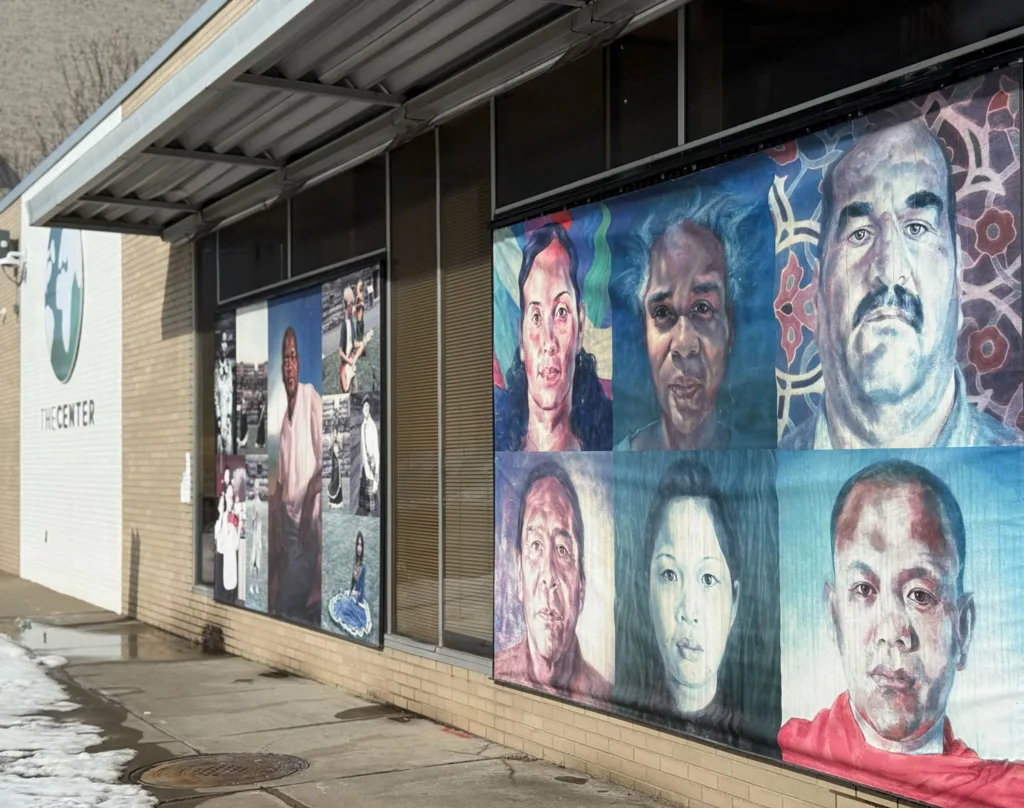
What we did see very clearly on our field trip, however, is that certain conditions consistently make a difference. In a focus group with recently arrived refugees that we conducted in Utica, participants emphasized how important it was to be near other people who spoke their language—not just for comfort, but for survival. One person described how, upon arrival, they relied on a neighbor to help them understand how to get their children to school and how to navigate basic services.
Across Buffalo, Utica, and Albany, we saw that successful integration depends on a combination of physical places, social infrastructures, and broader environmental conditions.
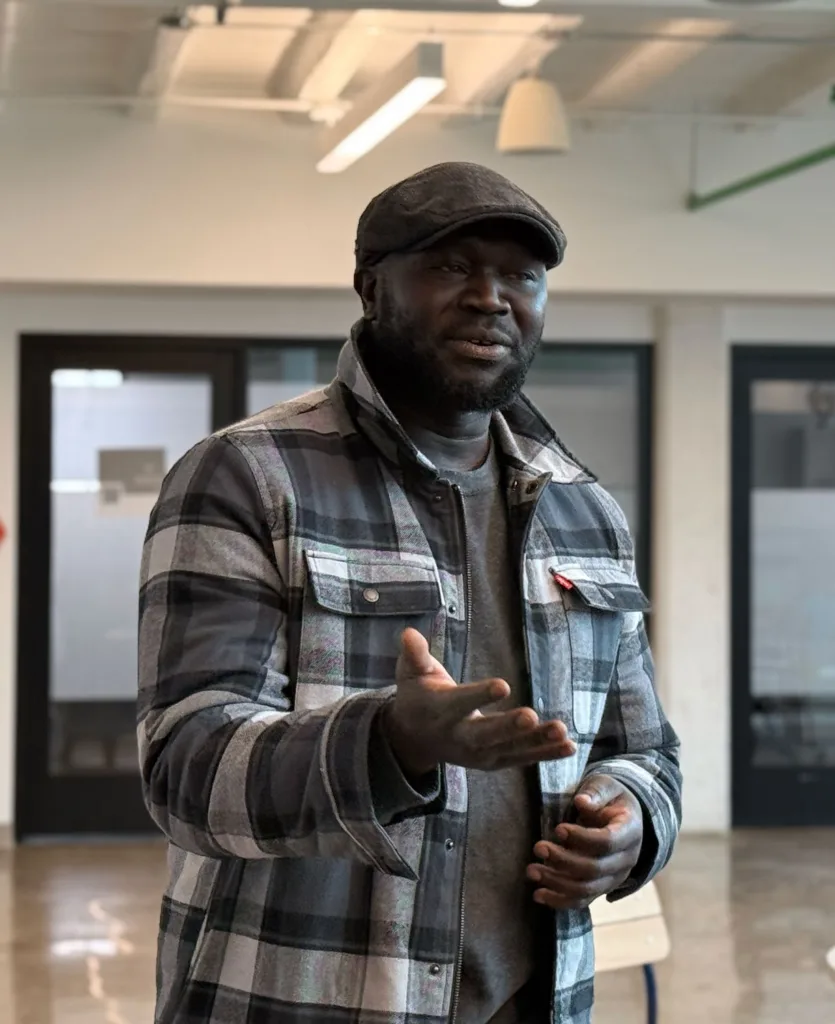
At the level of physical places, proximity to public transit, schools, libraries, and mosques matter enormously. If you are placed in an apartment but it takes two hours to reach a job by bus—as we heard in Buffalo—that’s not a viable long-term situation.
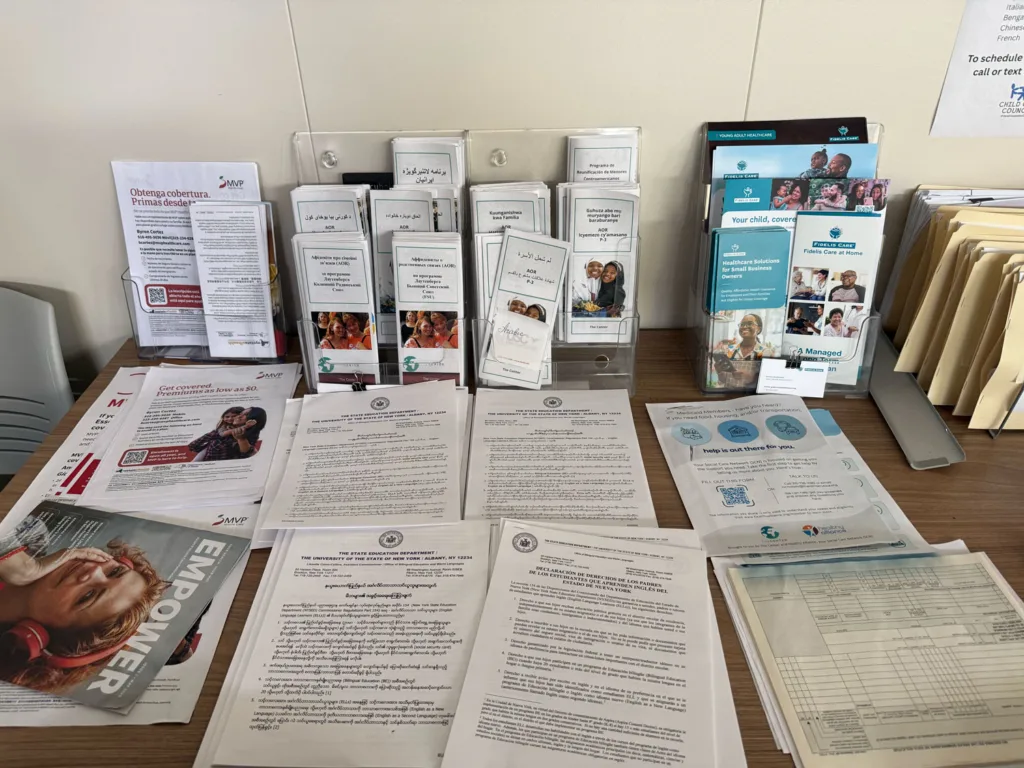
But just as important are social infrastructures and actors: libraries, community centers, small shops, and the people who animate them, from shopkeepers and caseworkers to neighbors and religious leaders. As Wessendorf notes in “The Library is Like a Mother,” the library is a place where people can go without an appointment, ask questions, and be guided. These are what others call “social front doors”: visible, accessible entry points into a new society.
Finally, there are structural and environmental factors that shape everything else: density, walkability, zoning, and the overall openness of the local economy. Dense, mixed-use neighborhoods increase the likelihood of chance encounters and access to services. More flexible zoning can make it easier to open a small business, adapt housing for multi-generational families, or create community spaces. And access to jobs—often in manufacturing, healthcare, or service sectors in these cities—is critical, though it frequently depends on transportation systems that are, in many cases, quite limited.
There’s also a broader context to all of this. The United States has resettled more than 3 million refugees since 1975, but federal support is typically short term—often just a few months—while integration takes years, even generations. That means cities, neighborhoods, and local institutions end up doing most of the real work.
So I would say that, overall, what matters most is not any single factor, but whether a city can provide a dense, connected ecosystem of housing, mobility, social infrastructure, and human relationships. When those elements align, refugee families can begin not just to survive, but to build stable, meaningful lives.
A. Krista Sykes
What can planners, designers, and local leaders do to make cities more welcoming—and more workable in practical, everyday ways—for refugee families?
Daniel D’Oca
At the most basic level, cities are “welcoming” when people can get to work without a car; access affordable, flexible housing; and find public and quasi-public spaces to meet people from their community.
Much recent work argues that we need to fundamentally update how we understand urban refugee life if we want to make truly welcoming cities. We need to understand, for example, that arrival isn’t a moment, and it’s not confined to a single neighborhood; it’s an ongoing, distributed process shaped by a mix of physical places, social actors, and structural conditions.
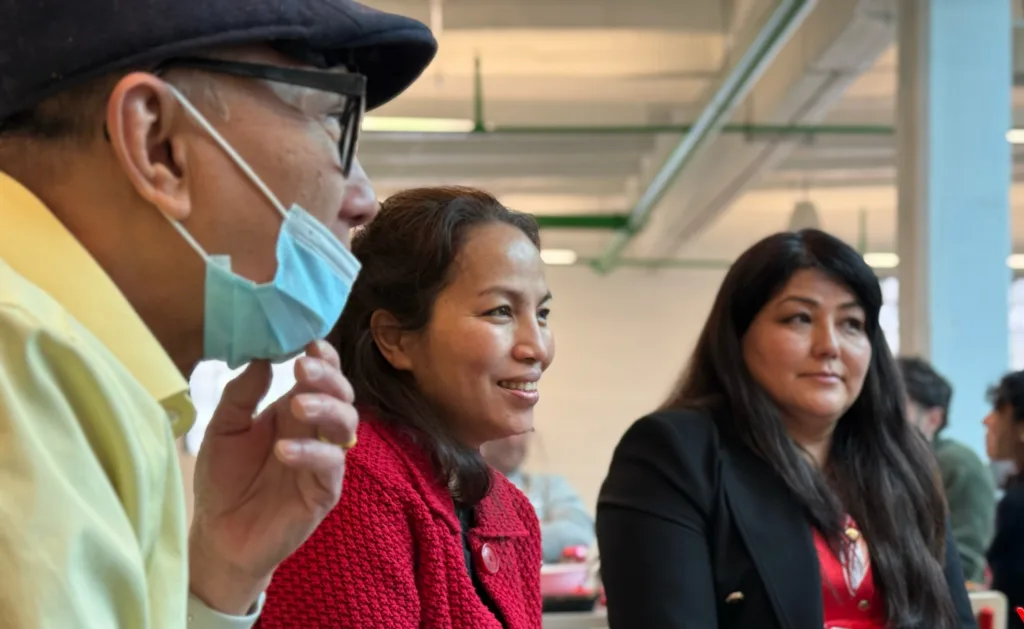
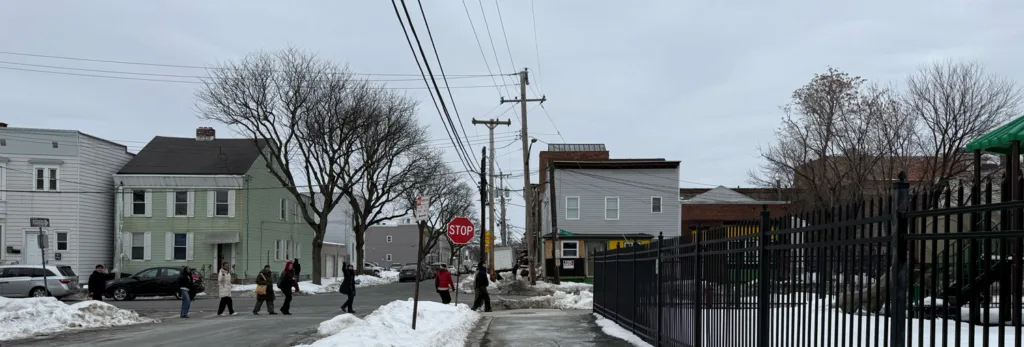
This framing resonated with what we experienced on our field trip. For example, in the Utica focus group, participants didn’t describe their lives in terms of a single arrival neighborhood. Instead, they talked about a network of places: the mosque, a particular grocery store, a workplace across town, a resettlement agency, a school, a bus route that may or may not be reliable. These are called “arrival infrastructures,” which include physical places, social infrastructures and actors, and structural and environmental factors.
A good example of social infrastructures are “arrival brokers”—often other migrants or community members embedded within the community who help newcomers navigate everything from housing to jobs to paperwork. In Utica, we heard repeatedly about how critical these informal actors are. In many cases, they are more important than official systems.
So one very practical takeaway is that planners need to recognize, support, and not inadvertently shut down these informal systems. This boils down to a few key shifts: Don’t over-focus on neighborhoods, because arrival happens across the whole city and even beyond it. Don’t assume a fixed trajectory, because not everyone is settling permanently, and not everyone is trying to. And, most importantly for me: pay attention to what’s already working on the ground, because much of the real infrastructure of arrival is built from below and not delivered by the state. I’m less interested in top-down, fully designed solutions, and more interested in how cities can create the conditions for people to build their own lives, often in ways that planners wouldn’t predict.
A. Krista Sykes
What in terms of government policy might help support arrival infrastructure?
Daniel D’Oca
One of the more provocative arguments—and one I strongly agree with—is that we need to relax certain regulatory frameworks to allow for more flexibility and informality. In practice, that might mean rethinking zoning that prevents small-scale entrepreneurship, or building codes that unintentionally prevent shared or transitional housing arrangements, or rules that make it hard for community organizations to operate in hybrid or improvised spaces.
We witnessed versions of this on the ground. In Utica, some of the most important resources for newcomers—small groceries, informal childcare arrangements, religious spaces in converted buildings—exist in a kind of gray area. They’re incredibly functional, but often precarious. A more supportive regulatory environment could make those systems more stable without over-formalizing them.
A. Krista Sykes
How can cities support refugee communities in ways that respond to what people need, rather than what officials or institutions assume they need?
Daniel D’Oca
One of the biggest gaps we’ve seen is a mismatch between how institutions imagine refugee needs and how people experience everyday life in a new city. A lot of formal systems are organized into neat categories: housing, employment, language acquisition, transportation, etcetera. But these are not separate domains. We heard very clearly on our field trip that people experience these things as tightly interconnected. In a focus group in Utica, for example, one participant described turning down a job because it wasn’t on a bus line that worked with their childcare schedule. Another talked about how finding the “right” grocery store—one that carried familiar food and where they could speak their language—was just as important as finding housing. These aren’t secondary concerns; they’re central to whether daily life is workable.
So responding to what people need requires a different posture from cities. It means spending more time observing how people are already making things work, rather than starting from preconceived categories of need. Research increasingly points toward methods that look more ethnographical, where we’re following everyday practices, mapping informal networks, understanding how systems are actually used and where they break down. But it also means being willing to act on that knowledge. In many cases, the most effective thing a city can do is not to build something new, but to support and stabilize what already exists.
The goal of planning shouldn’t be to impose a single model of successful integration, but to expand people’s options: to support a wider range possible pathways forward. And I think that’s exactly right. Refugees are often already telling us what they need, not just through formal engagement processes, but through the ways they move, adapt, and build networks in the city. The question is whether institutions are willing to adjust their assumptions (and, ultimately, rules) in response. At the end of the day, a city works when people can piece together a life that makes sense to them. Planning for that doesn’t mean predicting exactly what people will need; it means creating systems that are flexible, legible, and open enough that people can find their way.
A. Krista Sykes
What policy changes or local investments would make the biggest difference right now in helping refugee communities not just settle, but truly thrive?
Daniel D’Oca
The most important change needs to happen nationally. The refugee resettlement system in the US has been effectively dismantled. The Trump administration sharply reduced admissions and ultimately suspended the US Refugee Admissions Program. In our conversations with resettlement agencies across Upstate New York, we heard repeatedly how destabilizing this has been. As one provider put it, “the rug was pulled out from under the entire system.”
At the same time, there is a climate of fear shaping everyday life for refugees. During the focus group in Utica, some individuals said that they are reluctant to leave their homes or attend English classes because of concerns about immigration enforcement. One agency told us that attendance in language programs has dropped because people are afraid. This is a reminder that policy doesn’t just shape who arrives; it shapes whether people can participate in the basic systems that make integration possible.
That said, what happens locally still matters enormously. One of the clearest takeaways from our fieldwork is that refugee integration is fundamentally local. In Buffalo, for example, the city has made a strong commitment to being a welcoming place for newcomers. The mayor’s office and the Office of New Americans have worked closely with organizations like Journey’s End to support resettlement, coordinate services, and create a broader civic culture of inclusion. That kind of local leadership sets the tone and signals that refugees are valued, not just accommodated.
But beyond leadership, the most effective local investments are often the most basic and the answer is not a single program but a set of reinforcing conditions: expand the supply of affordable housing; improve transit so that people can actually access jobs; and invest in the public realm by making safe streets, accessible parks, and visible and welcoming civic spaces. These are not refugee-specific interventions. They are good urbanism. But they are especially powerful for newcomers, because they lower the barriers to participation in everyday life.In that sense, helping refugee communities thrive is about making cities work better for everyone, not designing parallel systems.
A. Krista Sykes
Might the lessons drawn from studying refugee communities in Upstate New York apply more broadly to other populations, for example immigrant communities? If so, how?
Daniel D’Oca
Absolutely. In some ways, that’s one of the most important takeaways from the studio. While the class is framed around refugees, many of the patterns we observed are not unique to refugees at all. They’re characteristic of how people in transition make a life in cities.
Arrival is not a special condition limited to a single group; it’s a more general urban phenomenon. People are constantly arriving, re-arriving, and repositioning themselves, whether they’re refugees, economic migrants, students, or even long-time residents going through a major life change. What we saw in Upstate New York is that the systems that support refugees—those combinations of physical places, social infrastructures and actors, and structural conditions—are often the same systems that support many other populations as well.
In all three cities we visited, the same grocery stores, religious institutions, and community organizations that serve recently arrived refugees are also serving longer-established immigrant communities. The same bus routes, housing stock, and employment networks are shared across groups. And the same kinds of informal support systems—like the arrival brokers who help people navigate jobs, housing, and paperwork—are just as important for immigrants who may not be formally classified as refugees.
These points counter the idea that planners should design for a single, linear trajectory (arrival, settlement, integration). That model doesn’t just misrepresent refugees; it misrepresents urban life more generally. Many immigrants maintain transnational ties, move between places, or experience periods of instability that look a lot like what some describe as “permanent temporariness.” When you start to see things from that perspective, the distinction between refugees and other immigrants becomes less about fundamentally different needs and more about differences in legal status layered onto shared urban experiences.
For planners and designers, that has an important implication. If you design systems that work for refugees—systems that are flexible, that support informal networks, and allow people to navigate complex and changing circumstances—you’re very often designing systems that work better for everyone. That might mean more adaptable housing, more reliable transit, more permissive spaces for small-scale entrepreneurship and community activity, and a greater willingness to recognize and support the informal infrastructures that people build for themselves.
In that sense, refugee communities can be understood less as an exceptional case and more as a kind of lens. They make visible the parts of the city that are often overlooked, including the workarounds, the dependencies, the social networks that hold things together. And once you see those clearly, it becomes obvious that they matter not just for refugees, but for a much wider range of urban residents.