When Youth Groups Designed Their Communities
In the 1960s, Black and Puerto-Rican youth groups established YOU, leveraging architecture and planning in support of their communities
In the summer of 1968, the Architectural Forum reported on an upheaval at the annual Urban America Inc. conference. Leaders from fourteen “former and current street gangs,” they wrote, had orchestrated a “direct confrontation” with the urban redevelopment professionals in attendance.[1] Despite the inflammatory and racialized rhetoric of the Forum, these “gang leaders” had not only been invited by Urban America; their travel and lodging had been covered by the organization itself. The “confrontational” message they came to deliver? “Please, we’d rather do it ourselves.”[2]
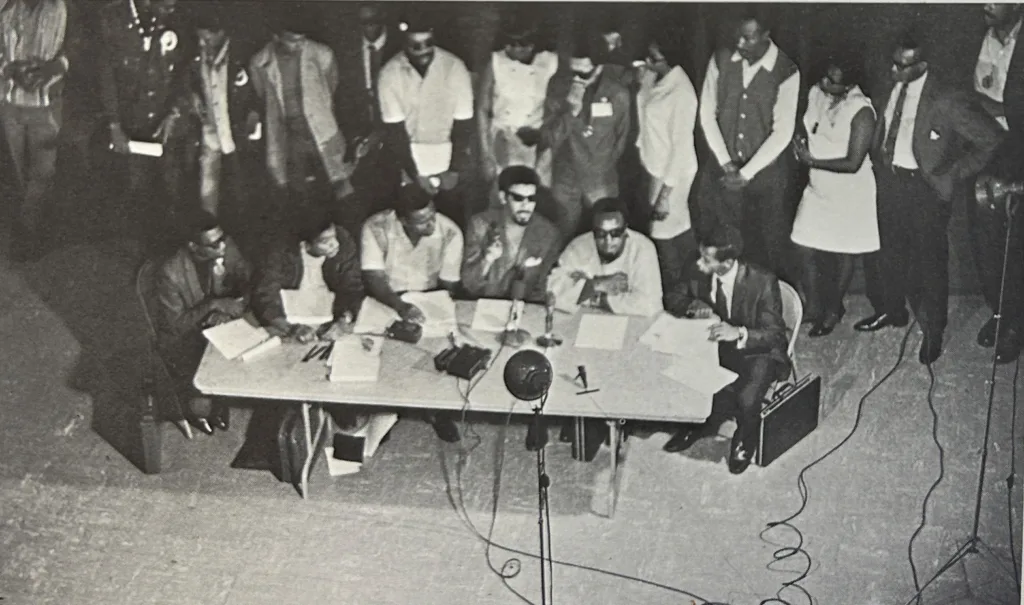
The young men and women in attendance were representatives of Youth Organizations United (YOU), a national coalition of 350 predominantly Black and Puerto-Rican led youth groups, unified to find “a constructive alternative to revolution.”[3] Each had attended the annual meeting in hopes of securing funding for local community development initiatives, programs that were increasingly turning to architecture and planning as a means to address decades of divestment in racialized communities.
By the mid-1960s, the built environment had become a key battleground through which the state, banks, and developers segregated and dispossessed racialized communities. Its decay and strategic divestment became a rallying cry for urban rebellions that spread across American cities—from Harlem to Watts. Social programs were needed, but so, too, were the buildings in which to conduct them. In this way, architecture and urban design were not separate from community development—nor from calls for community control and self-determination; they were its condition of possibility.
The tools of architecture and planning were foundational to the work of many formative YOU members. As progressives within the allied design disciplines attempted (and often failed) to attend to injustices through newly theorized, participatory modes of practice, YOU provided a model of what a nationally-scaled program for grassroots community development could look like. This essay, and the larger book project from which it draws, examines this model, exploring how a platform for community-controlled development mobilized architecture as a liberatory force during a moment of profound upheaval within the design professions. In shifting focus from the White professionals often credited with the emergence of advocacy planning and community-led design, I center the contributions of criminalized Black and Puerto-Rican youth in shaping a now-central tenant of architecture and urban planning in the US: participation.
At base, YOU functioned as a clearinghouse through which member groups could share project ideas and learnings with one another, and access sources of technical and financial assistance in government and private enterprise. The organization was governed by the member groups themselves; no one could claim a leadership role at the national or regional level if they were not also actively involved in the work of a member group. By uniting what would otherwise have been a series of disconnected experiments in community-controlled development, YOU sought to catalyze a national model of poverty alleviation that placed community uplift into the hands of community members. No longer, YOU members argued, would their communities be subject to outside intervention, with federal dollars going to White poverty-professionals naïve to the structural inequities shaping their lives. Residents of “the ghetto” knew best what was wrong, and how to fix it; all they needed was the power to do so.[4]
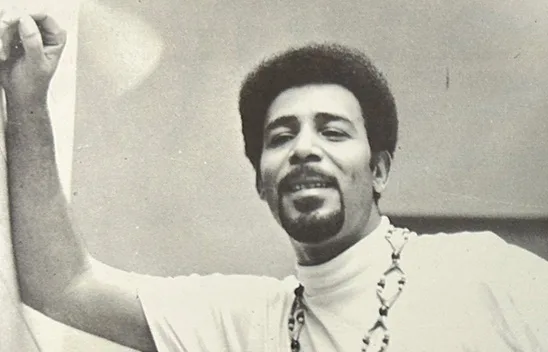
While YOU billed itself as a coalition of ex-gangs, not every member group shared this history. Some groups, like The Conservative Vice Lords, Thugs United Inc., and the Real Great Society, were quick to promote their histories as gangs that had “gone conservative.”[5] Other organizations, however, were simply composed of racialized young people who—in the context of the ascending War on Crime and persistent urban unrest—were seen as harboring an always-imminent threat.
In an early report on YOU, distributed to 2,500 business leaders across the nation, Lelan Sillin, president of Northeast Utilities, and chairman of Urban America Inc, described YOU and its member groups as the “last bridge” available to mend America’s increasingly fragmented society. He also issued a warning: if YOU failed for lack of funding, he wrote, “the burning will begin again. That is a fact, not a threat.”[6] This dual potential to direct the energies of Black and Puerto-Rican urban youth towards self-help and community development, or unleash it onto the streets of US cities, was the source of YOU’s initial power. As YOU member Reverend Jesse James of the Mission City Rebels often reminded potential funders, YOU and its member groups “had the power to lead destructively, and didn’t.”[7] It was the acceptance of this narrative, in the context of growing urban unrest and large-scale federal efforts to combat the “urban crisis,” that enabled YOU and its members to secure the no-strings-attached funding necessary to pursue their central goal: economic and political liberation through community-controlled urban development
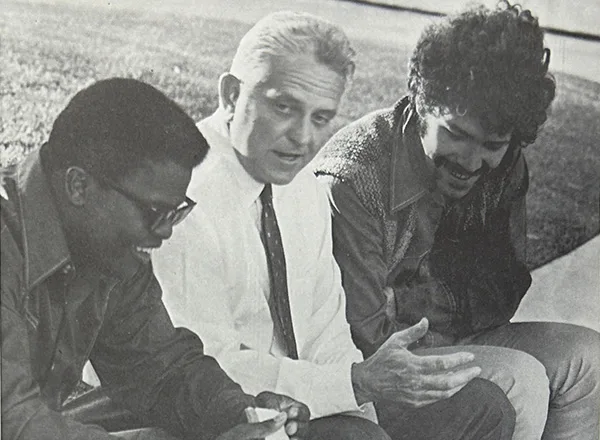
The formation of YOU was sparked by the introduction of McKenzie (Mac) Lewis, a well-connected, wealthy attorney in his mid-fifties, to leaders of the Real Great Society (RGS), during the “long hot summer” of 1967.[8] In the years preceding meeting RGS, Mac had grown enamored with community development programs implemented as part of America’s democratizing mission across the non-aligned world, viewing them as a potential solution to America’s own urban crisis. Such thinking was very much of the moment—by the mid-1950s participatory methods had emerged as the preferred tool of a sprawling, global network of US social scientists, federal administrators, and philanthropic organizations seeking to combat rising liberation movements by enfolding resistive populations into the operations of the administrative state while instilling a pro-capitalist culture of self-reliance.[9]
While working in Santiago, Chile, Mac encountered a model of action that seemed particularly relevant to the US context: youth gangs were reorganizing as vehicles for social change. After returning home, he was put in touch with members of the Real Great Society, a social-action group formed by Angelo Gonzalez and Carlos Garcia in the Lower East Side of Manhattan. Together, RGS and Mac decided to search for other groups engaged in similar action across the US. With the help of Rev. Jesse James, from San Francisco’s Mission City Rebels, Warren Gilmore from Chicago’s Conservative Vice Lords, and New Orleans’s Thugs United Inc., RGS and Mac secured funding to travel the US looking for analogous groups. Over two months, 65 additional groups were found, 50 of whom came together for a meeting in East St. Louis in May of 1968.[10] The outcome of this conference was the formal establishment of YOU, and the identification of urban design as one of its core functions.[11]
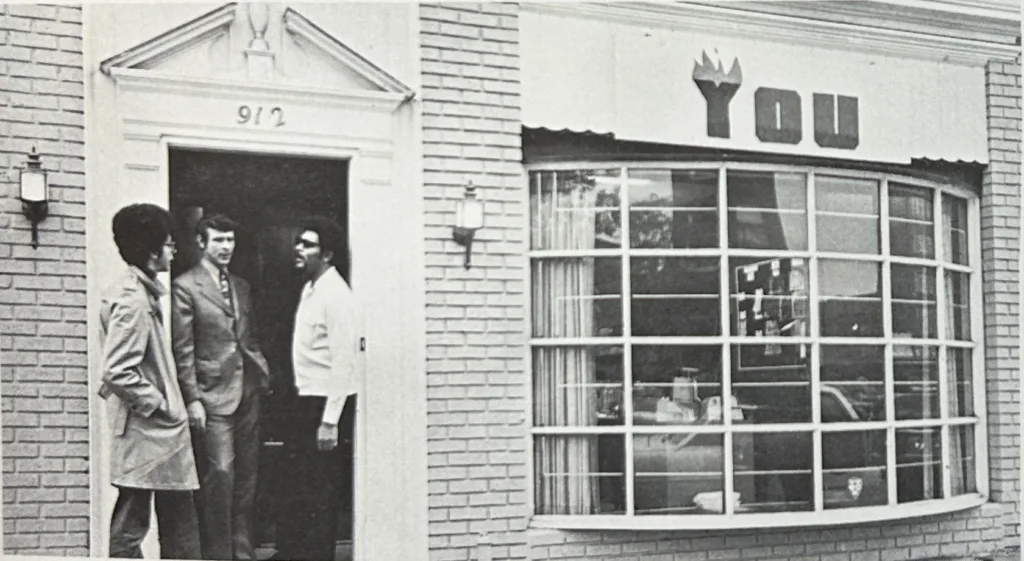
In the run up to the conference, the group had caught the eye of Urban America Inc.. It was through this organization’s Urban Design Center that YOU found itself invited to Urban America’s annual conference in Detroit. Representatives from fourteen leading YOU members attended: Hell’s Black Cobras, The Conservative Vice Lords, Sons of Watts, Watts Urban Workshop, Thugs United, RGS, Mobilization for Youth, Central Brooklyn Neighborhood College, The Young Great Society (YGS), 12th & Oxford Film Makers, Mission Rebels in Actions, Pride Inc., The New Thing, and Wilmington Youth Emergency.[12] Community control, planning, and architecture were the catchwords for a majority of the fourteen groups, with no fewer than eight involved directly in planning and architecture as key aspects of their work.[13] NYC’s Real Great Society, DC’s New Thing, LA’s Watts Urban Workshop, and Philadelphia’s YGS best epitomize the architectural and planning work of YOU.
In New York, RGS/East Harlem expanded into an urban planning studio under the direction of Black and Puerto Rican, Howard University-trained architect Harry Quintana, who had previously worked with the Black Power influence architects 2MJQ.[14] Through early collaborations with Columbia’s School of Architecture and Planning, the group quickly expanded from a townhouse and storefront project into vest pocket parks. At their height, they engaged in numerous redevelopment proposals for both the Lower East Side and East Harlem, at times in collaboration with the Architects Renewal Committee of Harlem, then led by Max Bond.[15] In LA, Eugene Brooks and Ed Goff formed the Watts Urban Workshop as a response to the 1965 Watts “revolt.”[16] The work of the office was split between its short-term “Project Now” programs and its long-range “Ghetto Beautiful” projects.
By 1970, the Workshop had completed 20 small projects including vest-pocket parks for burned-out lots, linear parks, and addiction and teen centers. The group’s longer-range projects took on the full spectrum of urban space, involving mixed-use housing, commercial, and cultural developments, and counter-Model City plans.[17] In DC, The New Thing forwarded a more explicitly Black Power-informed version of this model. Founded in 1967 by Colin Carew, a Howard-trained designer, the group sought to catalyze Black community-owned and -operated institutions in the city. Much of The New Thing’s architectural work dealt with ways to embed needed social services into planned programs (like housing and schools), while devising methods of community-controlled development for the future and imagining a Black architectural aesthetic.[18]
The wedding of social and physical services reached its heights with the YGS in the Mantua neighborhood of Philadelphia. The group was founded by Herman Wrice in 1965, to quell violence in the neighborhood by providing jobs, housing, health services, free childcare, and education. Wrice, however, quickly recognized the need for architecture and planning. Over half of the structures in the neighborhood were dilapidated, and/or vacant. To run its social services, YGS would have to build spaces in which to conduct them. And so, the group initiated an architecture and planning center, a building foundation to manage financing and mortgages, a construction firm, and a series of for-profit enterprises to fund its work. By 1971, the group had rehabilitated over 150 housing units, drawn plans and secured funding for 250 more, embarked on a low-income housing development and model block program, built a drug rehab center and health center, and built and planned seven schools in the neighborhood.[19]
Together, these groups not only shared programmatic similarities, they also shared a commitment to community control and a skepticism towards advocacy planning—a progressive movement that had pushed for community participation in planning decisions but still placed professional planners at its center. When YOU members engaged architecture and planning, they claimed to do so as community members and residents first. This stance is best illustrated by the work of the Watts Urban Workshop. From their studio in the garage of an old lumber yard, the group existed as a “forum for planning and development,” at every step affirming that “one must be part of the community to identify the needs that generate projects.”[20] As with other YOU members, the goal of this work was to involve residents directly in the planning and construction process as a way to cement community ownership of the Workshop. Anyone living in Watts was welcome to join and share in collective management.
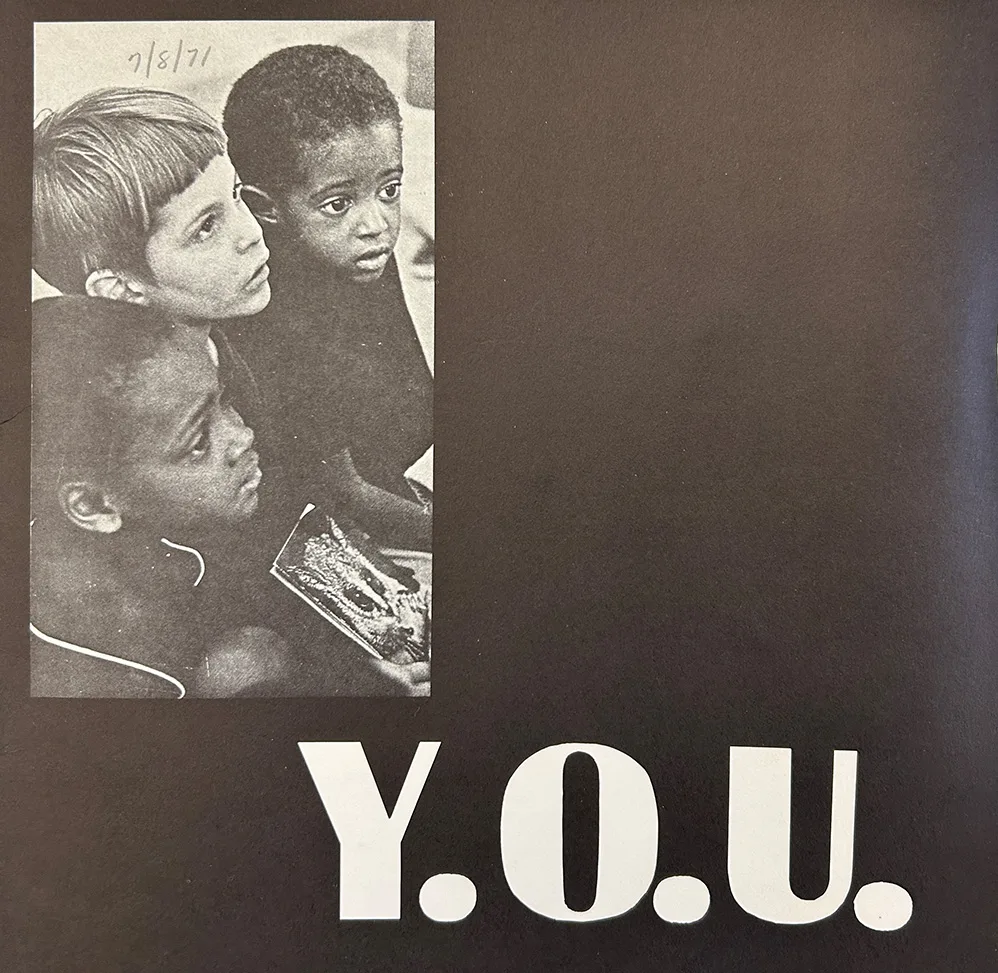
When questioned on their relation to the emerging advocacy planning movement, YOU members were united in their critique. Advocacy planning was dependent on a need for translation, on someone (usually a well-meaning outsider) making the claims of an oppressed community legible to systems of power. Advocacy planning’s animating premise was straightforward: planners should act as advocates for those systematically excluded from decisions that shaped their neighborhoods, giving voice to communities long ignored by the institutions that governed their lives. Secure a seat at the table, the logic ran, and the system would work as promised. What this framework could not account for was the possibility that the table itself was the problem—without power, communities could easily be heard and then ignored. This form of participation only served to reify the structures YOU members sought to dismantle—and worse, in the eyes of supporters and critics alike, it produced a demobilizing effect strikingly similar to what community development programs had wrought across the non-aligned world. Residents who had previously built coalitions and engaged in direct action now found themselves absorbed in endless meetings over projects that went nowhere, enfolded into the administrative state rather than mobilized against it.[21]
For figures like Tunney Lee, who was associated with DC’s New Thing, this form of planning had no place in a liberated world, and those attempting to institutionalize it without recognizing this fact were simply upholding white supremacist systems. Advocacy planning, according to most YOU groups, needed to be “phased out in favor of community control,” a move that would, in the eyes of many members, necessarily require the loss of professional identities.[22] Colin Carew had a term for this collective, liberation-oriented and citizen-controlled form of urban development: “Black Architectures.”[23]
Working together through YOU, each group sought to foment a paradigm change in urban development. The main tool for achieving this was YOU’s flagship project: the Inventory Systems Program. In an effort to connect the knowledge and resources of member groups, YOU created an index of all members, their sources of funding and programs, and added to this a related list of corporations, government offices, and foundations with relevant skills and a stated interest in providing technical and financial support. YOU members in need of assistance would contact the national office, who would search the database and arrange a meeting between the contact and the group requesting aid. By 1971, the cross-indexed inventory held information on 350 groups, involving an estimated 250,000 youth from across the country, 24 government agencies, 482 foundations, and 208 corporations.[24]
In its early years of operation, YOU had garnered widespread support from federal administrators and philanthropic organizations, but this support was short-lived, as a backlash against the gains of the Civil Rights movement began to take hold. The War on Poverty, President Johnson’s 1964 legislative initiative that dramatically extended federal funding and participatory programs into dispossessed communities, was premised on the belief that once skills in self-management were acquired, those stuck in a “culture of poverty” would rejoin the prevailing economic order through a newly acquired sense of civic responsibility.[25] While YOU and its member groups had been ideal subjects for those working within the War on Poverty, by the late 1960s, the Johnson administration had begun to retreat from its belief in the ameliorative effects of participatory poverty programs, coming instead to view Black activists seeking self-determination and community control as protagonists of urban unrest. However, as Elizabeth Hinton has written, the War on Poverty was never alone in its work. One year after the legislation passed, it was followed by the War on Crime, which expanded federal funding for law enforcement and laid the groundwork for the mass incarceration of racialized communities.[26] For many conservative members of Congress, the ex-gang youth of YOU were beyond the pale—incarceration, not remediation, was the only viable solution.
In many cities, YOU member groups had stepped in to fill the void left by a negligent state, quickly building power and support through the provision of services ranging from education to healthcare, housing, and public safety. This was perceived as a direct threat by mayors such as Richard J. Daley in Chicago, who responded with force, calling on the FBI and the McClellan committee to shut the movement down.[27] Within a handful of years, investigations had spread to include a number of YOU member groups, and YOU itself was placed under FBI surveillance.
Stuck between the promise of the War on Poverty and the threat of the War on Crime, YOU and its members struggled for funding and support in a context of increasing surveillance and incarceration, and by 1973, the organization had closed shop.[28] The end of YOU did not, however, mean the end of its member groups. While groups like Thugs United Inc. and the Conservative Vice Lords were swept up in the War on Crime, other YOU members rose to positions of power. Marion Barry, of DC’s Pride Inc., went on to become mayor of the city. Tunney Lee, who worked with DC’s New Thing, returned to Boston, becoming chairman of MIT’s department of Planning and Urban Studies. After a brief stint teaching studios at Yale, where he was involved with the Black Workshop, Colin Carew’s career took him to the heights of Hollywood, where he went on to produce the smash-hit sitcom Martin. Eugene Brooks and Ed Goff of the Watts Urban Workshop continued to practice, and Herman Wrice from Philadelphia’s Young Great Society continued his group’s work for years. Through YOU, these figures sought to collectively enact an alternative future for planning and architecture. And while some of the names mentioned are beginning to garner the attention they deserve, it remains important to understand them and their groups not as individual experiments or case studies, but as a network of Black and Puerto Rican practitioners who sought to collectively challenge the design and planning establishment, and push it towards a new, liberatory paradigm of practice.
[1] “Head On, Youth Speaks Out,” Architectural Forum, July/August 1968, 110.
[2] Mission Rebels in Action, Information Pamphlet, Box 103, Folder: Annual Meeting June 5–7 1968, Lelan Flor Sillin Fonds, Hoover Institution Archives, Stanford University, Stanford, California (hereafter Sillin, HIA), 2.
[3] “Statement Issued by YOU at Press Conference, May 20, 1968,” 99021, Box 103, Folder Urban America Annual Meeting June 5–7 1968, Sillin, HIA, 6.
[4] See “Youth Organizations United National Program Proposal,” March 1969, Box 100, Folder Urban America Youth Organizations United April 1969, Sillin, HIA; “Background Information Youth Organizations United,” May 12, 1968, Box 102, Folder Urban America Youth Organizations United 1968, Sillin, HIA.
[5] Lelan F. Sillin Jr., “What Is Our Answer to Angelo Gonzalez?” Box 96, Folder Youth Organizations United Correspondence Pertaining to 1969, Sillin, HIA; “Effort by Street Gangs to Help Cities Ready But for $750,000,” The Boston Globe, May 20, 1969, Box 100, Folder Urban America Youth Organizations United May 1969, Sillin, HIA.
[6] Sillin Jr., “What Is Our Answer to Angelo Gonzalez?”
[7] Lisa Hirsk, “Meeting: ‘It’s Been a Long Chain from a Gun to a Briefcase,’” City, July–August 1968, 17, Box 103, Folder Urban America Annual Meeting June 5–7 1968, Sillin, HIA, 21-22.
[8] Richard W. Poston, The Gang and the Establishment (Harper & Row, 1971), 95-96.
[9] This history is explored in depth in my dissertation, see also, Daniel Immerwahr, thinking small: The United States and the Lure of Community Development (Cambridge: Harvard University Press, 2015). Nick Cullather. “‘The Target Is the People’: Representations of the Village in Modernization and U.S. National Security Doctrine,” Cultural Politics Vol 2, (2006): 29-48. Alyosha Goldstein, Poverty in Common: The Politics of Community Action during the American Century (Durham: Duke University Press, 2012). See also an early book on international community development by Richard Poston, who would go on to work with the Real Great Society and YOU: Richard W. Poston, Democracy Speaks Many Tongues: Community Development Around the World (Harper & Row, 1962).
[10] “Statement Issued,” Sillin, HIA.
[11] Richard W. Poston, The Gang and the Establishment (Harper & Row, 1971), 95-143.
[12] “Delegate Roster,” 1968, Box 103, Folder Urban America Annual Meeting June 5-7 1968, Sillin, HIA.
[13] Lelan F. Sillin Jr., Memorandum re Annual Meeting of Urban America, June 5 and 6, 1968, Box 103, Folder Urban America Annual Meeting June 5–7 1968, Sillin, HIA.
[14] Harry Quintana Resume, by Harry Quintana, 4215, Box 7, PEO—to File #1 folder, Walter Thabit papers, Division of Rare and Manuscript Collections, Carl A. Kroch Library, Cornell University, Ithaca, New York.
[15] Letter to Lelan Sillin, from Willie Vazquez, August 6, 1970, Box 99, Urban America Youth Organizations United 1970, Lelan Flor Sillin fonds, Hoover Institution Archives, Stanford University, Stanford, California. Aponte-Parés, Luis. 1998. “Lessons from El Barrio—the East Harlem real great society/urban planning studio: A Puerto Rican chapter in the fight for urban self-determination. New Political Science, 20, 4: 399-420.
[16] Members of the Watts Urban Workshop were concerned with the misleading ways in which the community had been represented following the 1965 uprising. While the event was named after Watts, studies by the Urban Workshop showed that only 10 percent of what occurred took place in the neighborhood. As a result, they were attentive to the many ways the rebellion had come to be described by residents: a “revolt”, “manifesto”, and even a “demolition”. Berkeley, Ellen Perry. “Workshop in Watts.” Architectural Forum, January/February 1969.
[17] The Watts Urban Workshop information packet, 99021, Box 103, Urban America Annual Meeting June 5-7 1968 Folder, Lelan Flor Sillin fonds, Hoover Institution Archives, Stanford University, Stanford, California (hereafter cited as Watts Urban Workshop packet, Lelan Flor Sillin fonds).
[18] The New Thing information packet, 99021, Box 103, Urban America Annual Meeting June 5-7 1968 Folder, Lelan Flor Sillin fonds, Hoover Institution Archives, Stanford University, Stanford, California (hereafter cited as The New Thing packet, Lelan Flor Sillin fonds). Ellen Perry Berkeley, “A New Thing in Washington,” Architectural Forum, October 1968.
[19] Young Great Society information packet, 99021, Box 103, Urban America Annual Meeting June 5-7 1968 Folder, Lelan Flor Sillin fonds, Hoover Institution Archives, Stanford University, Stanford, California. Judson B. Brown. “The YGS Architecture and Planning Center,” in Eleven Views: Collaborative Design in Community Development, ed. Jacob Pearce (Raleigh: Student Publication of the School of Design, North Carolina State University, 1971).
[20] Watts Urban Workshop packet, Lelan Flor Sillin fonds. Berkeley, Ellen Perry. “Workshop in Watts.” Architectural Forum, January/February 1969.
[21] See Journal of the American Institute of Planners 34, no. 2 (March 1968); Journal of the American Institute of Planners 35, no. 4 (July 1969); Journal of the American Institute of Planners 40, no. 1 (January 1974); Social Policy (July/August 1970), Folder “AIP Journal,” Box 1, Davidoff, CUL.
[22] Ellen Perry Berkeley, “A New Thing in Washington,” Architectural Forum, October 1968. Judson B. Brown. “The YGS Architecture and Planning Center,” in Eleven Views: Collaborative Design in Community Development, ed. Jacob Pearce (Raleigh: Student Publication of the School of Design, North Carolina State University, 1971).
[23] Berkeley, “A New Thing”
[24] National Urban League, “Nine-Month Report on YOU,” August 12, 1971, Box 101, Folder: Urban America Miscellaneous Youth Project Documents 1971, Sillin, HIA
[25] Oscar Lewis, Five Families: Mexican Case Studies in the Culture of Poverty (Basic Books, 1959), 2. For a sharp analysis of the Culture of Poverty concept, see O’Connor, Poverty Subject, 99-123.
[26] Elizabeth Hinton, From the War on Poverty to the War on Crime: The Making of Mass Incarceration in America (Cambridge: Harvard University Press, 2016).
[27] Alyosha Goldstein, Poverty in Common: The Politics of Community Action during the American Century (Durham: Duke University Press, 2012).
[28] Letter to George W. Griffin, July 19, 1973, Box 101, Folder: Youth Organizations United 1971–1973, Sillin, HIA.