Games as Design Research
How faculty, students, and practitioners use play to generate knowledge, engage communities, and rethink urban design
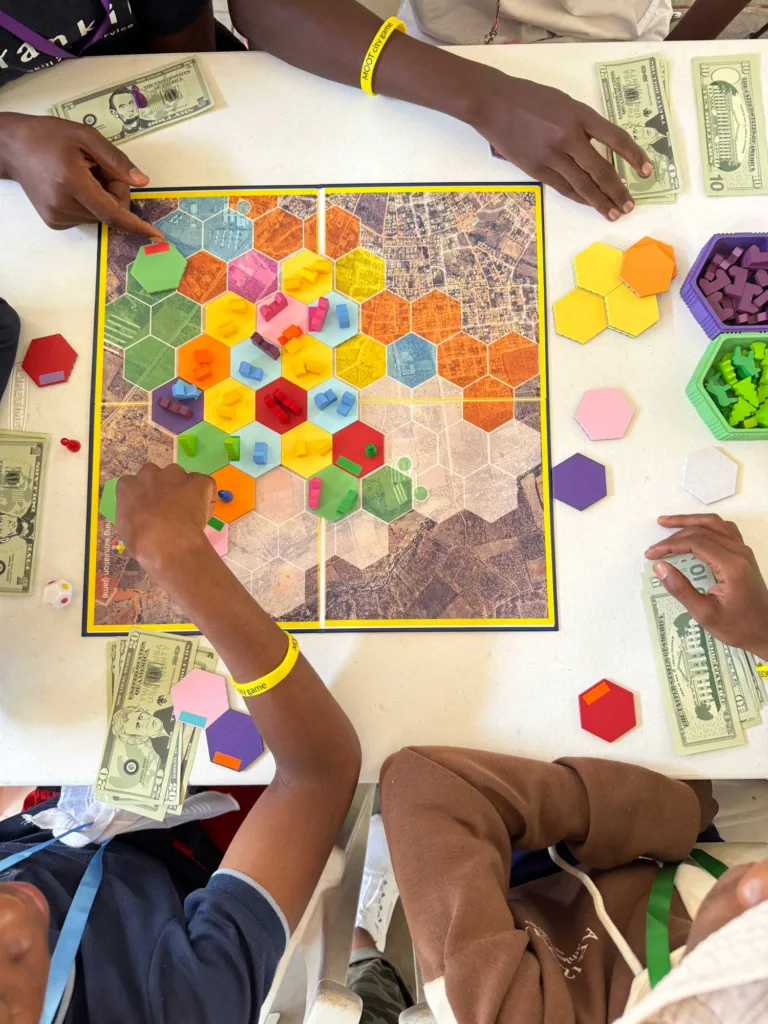
A group of strangers gathers around a colorful board game in a Botswanan mall. Within minutes, they are debating affordable housing, green space, and economic development. One player laughs and accuses another of being “an elitist” because they placed high-income housing far from low-income neighborhoods. Others argue over where to locate a transit hub. No one is offended. No one storms out. They are simply playing MOOT City, an urban planning game developed by Harvard Graduate School of Design (GSD) alumna Gorata Kgafela.
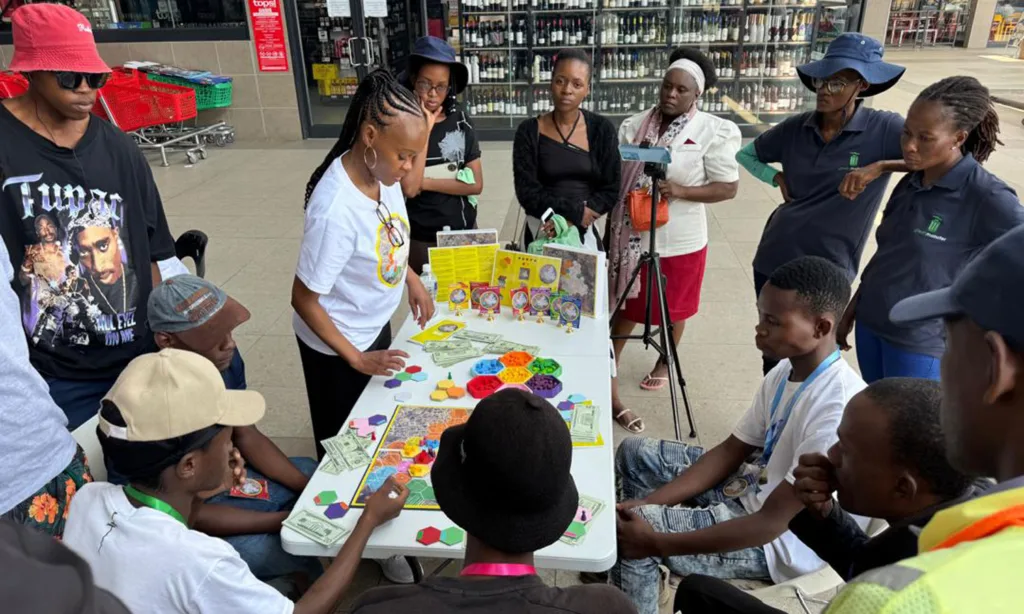
Yet the questions the players wrestle with are the same ones that confront planners, architects, public officials, developers, and community members every day.
Games offer something conventional design media rarely can: rather than merely represent buildings, neighborhoods, or systems, they invite people to inhabit them. Players negotiate competing priorities, test ideas, confront tradeoffs, and experience the consequences of their decisions. In the process, abstract concepts become tangible, and participation replaces observation.
Across the Harvard GSD, faculty and students are using games to explore the complex forces that shape cities—and to extend design conversations beyond Gund Hall. Their projects engage communities in planning, preserve local histories, and create new forms of civic participation, while practitioners use similar methods to address issues such as climate adaptation, development, and public decision-making. Together, these efforts signal a broader shift toward games as a medium of inquiry—one that invites wider public involvement while revealing the social, political, and economic networks that structure the built environment.
Why Games? Why Now?
This evolving understanding of games is reshaping design education. In spring 2026, Rem Koolhaas and Stephan Petermann led the MDes Open Project course “Project on the City: Rome, Moscow, Lagos,” encouraging students to investigate Rome through a range of media. While books and exhibitions have long been the dominant outputs of design research—including Koolhaas’s earlier Project on the City investigations—this latest iteration deliberately tested alternative formats. “While we like our traditional research outputs, there are . . . more options on the table to engage with audiences in other ways,” Petermann explains. “It was part of the course’s design to actively explore other output media.”
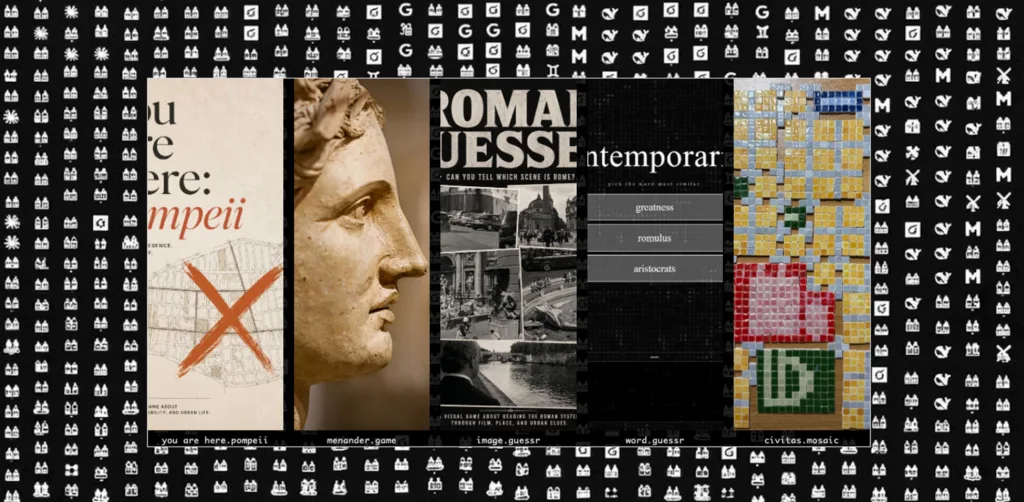
The course’s final exhibition took the form of an arcade in two senses: amidst an abstracted colonnade, students presented an array of games that examined ancient Rome. Xiya Jiang (MDes ’26) created Roman Mosaic, a board game in which players assemble fragments of Roman cities into new urban mosaics. Other projects transformed historical research into interactive digital play. For example, You Are Here Pompeii, by VN Chen (MDes ’26), invites players to locate themselves on an ancient map and explore how visibility and shared resources collectively sustain urban life; and Roman Guesser, by Emily Zhai (MDes ’26), uses film images to teach players to identify Roman urban systems through spatial cues such as street texture, public space, and visual repetition.
While Petermann emphasizes games as a medium for design research, Daniel D’Oca—founding principal of Interboro Partners and a former assistant professor in practice of urban planning at the GSD—sees them as a way of generating design knowledge. Since 2011, the first assignment in his studio courses has been for students to design a tabletop game. “The goal isn’t to invent the next Settlers of Catan,” he explains, referring to a popular strategy game, “but rather to help students understand how urban development works. It turns out that making a game about, say, building housing, is an incredibly effective way to learn about building housing.”
For D’Oca, urban change already resembles a board game. Developers, landlords, tenants, and public agencies all operate with different resources, constraints, and forms of power. Designing a game asks students to model those interactions, revealing cities as dynamic systems rather than static physical forms.
Likening urban development to a game may call to mind titles such as SimCity—open-ended video games in which players construct cities to simulate urban life. Despite this superficial resemblance, however, such games differ fundamentally from games developed as design tools. The distinction lies in their purpose. Whether they take the form of board games, card games, or video games, these design tools are created first and foremost to support research and learning about real-world forces. They may also be entertaining, but that is ultimately a byproduct rather than their primary objective.
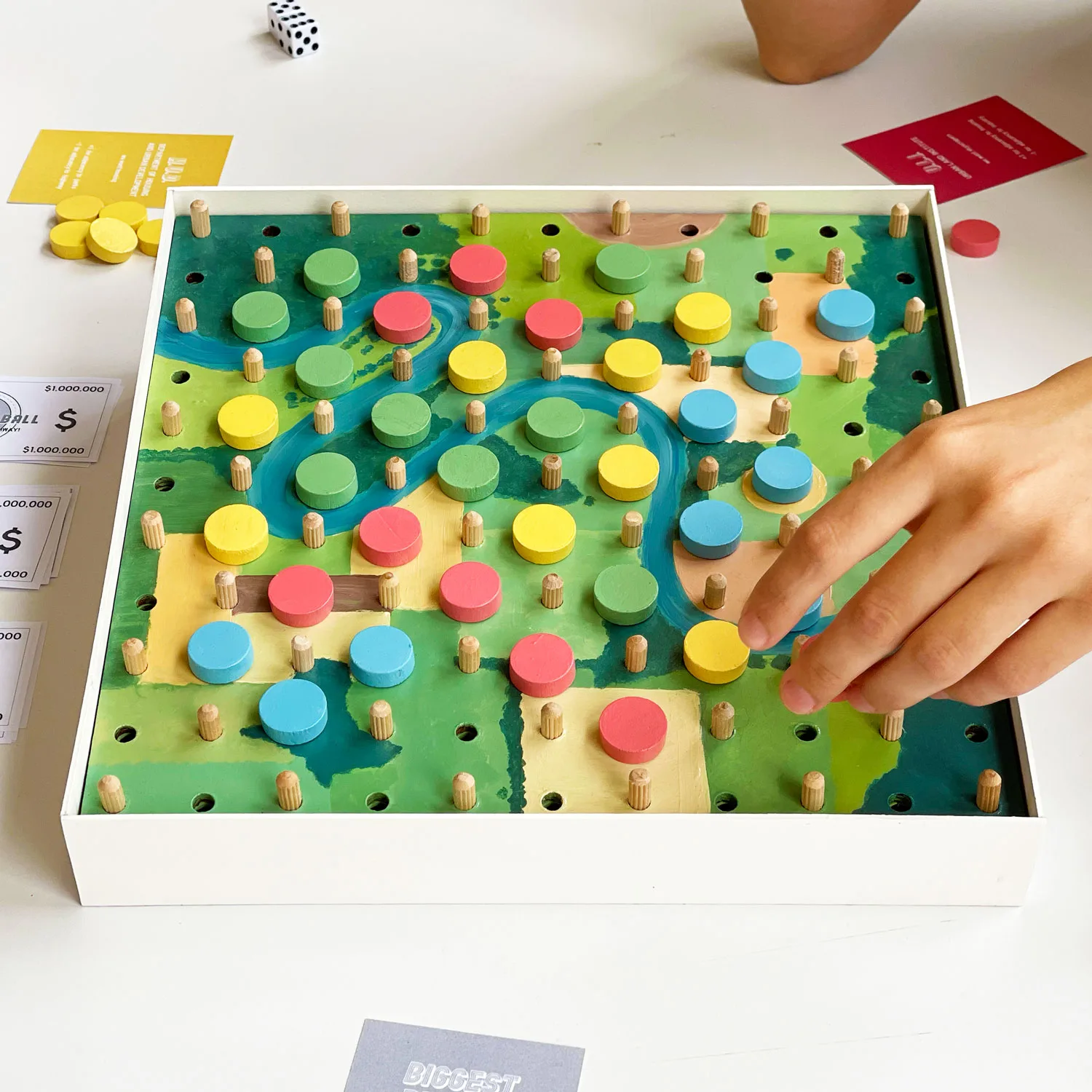
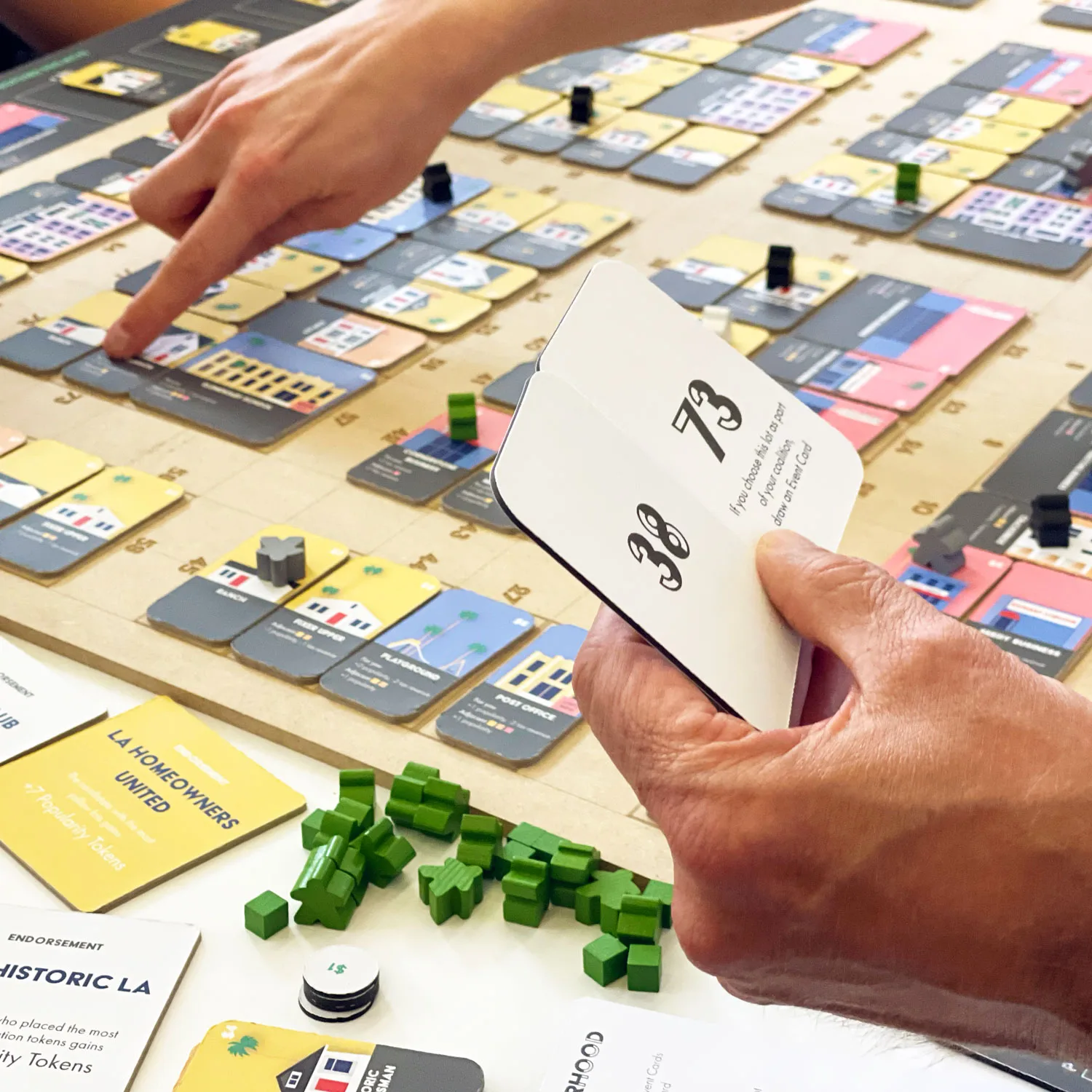
Games developed in Daniel D'Oca's design studios at the Harvard GSD.
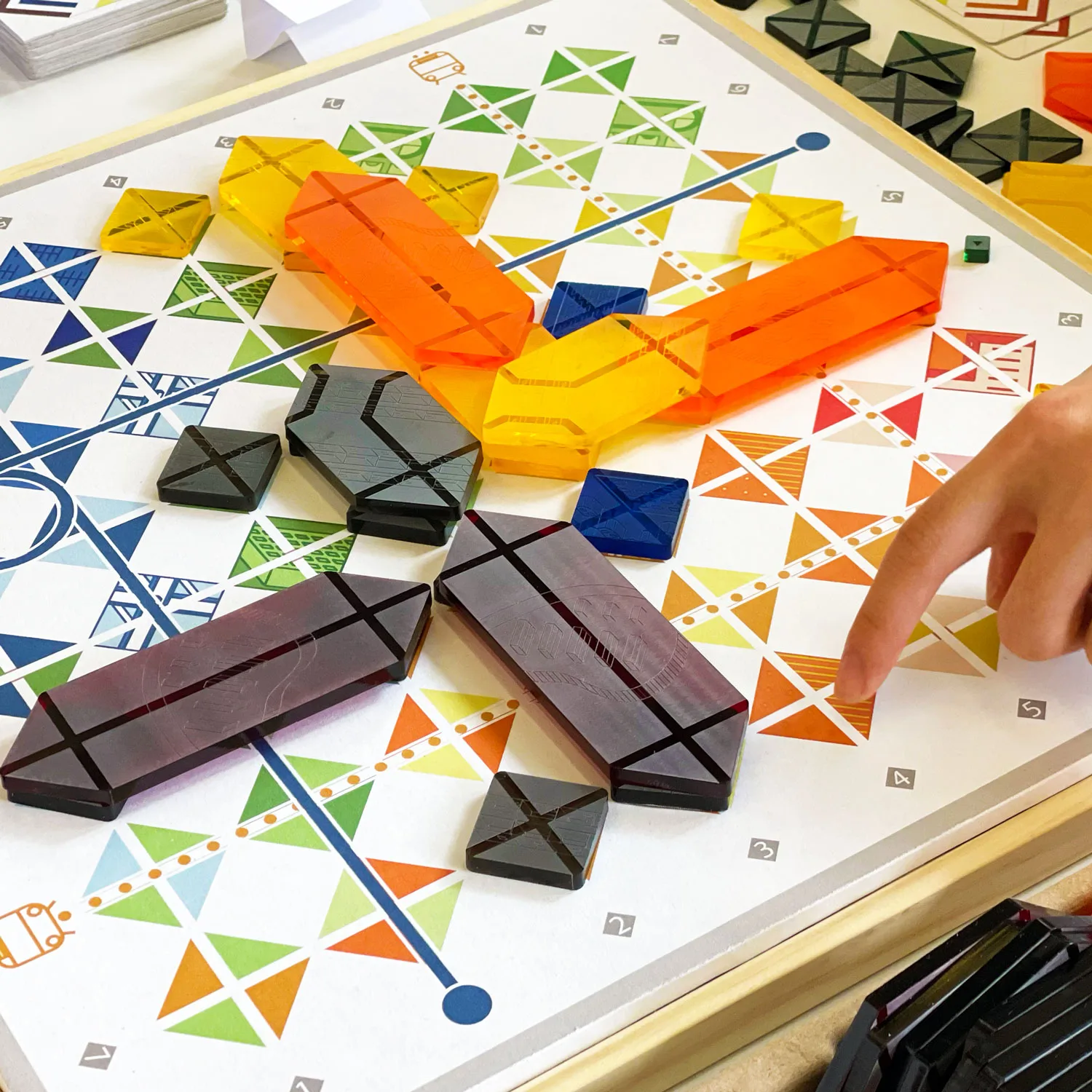
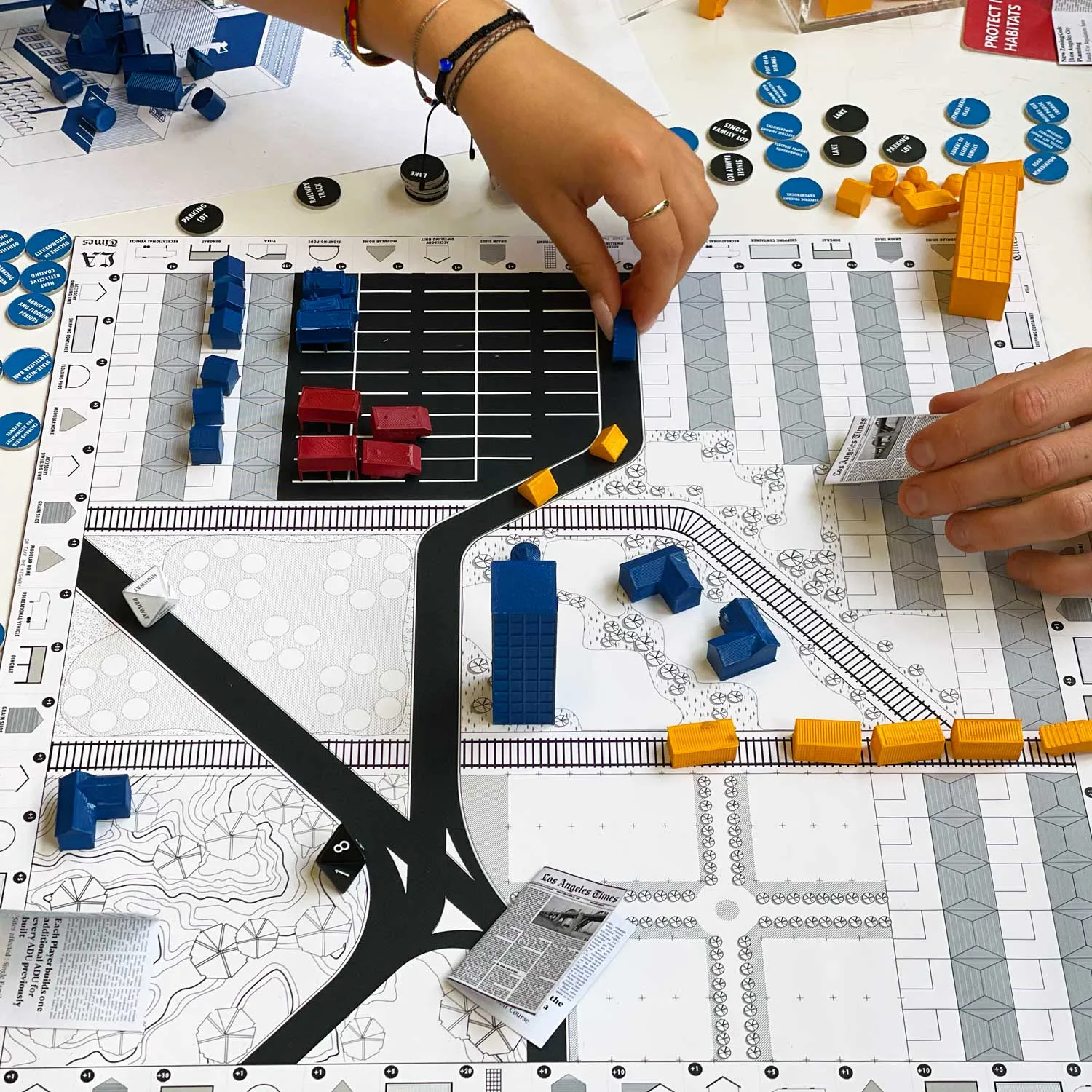
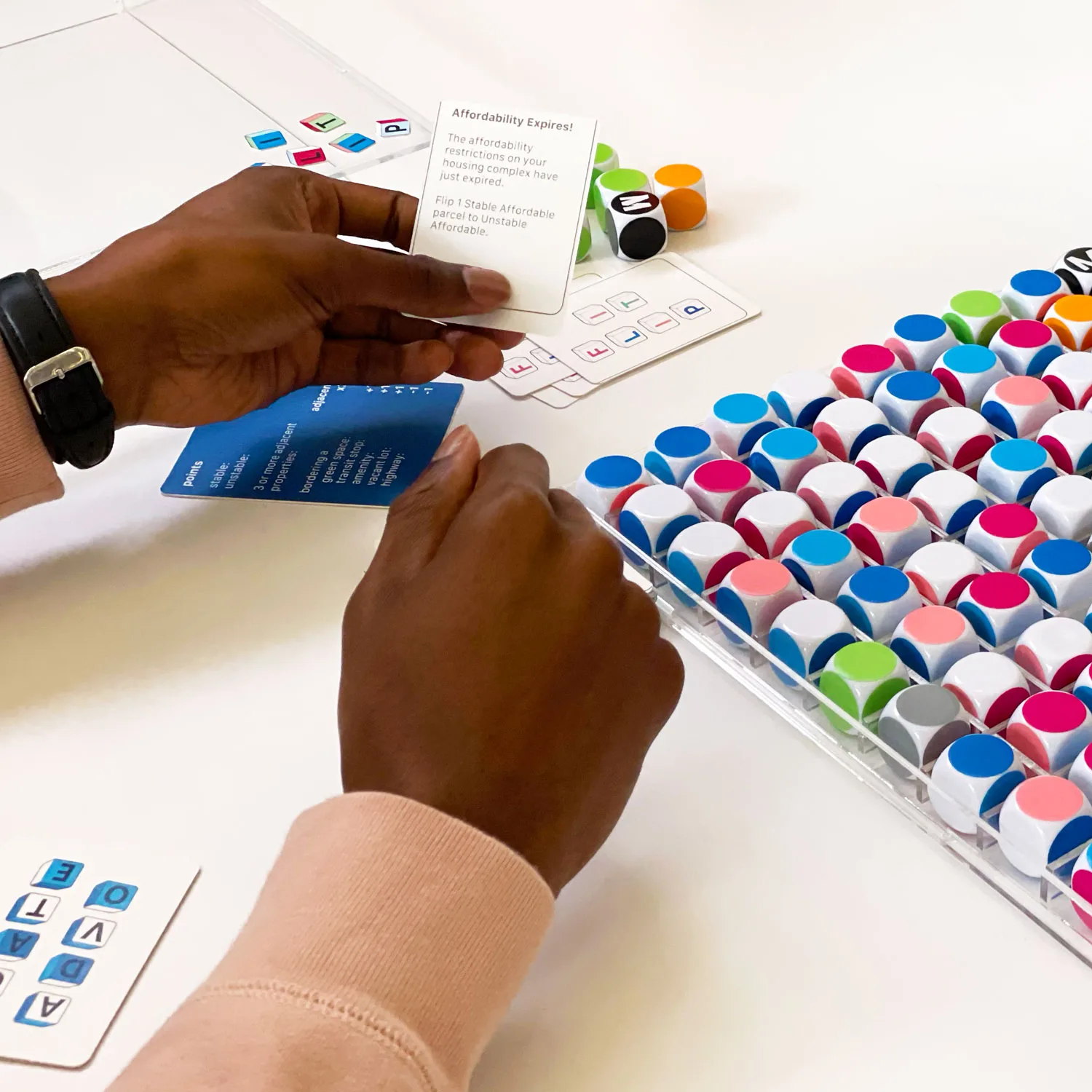
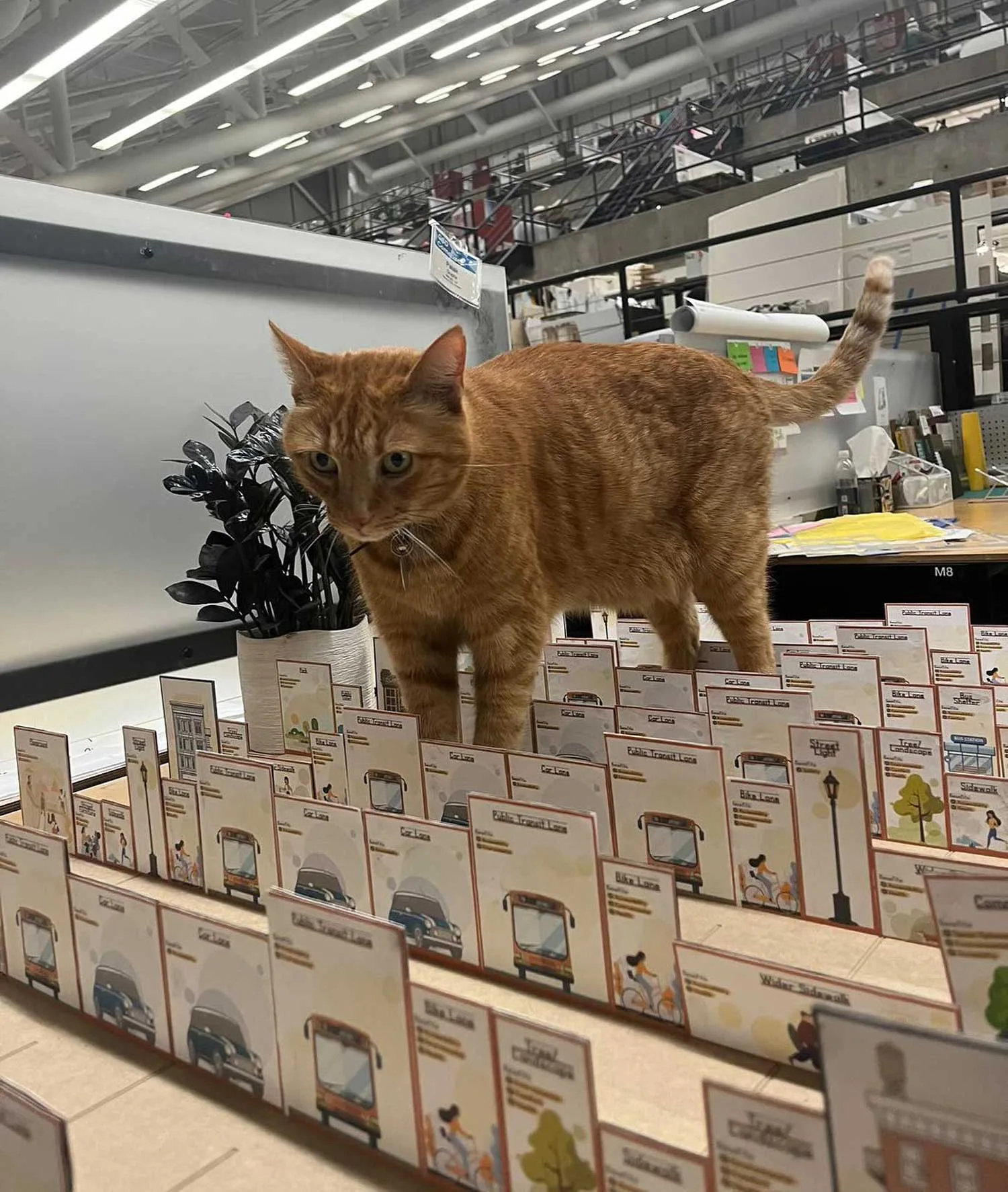
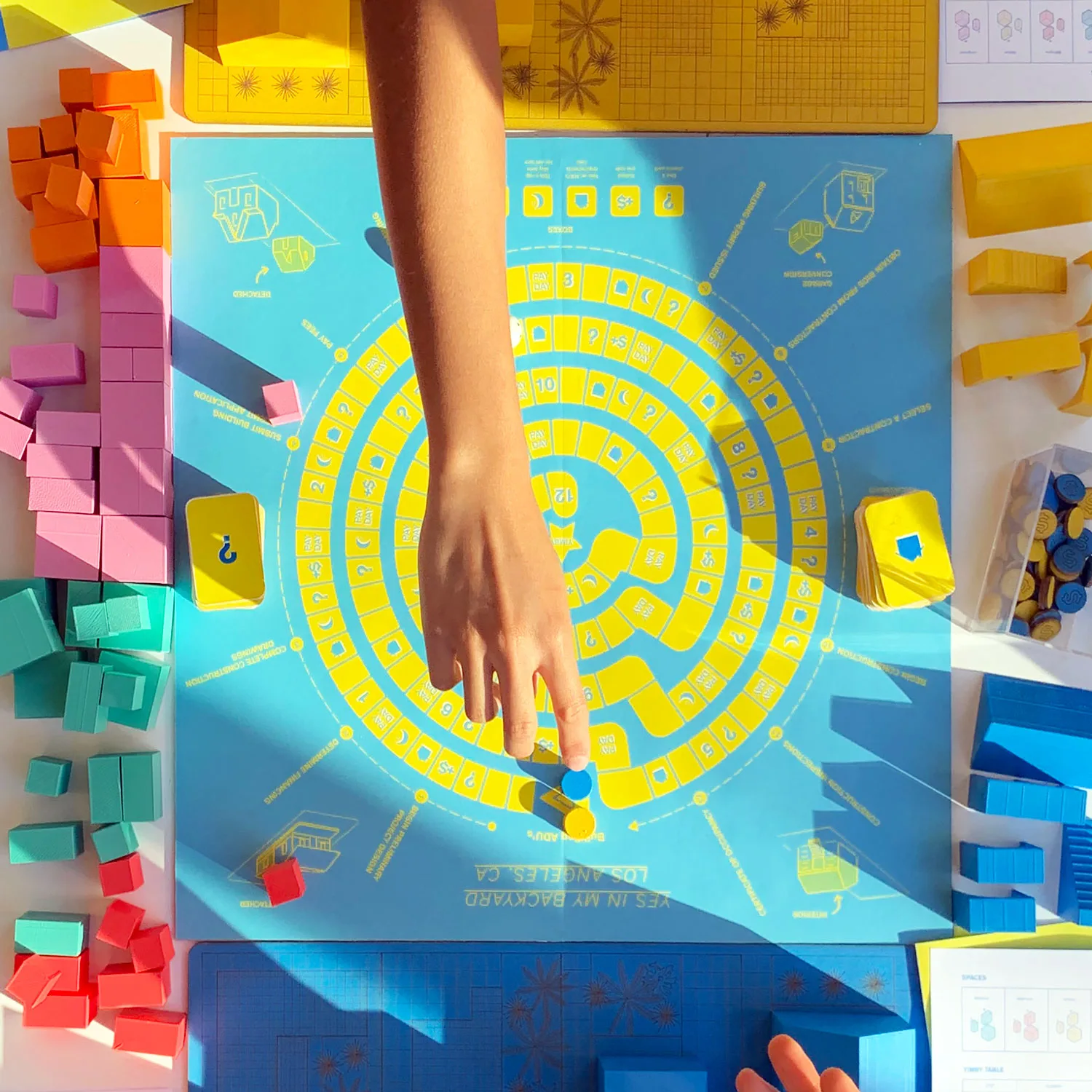
Beyond facilitating an understanding of how cities work, creating and engaging with these design tools cultivates a more collaborative studio culture, giving students a shared language for exploring conflict, uncertainty, and the assumptions embedded in urban systems. It creates room, D’Oca argues, for “humor, irony, and critique. . . expos[ing] absurdities in zoning, financing, permitting, or public process by exaggerating them slightly. That playfulness is often what allows students to engage difficult or politically charged topics with more openness and curiosity.”
What begins in the classroom does not stay there. As a growing number of students have discovered, the same qualities that make games powerful learning tools also make them effective methods of research and community engagement.
Games as Research and Engagement
If faculty are using games to teach systems thinking, students are taking them beyond the studio, using them as tools for research and public engagement. The opening MOOT City scene took place during Kgafela’s research in Botswana undertaken for her doctor of design (DDes ’25) degree at the GSD. Inspired by the country’s longstanding tradition of collective decision-making through the kgotla system, she developed MOOT City to lower barriers to public involvement in urban planning processes. Kgafela tested the game in villages outside Gaborone, conducting sessions in three settings—a traditional kgotla (open-air community forum), a community hall, and a shopping mall—to explore how each shaped civic participation.
“The game gave residents a platform where they engaged . . . with passion and excitement, but under a very low-stakes environment,” Kgafela says. The relaxed setting also helped her better understand participants’ needs and priorities. “In a more informal context, you’re actually able to see how people think and what they would prefer.”
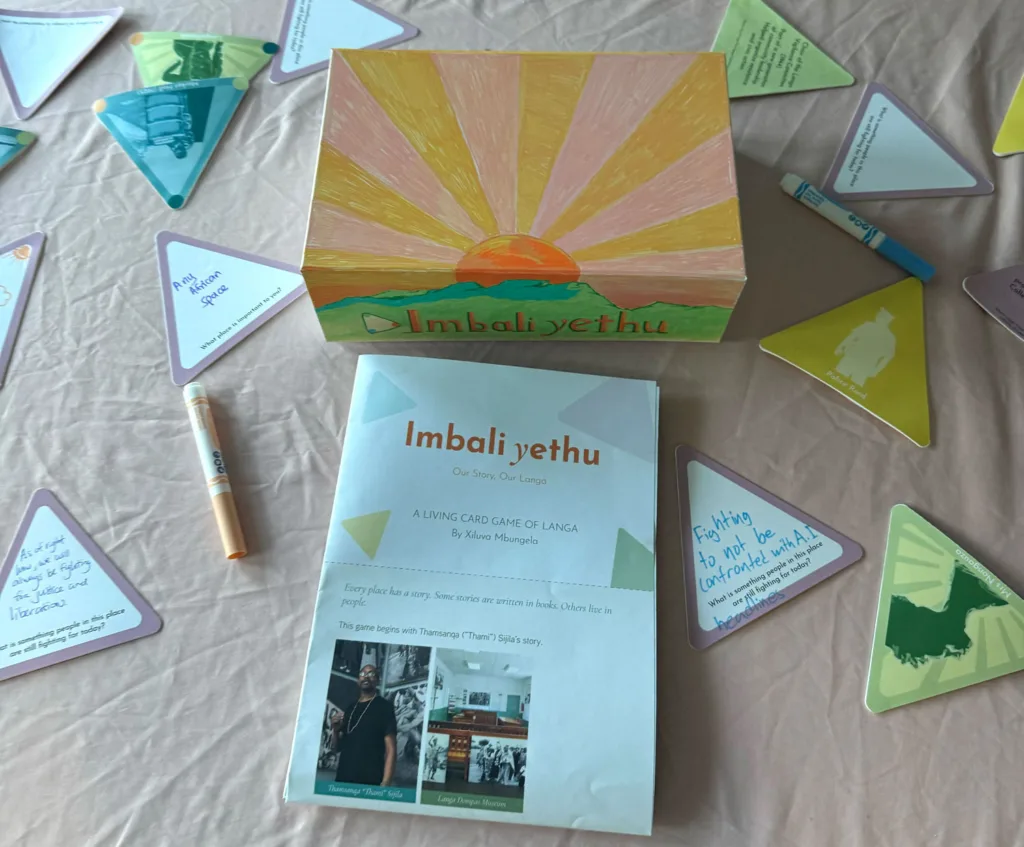
For recent master in design studies graduate Xiluva Mbungela (MDes ’26), games offered a different type of design opportunity. Working with community organizers in Langa, Cape Town, she wanted to create a way for young people to learn the local histories of apartheid and resistance, which are largely absent from school curricula, while strengthening connections across generations. She and her collaborators considered books and websites before concluding that play offered the most compelling option. “A game felt like the most participatory way to do this,” she recalls. “It also felt like the game could become much more than just a game.”
Mbungela’s card game, Imbali Yethu—a Xhosa phrase that translates to “Our Story”—connects people, places, and events drawn from community-authored timelines and oral histories. Blank cards invite players to contribute their own memories, weaving those experiences into an evolving historical network. Like MOOT City, the game becomes less a vehicle for transmitting information than a framework for generating new relationships between people and places.
Although Kgafela and Mbungela address different questions—one about civic decision-making, the other about historical memory—their projects share a common insight. For both, the game is a way to communicate research as well as produce it. Play becomes a method for uncovering knowledge, surfacing local priorities, and creating connections among participants.
Games in Practice
At Interboro Partners, founding principal D’Oca and his colleagues use games to help communities navigate complex planning decisions. “One of the problems with conventional public engagement is that it often amounts to simply asking people what they want,” says D’Oca. Games instead allow participants “to test scenarios, negotiate priorities, and experience the consequences of different choices”—a far more dynamic process than viewing a PowerPoint presentation or completing a survey.
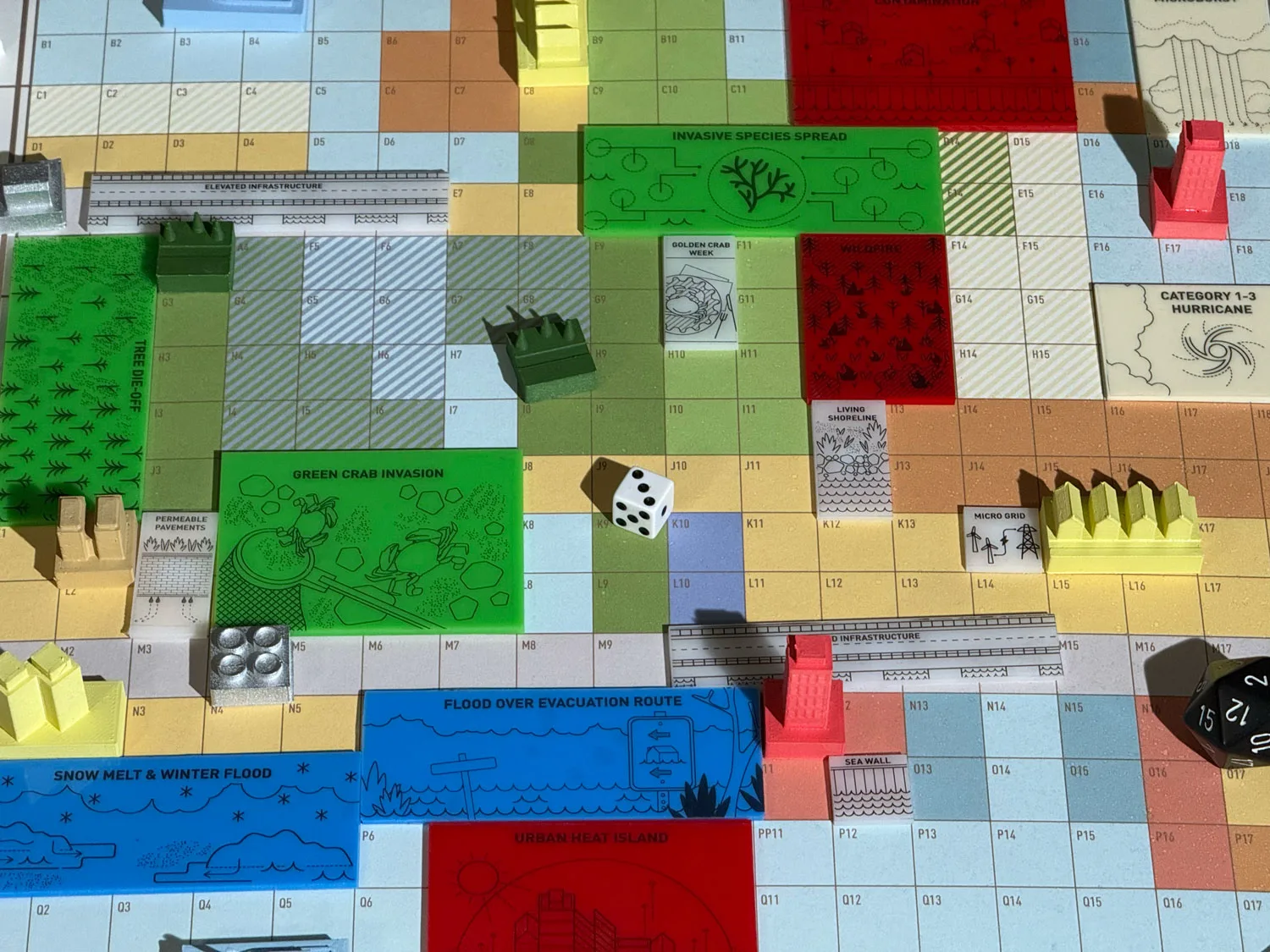
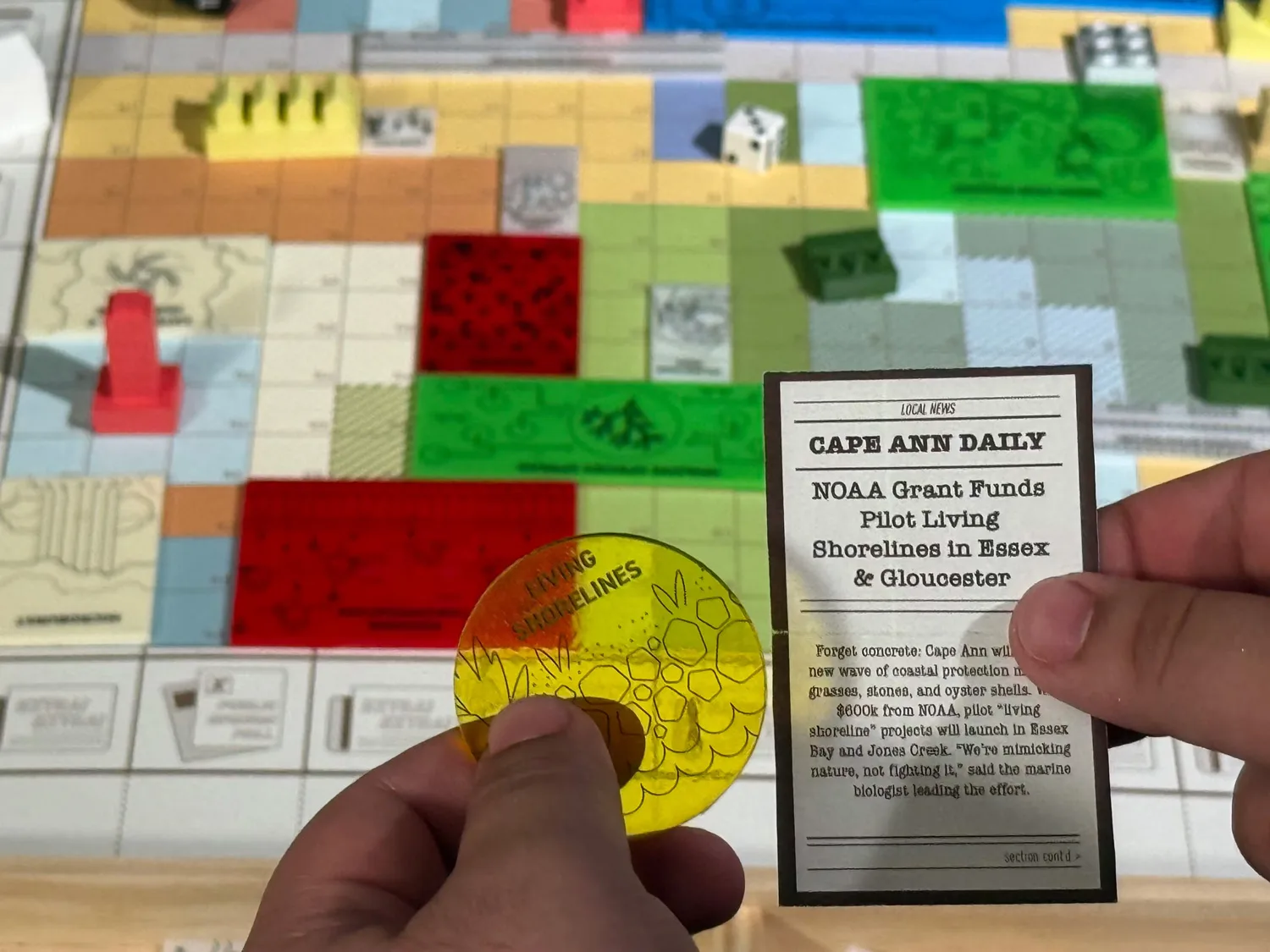
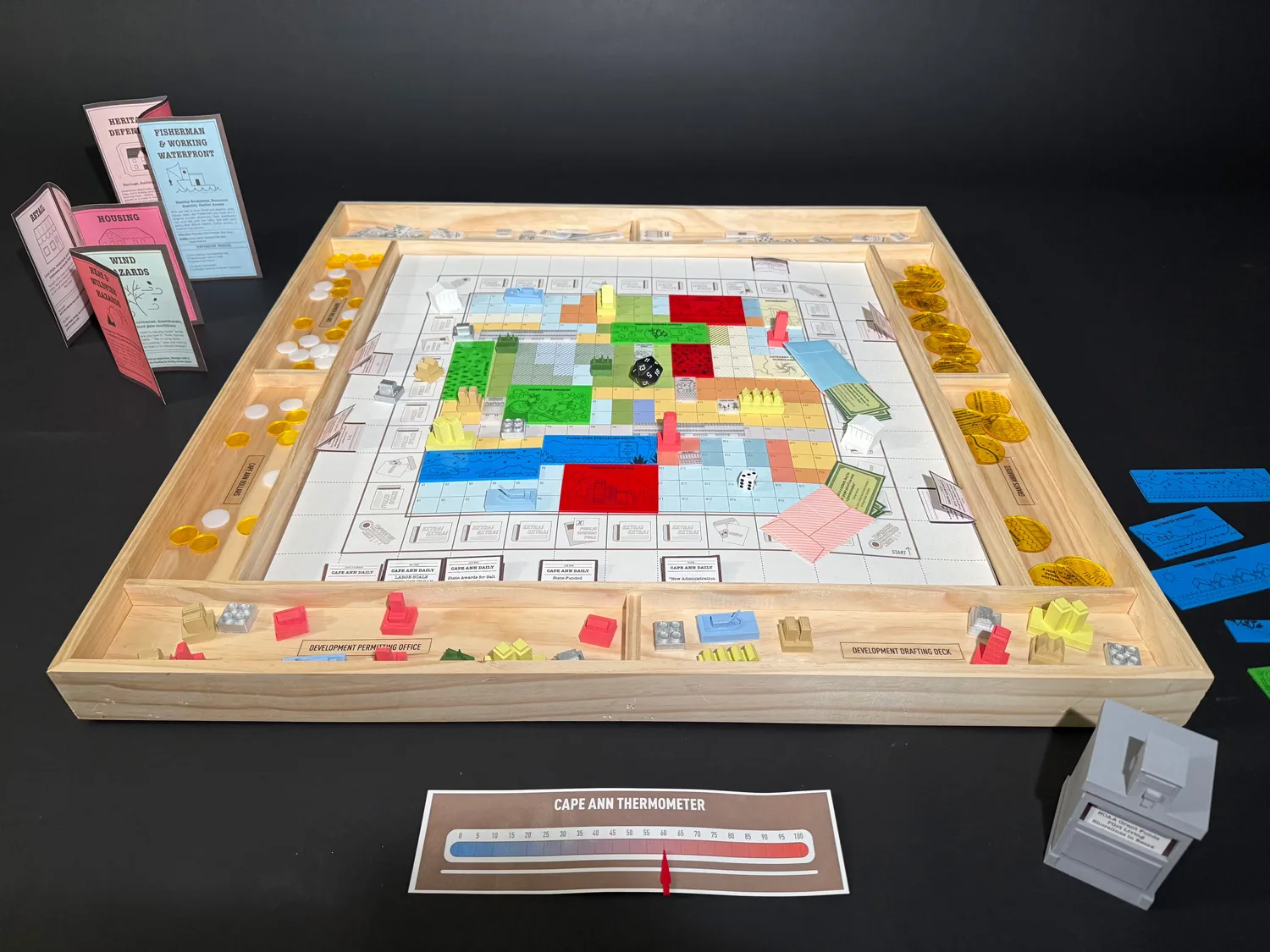
One recent example of an Interboro-produced game, Temperature Check, casts players as the mayor of Cape Ann, Massachusetts, a real-life coastal community confronting sea-level rise, extreme heat, development pressure, and budget constraints. With each turn, new challenges emerge—from flash floods and grant opportunities to developers’ proposals and federal policy shifts—forcing players to balance competing interests while “managing the ‘temperature’” of stakeholder groups, economic sectors, and environmental systems. Participants learn that there are no perfect solutions, only tradeoffs. And for D’Oca, that is precisely the point.
Whether in a GSD studio, a village outside Gaborone, a neighborhood in Cape Town, or a small town in the American Northeast, these projects point toward the same conclusion. Games are more than tools for teaching, engagement, or communication; they produce design knowledge. Their power lies not in the worlds they depict but in the thinking they make possible.