The Art of Building Affection
Jill Medvedow, former director of Boston’s Institute of Contemporary Art, on teaching students to build a public-facing vision for culture.
When Jill Medvedow, who served as the Ellen Matilda Poss Director of Boston’s Institute of Contemporary Art (ICA) for more than 25 years, stepped down last year, she didn’t foresee teaching as her next step. But, for someone who fostered a love of contemporary art in Boston—a place previously known for more traditional institutions like the Isabella Stewart Gardner Museum and the Museum of Fine Arts—and built the ICA’s first permanent physical home and a robust audience, it makes perfect sense. This semester, in her Graduate School of Design (GSD) course, “Building a Vision: Leadership, Curatorial, and Design Practices for Public Places,” she draws from a lifetime in museums and cultural institutions to help students envision how they can use their voices to cultivate an appreciation of art by making it accessible to the public, not only in museums, but in a range of roles and practices.
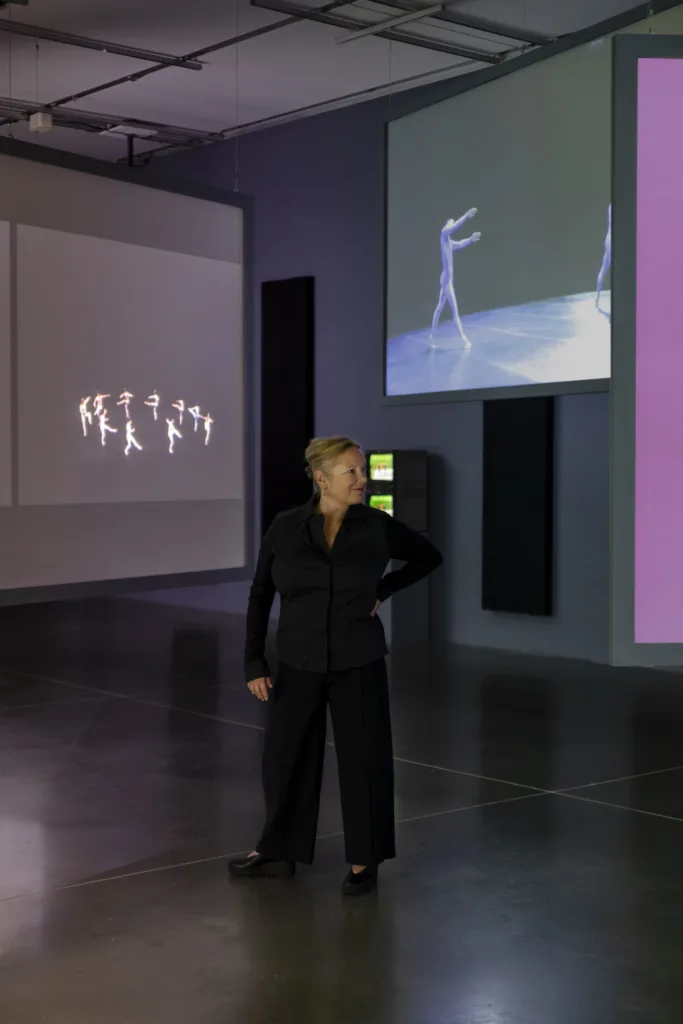
Medvedow, lecturer in advanced studies at the GSD, began her career at New York’s Metropolitan Museum of Art and the Franklin Furnace Archive, before going on to found the nonprofit 911 Media Arts Space, in Seattle, Washington, and then moving east to Boston in the 1980s. In the course she’s teaching, her career serves as one of many examples that the students learn about during the semester. Medvedow reflected back on her early days, when artists were experimenting in conceptual forms and pushing back against the idea of art as a physical object to be commodified.
“I was working in the vibrant alternative artist spaces in the late 70s and early 80s, with artists who were invested in dematerializing the art world,” she explained, referencing Lucy Lippard’s 1968 essay on the subject, “making artist books and performance art, much of which was political; there was a lot happening in the streets. That was absolutely foundational for me.”
Here in Boston, Medvedow worked in public radio, at foundations, and for the Isabella Stewart Gardner Museum, which is “lush with material,” and quite the opposite of dematerialization, she says. The museum’s design relies upon its objects and their precise placement, by Gardner, throughout the building. There, Medvedow observed how new programs, including small exhibitions, built on the old master works—paintings, furniture, tapestries, and other objects that Gardner curated—to the magnificent indoor courtyard garden, a “living collection through horticulture,” says Medvedow.
She began to work at the ICA in the late 1990s, after the museum had moved through a dozen locations and was housed in an old police station, which was designed in 1886 by Arthur H. Vinal in the Richardsonian Romanesque style. With a formidable stone exterior, the site was less than welcoming to visitors and had a very small audience. The ICA operated as a kunsthalle, Medvedow says, focusing on exhibition-making that brings works in temporarily, rather than owning artwork. She began to build a permanent collection, reestablish a board of directors, and focus on engaging the public.
“Could I build affection for the institution, for the art, and build a community with the ties that bind affection—habits of heart and mind?”
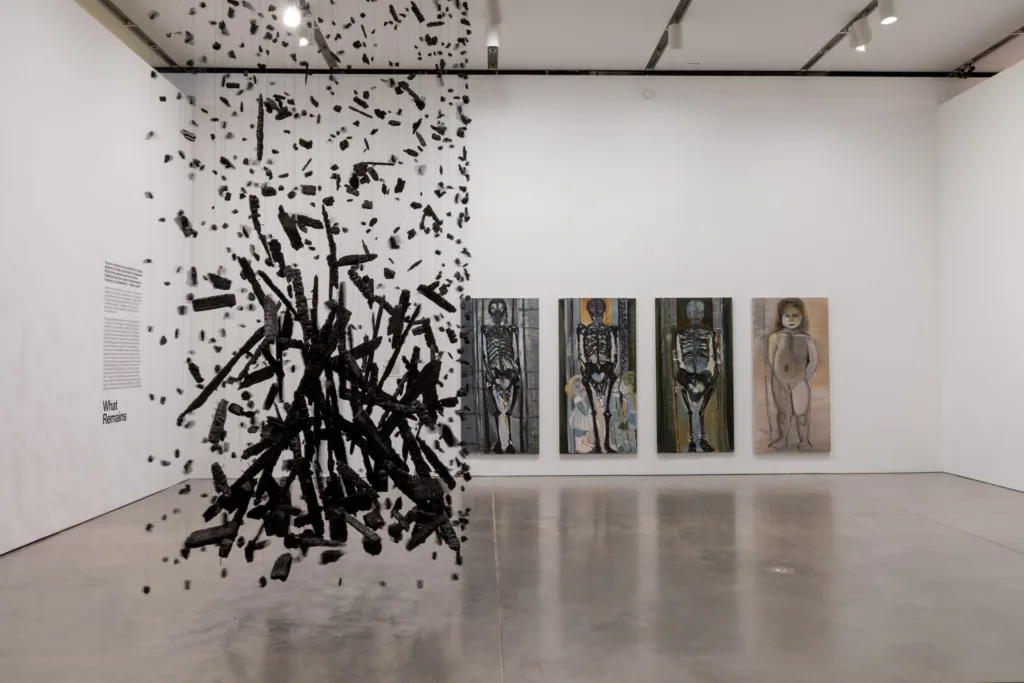
Driven by an ethos of care, she began to think about how to build the public’s engagement with the institution by making it a necessary and beloved part of their lives. Rather than rely on exhibitions alone, for example, the ICA established weekend educational programs that appeal to families, evening performances, and opportunities for artists to exhibit their work in public spaces, all of which brings the public to the art through their routines, needs, and interests. In the 1990s, building on her previous experiences across the country, Medvedow launched ICA programs such as Vita Brevis, which invited artists to create public art at historic sites around Boston, and expanded Fast Forward, a film-making program for teens that’s still operating today, along with many other programs. People began to see the ICA as a place they could turn to for education and family programming, visiting the galleries as part of a larger experience at the museum.
The complexity of establishing new habits of heart and mind is what she addresses in this semester’s GSD course with her students, along with “issues of programming, governance, facilities, neighborhood, partnerships, education, as well as of collection, engaging with the city, and trying to understand the civic role of an institution,” all of which Medvedow navigated as the ICA grew.
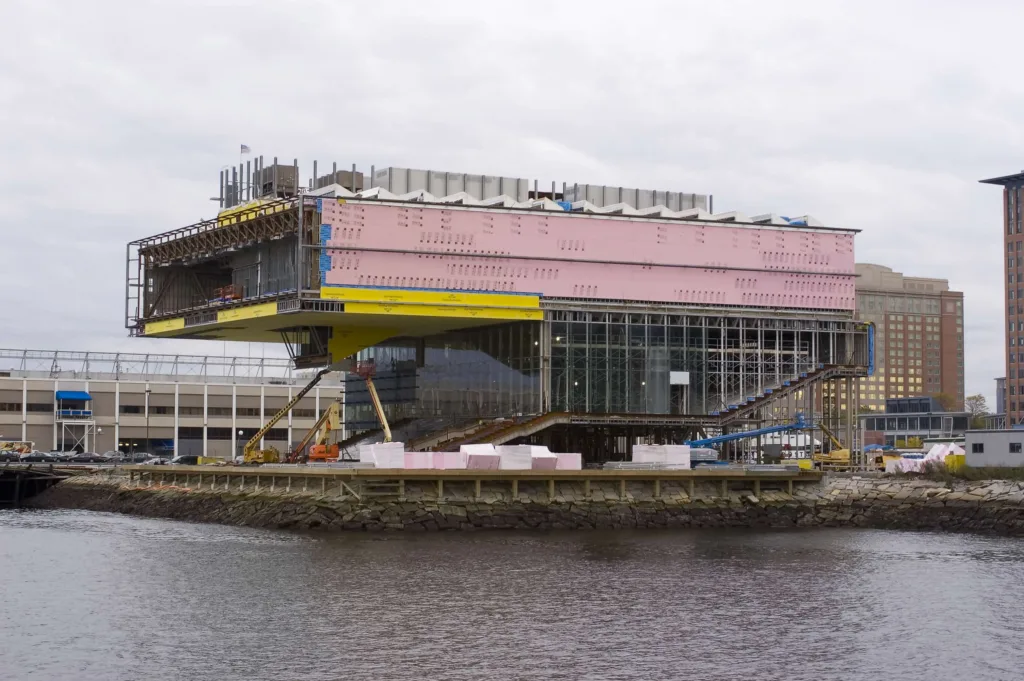
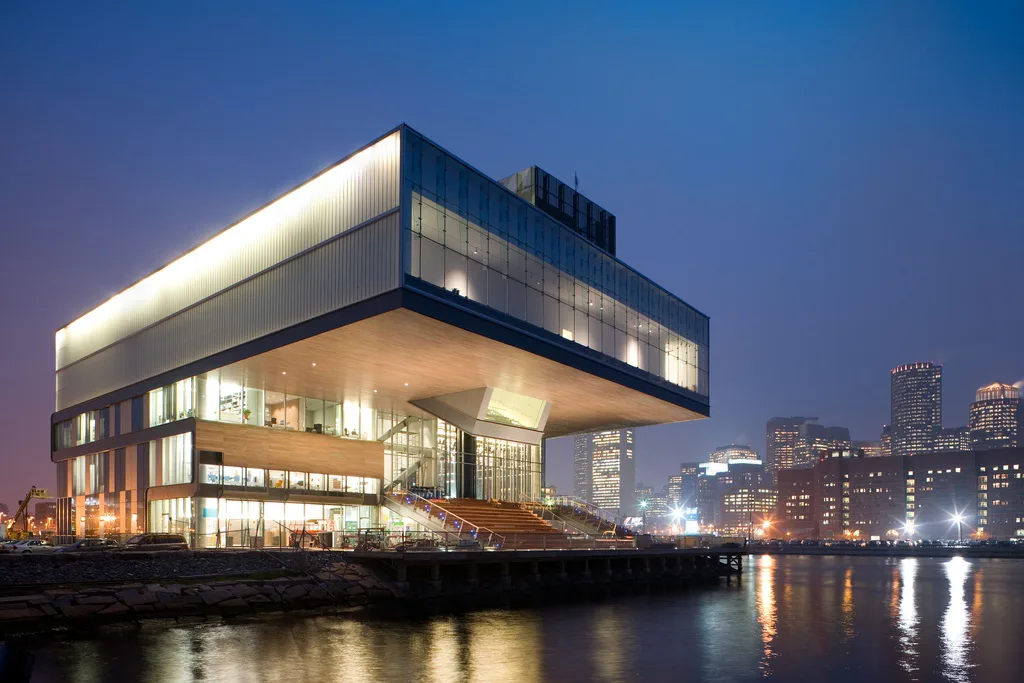
In addition to fostering affection for contemporary art and forging strong connections with the public, Medvedow gave the ICA a permanent home. In 1999, the museum won a competition held by the city to develop Fan Pier in Boston’s Seaport, and was granted a 99-year lease. Back then, it was surrounded by windy, empty parking lots, but plans were underway to develop the neighborhood into the bustling business and commerce center found there today. Medvedow hired Diller Scofidio + Renfro to build what would be their first building in the United States. Because the museum envisioned an exhibition space of 18,000 square feet and held a small lot, the firm designed a fourth-story cantilevered gallery that stretches out over the water. There are also spacious education spaces on the first floor, a glass elevator that rises up to the galleries, a theater, and a media center that overlooks the harbor. Today, the ICA is known as one of the city’s most important cultural institutions, and welcomes approximately 300,000 visitors a year.
This semester, Elizabeth Diller visited Medvedow’s GSD class to talk about their design of the museum, as well as New York City’s High Line, the Shed, a commercial residential tower, and an opera produced on the High Line.
“That’s four or five really different typologies,” says Medvedow. “There’s a museum, an elevated garden, a residential tower, a cultural space. Going in and out of institutional frames, to individual case studies, helps students see what’s possible when we talk about public art and curating in all its forms.”
Through a series of case studies, guest lectures, and site visits, she hopes that students will see that cultivating a vision requires navigating many different contexts, such as politics, permissions, permits, clarity in communication, and the art of persuasion. It’s more than designing a building, which, she says, brings its own complexities, as well.
“Some of these skills have been seen as ‘soft skills,’” she says, “but they’re not. They’re both specific and very difficult to do. These are key skills that students need as they go out into the world to do good.”
Medvedow emphasized the fact that there are still “enormous resources and opportunities,” with new museums recently opened across the US, and a wide range of roles outside of museums, where students can “use their voices in a public setting.” Since she stepped down from her role at the ICA, she has continued to find ways to continue to make art part of civic life, in sometimes unexpected ways. She’s circled back to public radio, launching a reading club in partnership with WGBH’s “The Culture Show” podcast, and is working on a sequel to her children’s book.
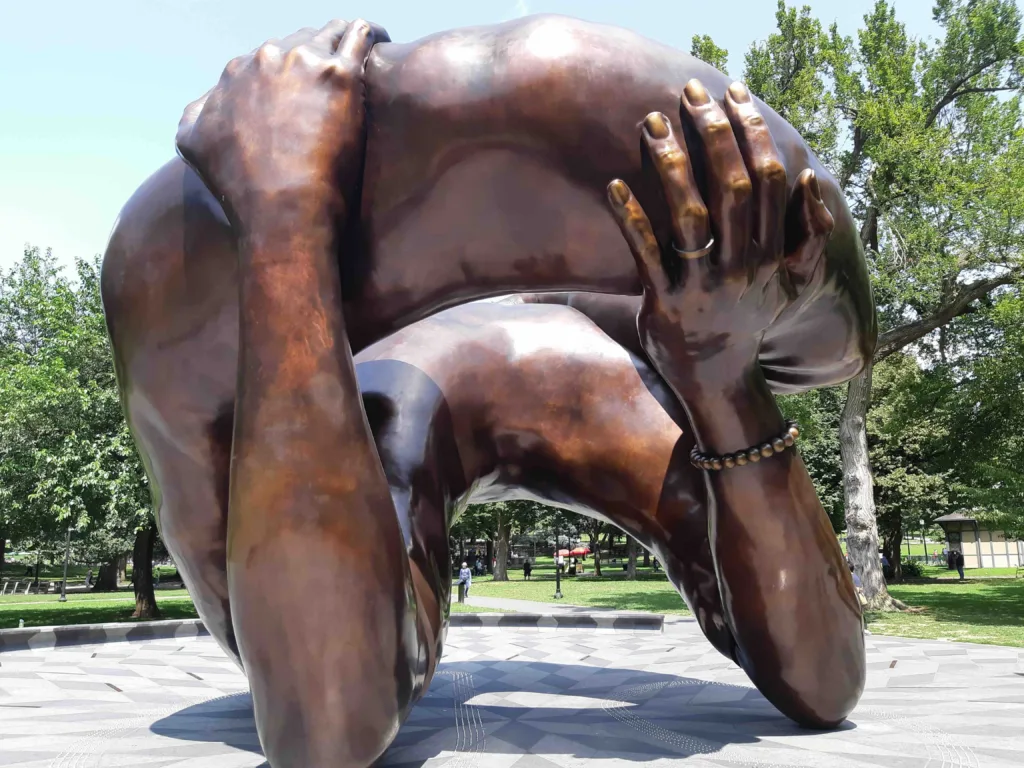
Her teaching at the GSD folds into her vision to help others make art part of the fabric of public life, with a historic overview of public art forms, including the Vietnam War Memorial in Washington, D.C., and the AIDS Memorial Quilt, which many students, who were born decades after their creation, had never seen. They also studied commemorative and monumental works, place-based projects, and art in public realms such as parks and transit systems, in addition to the critical roles that museums and institutions serve as collections and drivers of civic engagement.
“The central idea and execution of the course is that anyone who is building their vision,” says Medvedow, “will need to consider how that vision extends beyond oneself, to impact communities, relationships, and civic life.”