Minimal Viable Project Architecture: The New Landscape of Hyperscale Data Centers
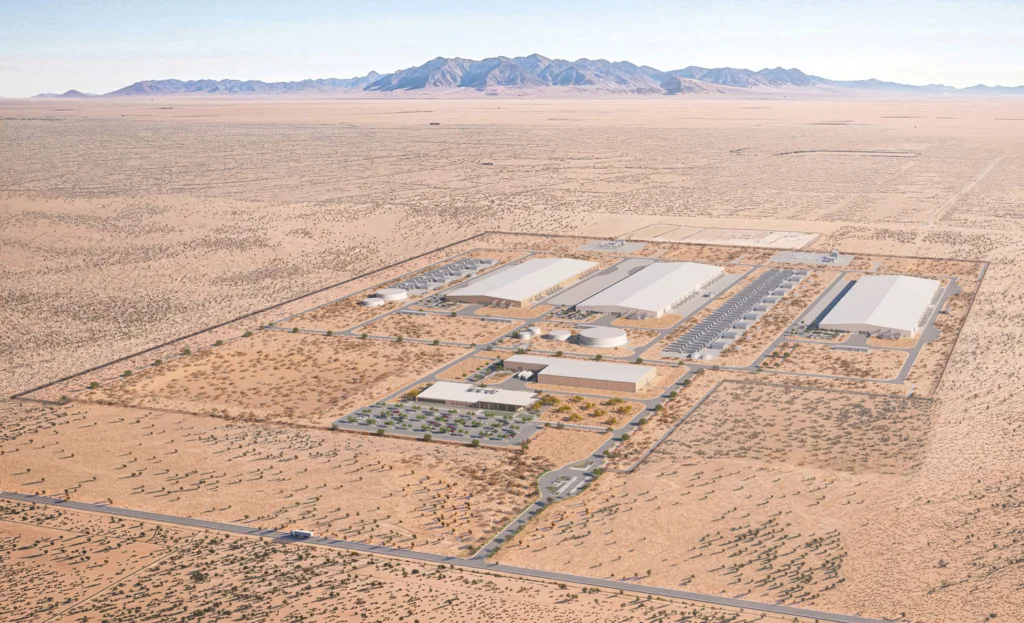
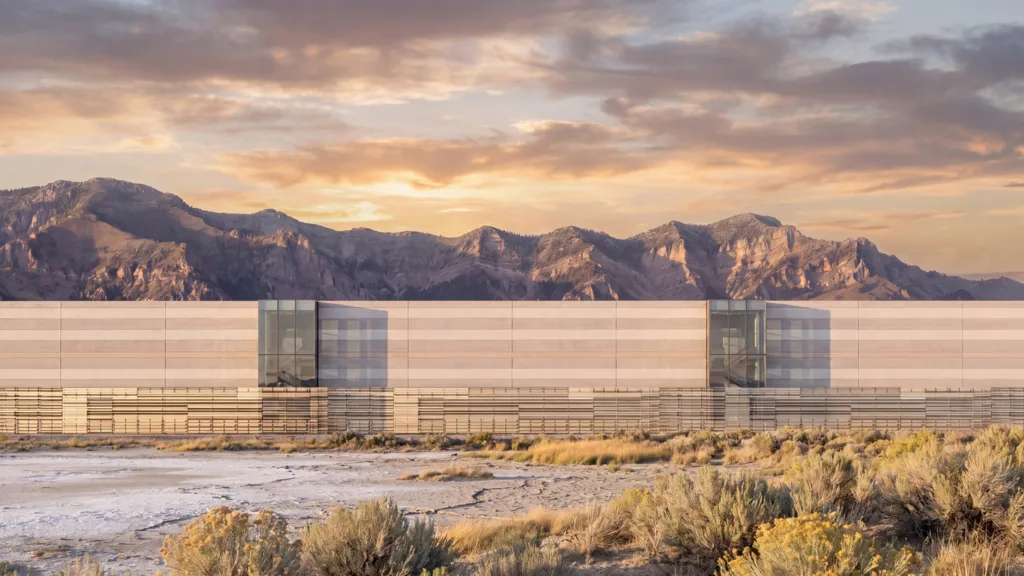
The Stratos Project, announced to the public in April of this year, is a “hyperscale” data center planned for the rural Hansel Valley in Utah’s Box Elder County. If operating at its projected capacity, the complex of some 60 buildings sited on a 40,000-acre parcel, would consume an estimated 9 gigawatts of power—twice the amount of electricity now used by the state of Utah. Developed amid a boom in data center investment, the Stratos Project is among the largest such initiatives announced in the first months of this year, though it is by no means an outlier. As tech companies race to refine artificial intelligence models, the sprawling data centers that house and power their energy-hungry servers are becoming the iconic structure of the twenty-first century built environment.
The tech companies’ determination to scale up construction has been met with equally stiff resistance from the communities near proposed sites. Packed town meetings from Maine to Arizona have become venues for voicing outrage at the prospect of higher energy bills, noise pollution, water consumption, heat island effects, and climate-changing emissions. Protests over data centers in the United States mirror similar movements emerging around the globe.
Though data centers have become a polarizing political issue only recently, deep research on the subject informed a public conversation at the Harvard Graduate School of Design (GSD) this spring. Marina Otero Verzier, lecturer in architecture at the GSD, received the Wheelwright Prize in 2022 to study the state of data center design and spent two years researching developments in Europe, South America, and the U.S. Kate Crawford, artist and research professor at the University of Southern California, published the prescient, award-winning Atlas of AI: Power, Politics, and the Planetary Cost of Artificial Intelligence in 2021, years before ChatGPT had become a household name. In this conversation, the two scholar/practitioners, both early to recognize the implications of artificial intelligence for the built environment and the planet, compare notes about the constantly evolving field of data center construction, discuss strategies of resistance, and offer insights about what’s next for the “powered shells” that will be left behind.
Marina Otero Verzier
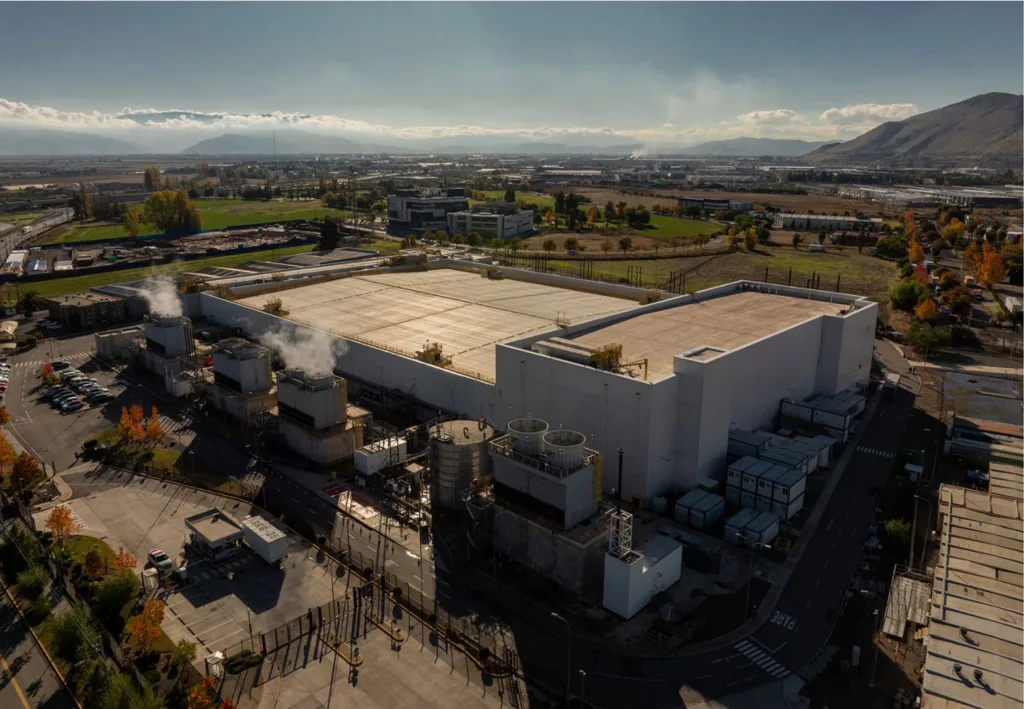
I want to start by telling a short story about how Kate and I met. It was a bit more than two years ago, when I was working with the community of Quilicura, on the outskirts of Santiago in Chile. Data centers, including one built by Google, have been using the local wetlands as a source of water for cooling their server rooms, affecting the entire ecosystem. This community invited us to work with them, to help them negotiate with the government and corporations to find a solution. That’s not a small task. But I said, well, let’s try.
The idea was to make these companies accountable and convince the government to create new legislation around data centers in Chile. I thought, we need Kate Crawford. We need her to come to Chile. I chased you and I convinced you to go to Chile without much information. Kate was part of our efforts to put pressure of all means on the government to regulate data centers
Kate ended up on the front cover of Las Últimas Noticias, the most-read newspaper in Chile. It’s also very yellow press, but I love that. It was everywhere in the streets of Santiago. Everyone saw this headline: “Artificial Intelligence is neither artificial nor intelligent.” A few days later, I also appeared in the cover, but my quote is sillier: “The selfies that we accumulate and never see consume water and energy.” And the headline directly under says, “Pancho Saavedra is going to stop using Botox.”
We have to be in these conversations in order to make an impact! After that, I was invited by the government to join the team that will draft the first National Plan for Data Centers, which is not perfect, but is one of the most advanced plans of its type in the world. Since then, Kate has been an incredible ally and an inspiration.
Kate, I’d like to start by asking about your book Atlas of AI, which was published in 2021. How did you manage to write a book on AI in 2021 that still feels so relevant in 2026? And what do you think has changed? Are there things that you might not have foreseen when you published the book?
Kate Crawford
We’re all gathered here today at an extraordinary time in artificial intelligence. So much is changing. Even in the last three months, we’ve seen an extraordinary shift, which is now playing out in Iran and throughout the Middle East, as these systems are being fed directly into military intelligence.
While there’s been so much change, so many new models released, and so much press, we’ve been forced into a state of technological presentism where we can think only about what happened last week and maybe next week. The time dilation of this moment has become very short and extreme.
Despite this, there’s an underlying set of dynamics that have not changed since the time I was researching Atlas of AI. I spent five years doing fieldwork for that book. I was less interested in the next thing that will happen in AI than in the underlying material conditions that are driving this industry. It was clear to me then that the forms of extraction on which this industry is based—it is very much the extractive industry of the 21st century—include both traditional forms of extraction across natural resources, water, energy, minerals, but also data extraction, and the extraction of forms of labor value. Everything that we are contributing to these systems is a form of unpaid labor. In doing this research, it became clear to me that extraction across these three domains—data, natural resources, and labor—are the trifecta this industry is built on.
Since 2021, we have seen dramatic expansion at each one of those levels. Back then, I could not have imagined the rapid growth in scale. The International Energy Agency now says that in two years, AI will be consuming as much energy as the nation of Japan. Bloomberg released an investigation that said that by 2030, generative AI will be using as much energy as India. The water costs of these systems are ongoing and very serious, even though there’s an ongoing tech industry campaign disputing that AI uses that much water. Extraordinary contortions are needed to minimize the environmental impact of gigantic hyperscale data centers.
So we’ve seen the super-sizing of a set of dynamics that were clear five years ago. But the full impacts of that super-sizing are now present and part of our lived experience: all of us are affected by AI systems as they are now deeply woven into everyday life.
One of the profound things about your work, Marina, is that you early on wanted to make a typology of the data center, asking how we understand the data center as an architectural object. You started that work in 2022. Could you tell us a little bit about your fieldwork? Where did you go, and why?
Marina
I became interested in data centers in 2016, as a result of looking into automated spaces in the Netherlands. That research started in automated dairy farms, greenhouses, harbors, and led to data centers and ultimately to lithium mines. I was collaborating with Ippolito Pestellini, an incredible architect and researcher who was then a partner at OMA. We ran design studios at the Royal College of Art on reimagining data centers. For us, they were still a site of experimentation. We could imagine them as posthuman architecture. We looked at typology to understand what architecture without humans at the center could look like.
It was a critical approach, but its meaning has changed for me. Obviously, we are not at the center anymore. Humanity is not at the center, meaning that the well-being of the majority of humans, not to mention more-than-human life, is treated as less important than the benefits of a few.
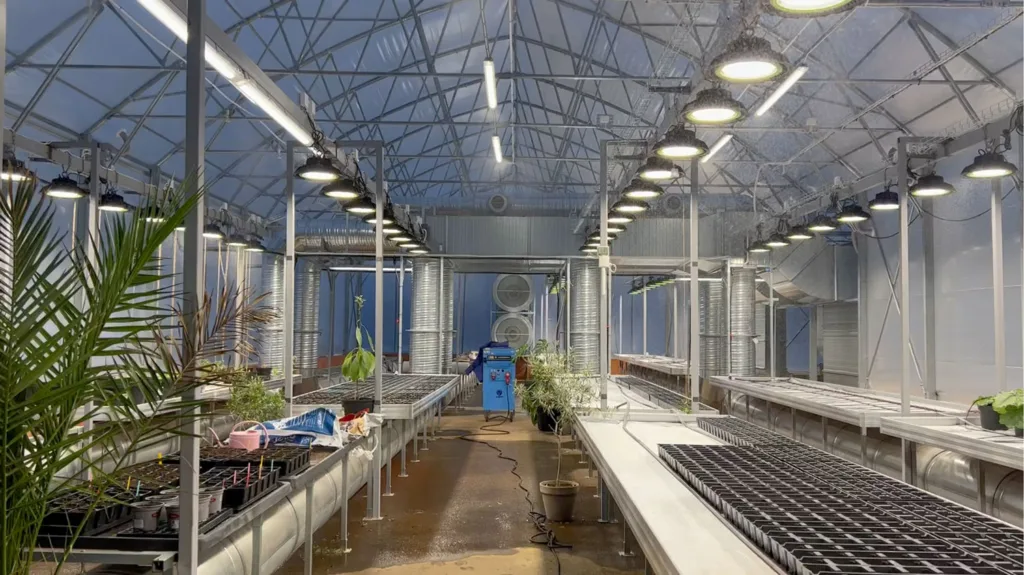
When I did the research field work, thanks to the Wheelwright Prize, I visited data centers that held the promise of improving conditions through better eco-social relations. Data centers that are more “green,” let’s say. I visited the Nordic countries. Because of the climate there, data centers there need less energy to cool server rooms. Some also use a combination of direct cooling and renewable energy and have systems for reusing the excess heat coming from the servers, for example greenhouses or swimming pools heated by data centers. I also visited data centers that were built with wood in an attempt to offset emissions. I found numerous cases of companies attempting to offset emissions through urban forests, which often proved to be little more than PR campaigns.
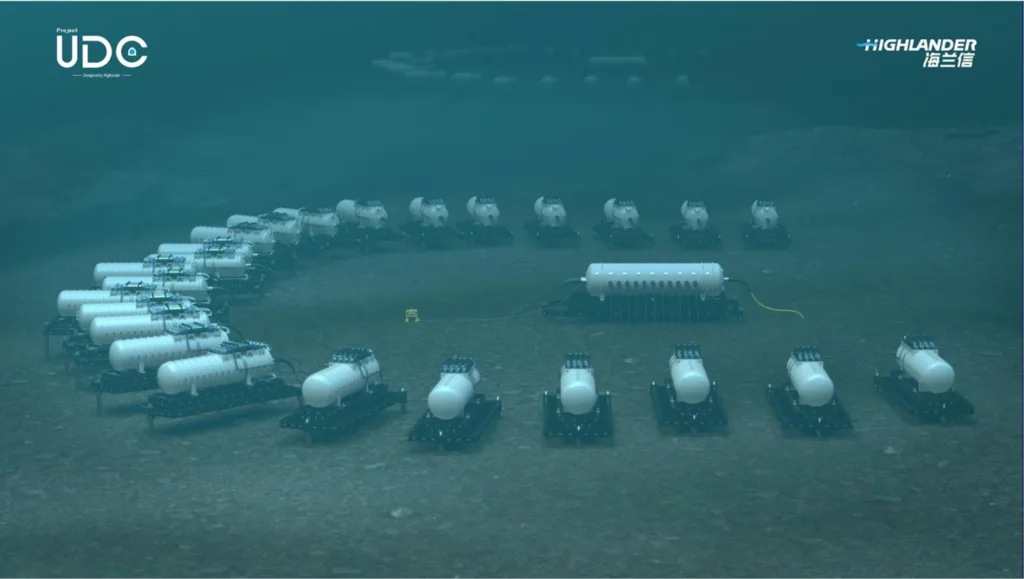
I went to several regions in Australia to learn about Indigenous-led data centers and initiatives focused on indigenous data sovereignty and the development of “appropriate technology.” I also travelled to many places in Europe and to the U.S. to see floating data centers or underwater data centers, even to scientific laboratories working on orbiting data centers.
Kate
Indeed, we’ve both visited the labs working on data centers in space. Now, thanks to Elon Musk, those projects are getting a lot of resources.
Marina
The problem is that when looked at what happens around and beyond the data center, I found many externalities, even in the most advanced projects. For instance, the type of renewable energy infrastructures serving the data centers could encroach on Indigenous land in Sápmi, with devastating consequences for their culture. Ultimately, we are falling in the trap of designing around the needs of the industry, instead of asking the industry to adapt to the needs of ecological systems and collective life.
Kate
The intervention of architects and designers in data centers is desperately needed right now, but it’s also a problematic project. How do you intervene in these structures that have been shown to be dangerous and harmful to humans and ecologies?
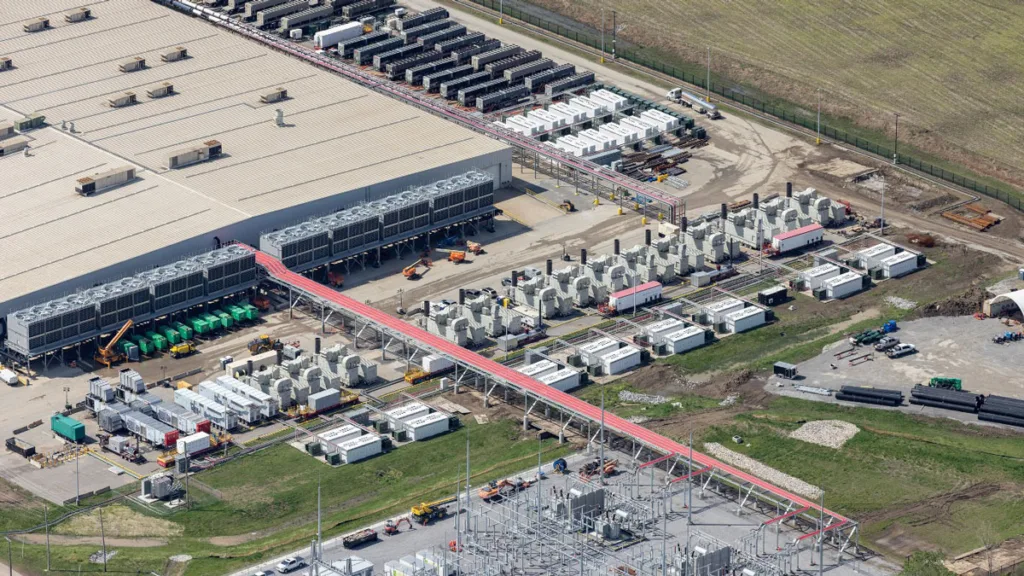
An xAI facility in South Memphis was unable to draw enough energy from the grid, and so they shipped in gas turbines that are emitting large amounts of nitrogen oxides, greenhouse gases, and formaldehyde into the air. The data center is located in a historically Black community that already has extremely high rates of childhood asthma.
There is a fight now happening around this particular facility, and the fight is moving across the country. But before we get there, I think it’s really important that we talk about the fact that the data center as an architectural unit has shifted.
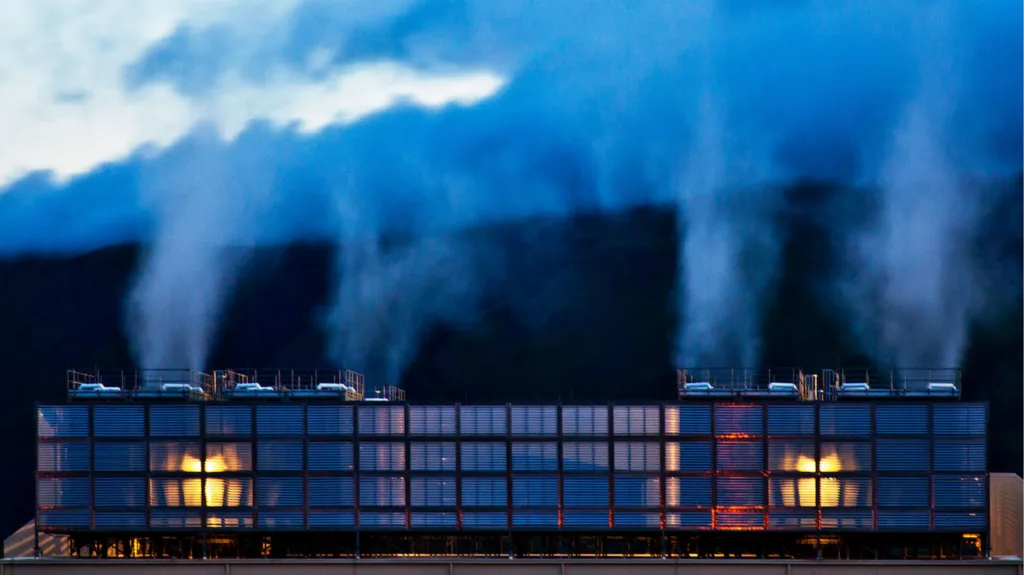
The hyperscale data center is fundamentally a different structure to the traditional data center. Some of the data centers you visited have scientific purposes, designed to study and map the universe. That is very different to a hyperscale data center, which can be around the size of 20 football fields or larger. Mark Zuckerberg said that the new Meta one they’re building in Louisiana is going to be the size of Manhattan and eventually draw five gigawatts of power. For comparison, a standard nuclear power plant is one gigawatt. This is the biggest infrastructure that we’ve built as a species, dwarfing the Manhattan Project in terms of capital, land, and energy outlay.
We know that $450 billion was spent on data center infrastructure just in 2025. In 2026, it’s projected to be $680 billion. At a time when we’re seeing so many issues in the world that need substantial investment, instead our resources are being directed to these structures.
But something important is happening to these structures that I want to ask you about, Marina. They are becoming impermanent. They’re becoming ghost architectures. They’re mobile. They’re shifting. Some of the new data centers are being built in tents, because they cannot put up buildings fast enough. Often, these data centers use existing warehouses that have been abandoned, bringing in mobile trucks with generators. And then there is an inbuilt endpoint, the planned obsolescence of chips after three to four years, when they have to get new chips and discard the old. The old chips, of course, become e-waste: the fastest growing category of waste on the planet.
So the data center is an anti-monumental architecture, a minimum viable project architecture. How do we think about this as an architectural form? It seems to be slipping away into an instantiation of tech capital that is constantly on the move, leaving only waste and damage in its wake.
Marina
It’s keeping me up at night. Over the last few years, I have worked on regulation, prototyping, advocacy—you name it—to redesign data centers, but always understanding them as infrastructure that will have a legacy . If you invest millions and millions and redefine energy and water systems, presumably, that investment would be for the long-term.
Based on that premise, the idea was to make data centers more connected to their context and attuned to existing needs.
But recently, I came to the conclusion that data center providers are using the globe as a board game, seeing opportunities and planning projects in parallel. Where can an investment be made with the least opposition and the lowest taxes?
We are not seeing real commitments by companies to a place. The industry is exploring possibilities. The moment these possibilities become inconvenient for the industry, they shift and move to another location. The role of architecture is contested because many data center providers today are more interested in powered shells, basically warehouses where you can quickly install equipment that lasts three, maybe four years.
The computing equipment, the servers and chips, represents 60 percent of the cost of the data centers, power generation is 25 percent, while land and building, 15 percent. The companies can get rid of that 15 percent when it’s advantageous to have the 60 percent somewhere else. As technology evolves rapidly and the lifespan of hardware grows shorter, many companies are favoring flexible configurations that allow hardware to be replaced, or relocated, depending on changing conditions such as energy and water availability, tax incentives, or community responses. Some data centers have their power generation on wheels.
It’s a dystopian version of the 1960s and ’70s dream of mobility. It’s as if Archigram’s Ideas Circus has now been taken up by the data center industry and turned into a very destructive system. You land in a place, you take the resources, and you leave, leaving pollution, depleted resources, and infrastructural corpses behind.
What strategy do we have to embrace and what is the scale at which we have to work? Those are the questions that I’m trying to answer right now. I have come to regard as naïve an approach to designing cities around data centers that might not stay.
Kate
This shift towards mobile ghost architectures is very recent, occurring in the last couple of years. There is an absence of architectural and design strategies for dealing with it.
For the current era of data centers, the industry is behaving like hermit crabs. They’re looking for the next shell and then an even bigger shell, and then the empty shells are left behind. And the communities are left with legacies of pollution, water loss, and inflated energy bills.
These shells are also now becoming militarized infrastructures. Their status as high-security sites impacts our ability to visit these facilities and do the kind of fieldwork that we have done for many years: to get inside, to talk to people, to understand them. That access is being shut off very rapidly.
From leaked documents we know that the US government is pushing for a new form of export control where even people who have only 1,000 chips will require a license. Once you get over 100,000 chips, you need to have a government agreement. And then once you get to 200,000 chips—real hyperscaling—you can have inspections, presumably modeled after weapons inspections. The U.S. government is able to then inspect anywhere in the world that is creating these structures using U.S. chips.
Marina
In the world?
Kate
In the world. This is a proposed export regulation. You can think about this as a different type of digital colonialism. The US will be able to control this infrastructure even after they’ve sold it around the world, because it’s seen now as being such a significant US interest.
So you have multiple registers in your work. You have a critical register, but you also have a rehabilitation register. Is there a way to rehabilitate these architectures, or are they now so far outside of our grasp that they will move more and more into this military-based space?
Is another data center possible?
Marina
If we are thinking about a public infrastructure that will have more transparent governance and include the communities involved. It requires also thinking about the data center beyond the building itself. Because we have to understand architecture in a more expanded way, territorially, the cumulative effects of this industry at the scale of its operations, which requires strategic planning.
I always talk about regulation and planning. And then I’m accused of being an over-regulator. But I still believe that regulation and innovation are not mutually exclusive. You can plan for growth or decay while still having a commitment to the place where these infrastructures are installed.
Strategic planning, at the level of the territory, has to come with commitments from the companies. If you are installing this infrastructure, you also have to take responsibility for its future. If installing this infrastructure requires improving electric grids, building new energy plants, substations, that has to come from the company’s pocket, not from the citizens. They are turning permeable soil into hard surfaces and should also be responsible or repairing those ecosystems and making sure the architecture could be easily dismantled or reused.
At the level of architecture, we also need to shift our perspective and start thinking about what data infrastructures could be if we don’t assume immediacy, of resolution, of accessibility as a given. That’s tricky, because are taking for granted immediacy in how we receive information. We want the possibility of being online, even during a flight. But do we really want that, or have these systems created a dependency?

If we start inspecting our real needs and those of the planet, perhaps we can design different architectures for data. That’s what I call ecologies of data: we have hot data, cold data, private and public, ephemeral, long-lasting. And those combinations of data have the possibility of manifesting in alternative models for data centers. Different ecologies imply different ways of storing information and different levels of security, more appropriate than the systems we use today, which assume that all data must remain hot and highly secured. Cold or long-term data, for example, may not require the security or immediacy of a Tier 4 facility and could be stored in environments designed for slower rhythms of access. We could move toward context-specific systems rather than defaulting to maximum intensity, or relying on Powered Shells. We should ask which types of compute are truly critical and must be on; design for workload flexibility and load shifting; integrate large-scale storage with media that require less energy; and connect these choices to community governance.
The hyperscale data center would still exist, and probably for military uses, which is terrible to acknowledge—secure, hot data, the ability to strike any country in the world with artificial intelligence–powered weapons.
Kate
This is why we’re in such a difficult point in history, because artificial intelligence, of course, comes out of military research directly. Its genealogy is grounded in the military. And the very creation of Anthropic came from a falling out between Dario Amodei and Sam Altman, because Dario wanted a company that had higher safety standards to counter the risk of these imperfect systems, with their hallucinations, with their errors, being fed into sensitive institutions from healthcare to military intelligence.
We’re still waiting to hear information about who was responsible for the bombing of a girls’ school that killed over 150 people last week, predominantly children. But many people are hypothesizing that this came about through artificial intelligence targeting by the Maven program, because that facility used to be a military facility 10 years prior. If that information is still in your data set, you might see that as a site of significance. It’s exactly the error that you could imagine happening with AI targeting. We’re living in that world now, unfortunately, before we’ve had clear red lines set around the use of these systems.
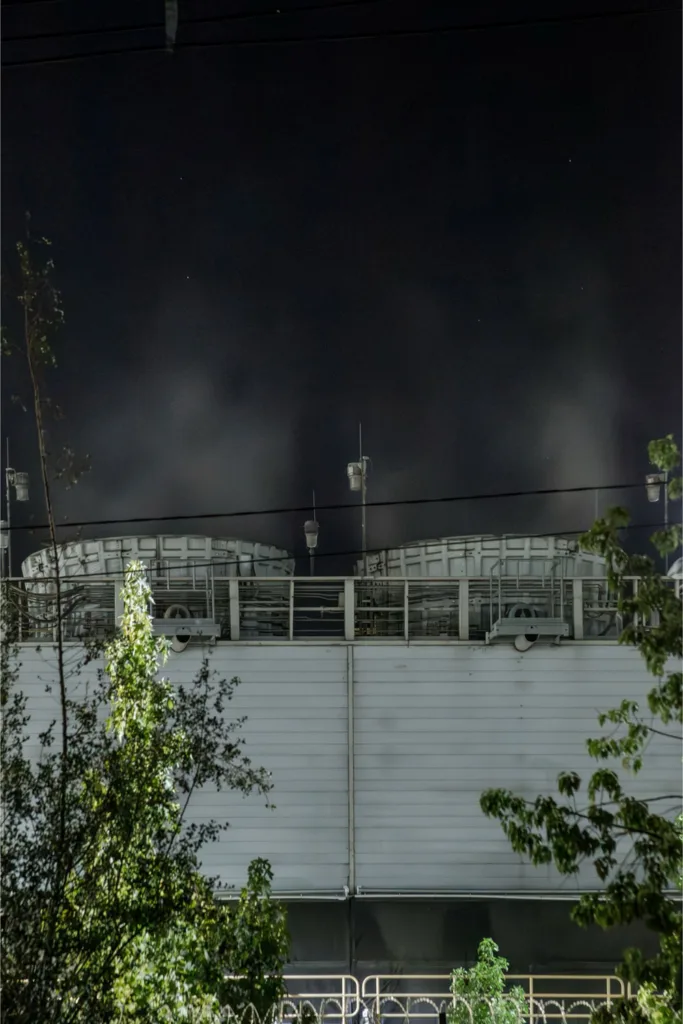
We haven’t reached the place as a society where we can say, if you’re going to build a data center for $10 billion, you should also be responsible for building not just the power grid, but schools. You should be building hospitals. You should be building some public infrastructure that can last.
This isn’t happening because power so far has been held by companies able to negotiate these deals. Whichever states and territories are willing to say, yes, we will give you a tax break, we will give you prioritized access to the grid, we will give you priority access to water, that’s where these data centers are being built. States that are less wealthy see AI as a commitment to the future, potential for economic growth, a way to be ahead of the wave. And unfortunately, that has created this ongoing regulatory arbitrage. If you regulate, the data centers will simply move elsewhere.
This is what you’ve been working on, particularly with the Ministry of Science in Chile. What is the role of regulation here? Even if you manage to regulate, what happens with data centers in Chile? Will they move to Argentina, or elsewhere? How do we think about regulatory paradigms at a time when they’re so desperately needed?
Marina
If everyone would commit to regulation, then there would not be this backlash.
Chile wanted to have artificial intelligence. But they also realized that they might not have the resources to sustain what the industry demanded from them. They realized they needed to national plan, having seen the growth of data centers in Mexico, for instance, have left nearby populations nearby without water, without energy.
And in Chile you have this idea of the Proyecto País—projects at the level of the country, and they are very proud of that type of control and organization because it would allow them to receive investment.
First, they created a tool that helped identify potential zones for installing data centers. They tried to see all the different possible arrangements that would be close to infrastructure and energy, but at the same time would not be disruptive to communities or to ecosystems. In the end, the government only identified a few areas where these places could be. They invited investment so long as the companies would locate their data centers there.
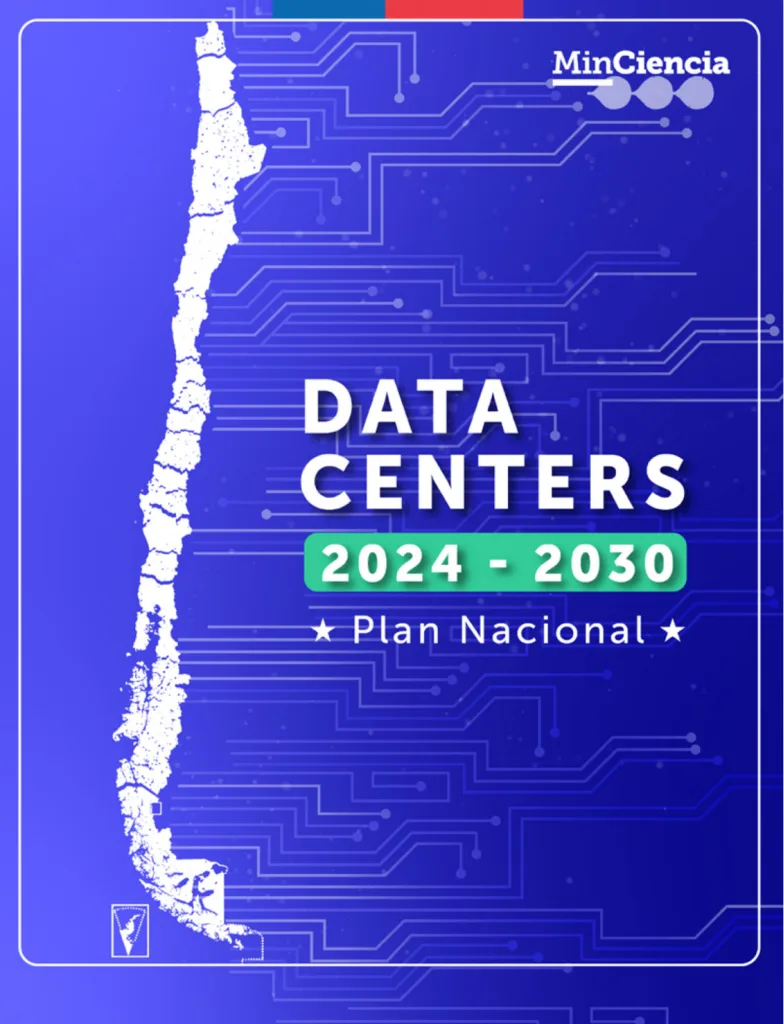
The Chilean government could please companies by giving tax breaks and loose regulatory frameworks. However, Chileans know how to protest, how to take it to the streets, how to push for regulatory frameworks and take corporations to court. That’s why the data center industry finally acknowledged that their projects need to be legitimized by local populations, not only governmental officials. They have to incorporate the communities through consultation processes. They also acknowledge they have to use clean energy, and provide their own clean energy. All this is contemplated in the national plan for data centers. It is common sense. It’s not even radical.
Still, there was fear that if Chile regulates, the data centers would leave for Argentina with Javier Milei or to Querétaro, Mexico, where there are already lots of data centers. But, actually, the data center companies have stayed because they also appreciated a certain form of stability that the country was offering.
Is this sufficient? No, it’s very fragile. The National Plan for Data Centers was published in 2025. The information we have about energy and water consumption comes from environmental assessment reports. But these reports were not filed because of the need to measure the effects of data centers on the environment in terms of water and energy usage. They were filed only because data centers have diesel generators as a backup system. Because they store diesel, they have to file an environmental report. And that’s how communities, researchers, and journalists find the numbers.
Recently, the same government that approved the national plan, passed a law that environmental reports are only required for diesel deposits above a level that does not include data centers. As a result, there is no way now to document the real impact of data centers in Chile unless companies disclose it. You see the fragility. You gain something, and you lose it the week after. And it’s exhausting. And that’s how the companies win, because we are all tired.
We were also supposed to have regular sessions for discussion between the government, the companies, the communities. It happened twice, and one of them, last one, because we really pushed for it. And, in addition, the government has just changed; we don’t what will happen with the plan.
Kate
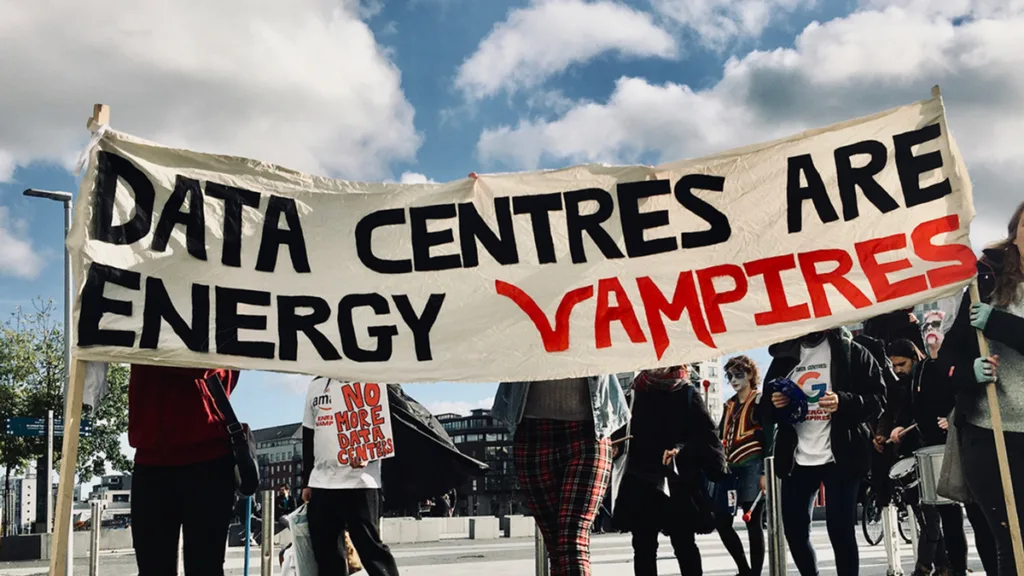
I want to talk about the extraordinary protests that we are now seeing. Across the U.S., 25 major data centers that were going to be built have either been canceled or delayed because of local activism. In Chile, there is now a successful, strong activist movement.
What are the similarities and differences between what we’re seeing in the U.S. and in other countries? Are we seeing the similar concerns, or are they fundamentally driven by different questions?
Marina
They have similarities, but they are also very contextual. In some places, the water might be the most important question. In others, it will be the electricity bill. In another, the community doesn’t want this infrastructure near kids due to the data center emissions.
The concerns in the end are more or less similar. The ways of protest vary. But more and more, these different communities are organized, are connected, and they share information. They also share strategies—we are talking about protesting against some of the most powerful corporations in the world, and one could feel very powerless. So at least you that there are other people in Marseille, in Amsterdam, in Madrid, in Santiago, that had wins, or partial wins, and you want to learn more about how they did so.
But I also see different pathways. We are seeing across the U.S. and in Europe many calls for moratoriums.
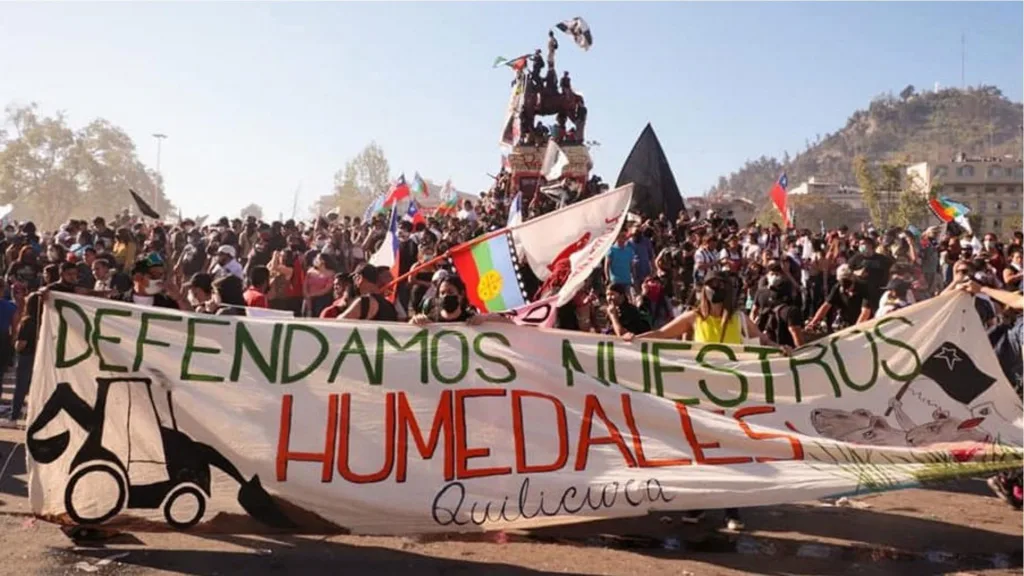
The communities in Chile, have been very successful in understanding how the system works. And because there have been so many years of protest, el estallido, Chilean citizens, have learned how to make their government accountable.
In the US, voters have a lot of leverage against their local representatives. If a local representative sees that their constituents are really against a project of data centers, they might be able to cancel it. These movements are effectively sending a sign to their local governments, that we don’t want data centers.
That’s not how it works in Spain. People will protest, but they probably will not stop voting for their candidates. They tend to stick to their parties and their preferences in terms of policy and politics. Opposition against data centers has not yet have an effect in local and regional elections. So, we are taking these companies and the governments to court.
Kate
This is becoming an election issue in the U.S. It’s happening at a local level around data centers, but it’s also now going to become an issue for the midterms. We’re starting to see the creation of well-funded super PACs to support candidates who will be lenient on tech companies and who will support these data center architectures.
There’s a lot of work that is being done. It might be NIMBYism—“I don’t want that loud structure that’s also emitting all of these fumes into my community.” But what is clear is that communities are starting to push back. And it’s been effective.
So much of what is happening in artificial intelligence feels like it’s being done to us. We’re not having a say. If you are in a workplace, you’re being told right now that you have to use these tools. If you’re a student, you’re told that everyone else is using them in their research, and you feel that you have to, too. There’s enormous pressure right now, and I think it’s very difficult to find an access point. What does a politics of refusal look like when these systems are threaded throughout everything we do? The data center has become the symbol, the structure that you can resist because it’s the one physical, material thing you can see. It’s the unit that you can point to, a site for protest. We’re seeing less resistance around the actual software infrastructures in workplaces. It’s much harder to resist there. So it is the data centers that bear the symbolic weight, inflict much of the environmental harm, and now become the focus of protest.