Designing an Inclusive Urbanism for the Obama Presidential Center
Maurice Cox’s multidisciplinary studio charts the future of the Chicago neighborhood adjacent to the new Obama campus.
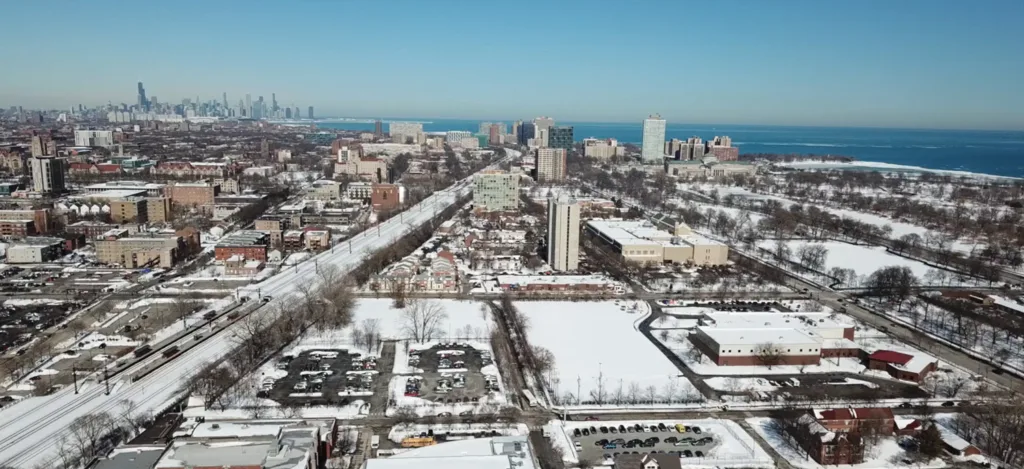
The handful of blocks immediately across Stoney Island Avenue from the newly completed Obama Presidential Center (OPC) in the Woodlawn neighborhood of Chicago are a typical South Side hopscotch of vacant lots with elegant red brick and greystone two-and-three flats, courtyard apartments, community gardens, and small churches. Real estate brokerage signs common on the much more affluent North Side are sprouting up, and there are more vacant lots than vacant buildings—land primed for a flip. It is clear that Woodlawn is in the middle of a transition that will change it forever.
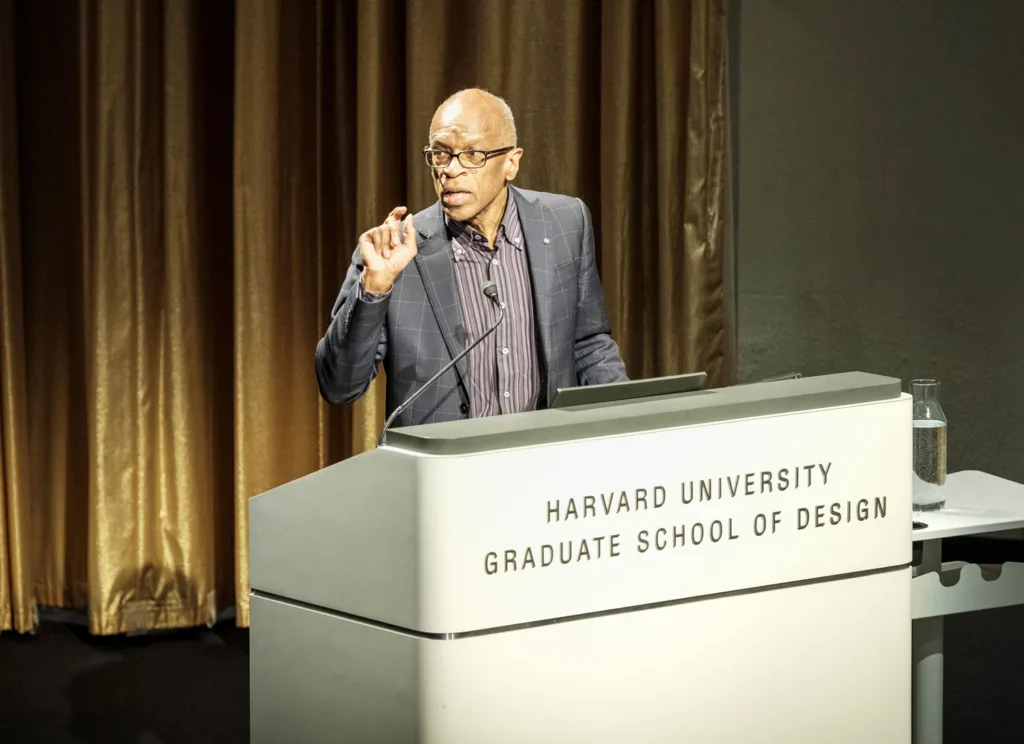
Maurice Cox, Emma Bloomberg Professor in Residence of Urban Planning and Design, is here to guide this change, through a unique studio collaboration between urban design and real estate students at the Harvard Graduate School of Design (GSD).
“Is there a way that the outcome could catalyze equitable development strategies?” says Cox. “With regards to presidential centers and libraries, quite frankly, it’s never been done before. I am concerned that if we allow the real estate market to do what it naturally wants to do, that we will wake up and have lost the Woodlawn neighborhood as we know it, and not honored the intention that the Obamas had for it.” With his 2026 spring studio “Hope & Change: The Obama Presidential Center and Gateway to the Woodlawn Neighborhood” (co-taught with Associate Professor of Real Estate Avis Devine), Cox and his students developed district-scaled development plans for the eastern section of Woodlawn abutting the OPC.
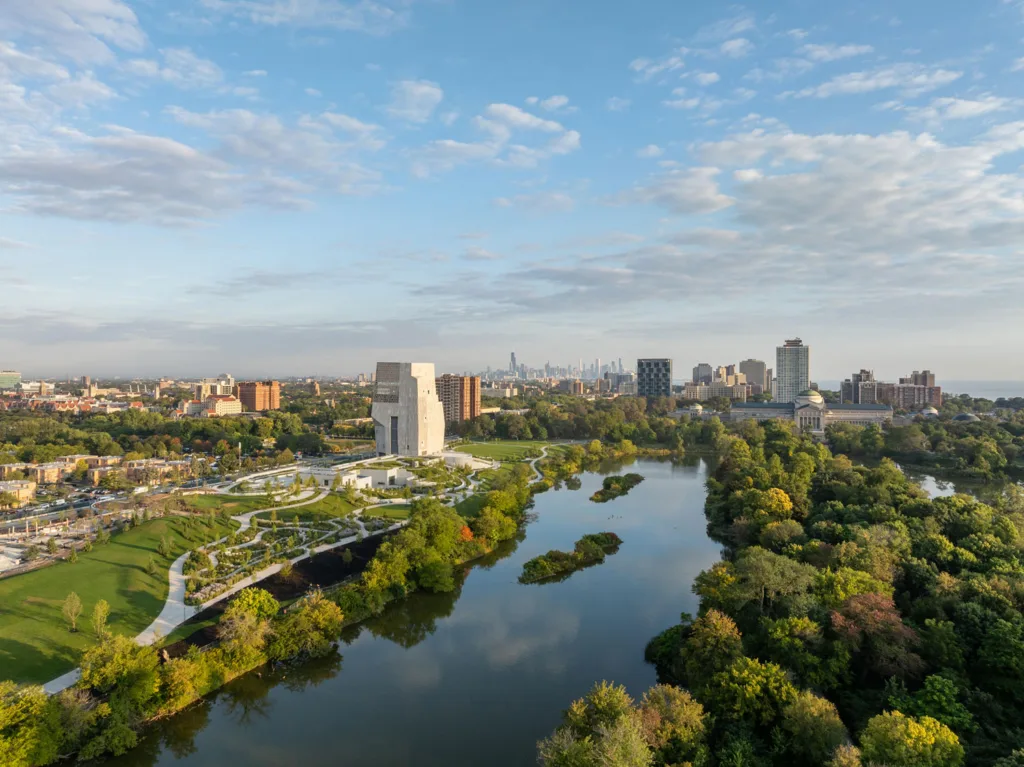
Before he was a senator, president, and cultural icon, Barack Obama was a community organizer on the South Side and has explicitly couched the selection of this site as the continuation of his community work—a chance to reinvest and catalyze growth on the South Side, some of the most contested and vilified urban fabric in the nation. But the ambition of the OPC cannot be captured solely within the boundaries of the center’s campus. To fulfill this mission, there needs be to a transformative impact in the surrounding neighborhood, which means addressing housing, jobs, economic development, transit, and cultural life at an urban scale.
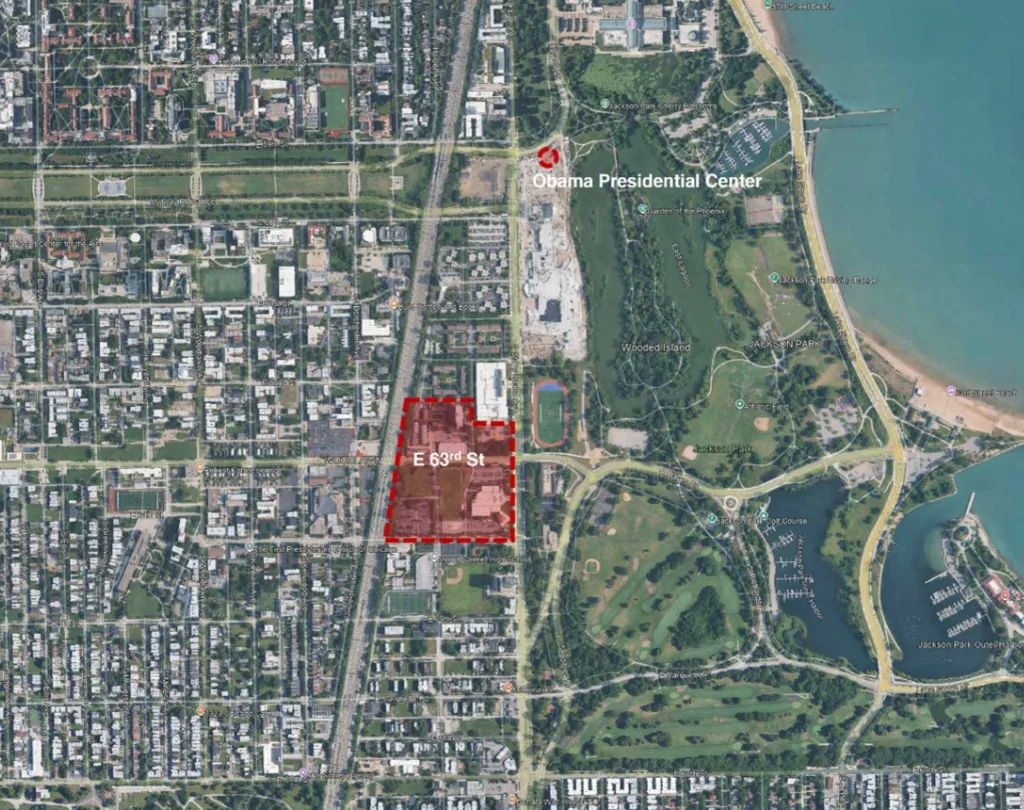
Located immediately west of Frederick Law Olmsted’s Jackson Park where the OPC (designed by Tod Williams and Billie Tsien Architects) is located, Woodlawn has been subject to deep disinvestment and depopulation, sadly typical for much of the South Side. (Eighty thousand people lived in predominantly Black Woodlawn in 1960, now only twenty-four thousand are left). Cox’s primary site consists of 11 acres, two blocks along 64th and 63rd Streets, though a multi-decade, long-term vision for several blocks north and south of this core area extends the plan. Within this mix of vacant lots and parking lots, but also vital cultural anchors, Cox and his students’ mission was to create market-ready plans to steer the expected $1 billion investment in the neighborhood in a direction that rewards those who stayed and makes room for newcomers as well.
Trained as an architect at The Cooper Union, Cox has been a city council member, the mayor of Charlottesville, Virginia, and city planning chief in two cities—Detroit and Chicago—that have been at the forefront of the de-industrial crisis and post-industrial renewal. “I have rarely shied away from big, audacious challenges,” he says, including signing on as planning director of Detroit just two years after the city filed for the largest municipal bankruptcy in American history.
These experiences have given him a powerful understanding of the ways that design can both convene political constituencies and manifest political goals. “Your community is in one place today, they aspire to be in another place in the future,” he says. “There’s a gap, and the process of design is the thing that closes the gap.”
Even aside from the historical trajectory of de-industrial decline in Woodlawn, there will be a gap to close. The South Side is largely united in provenance and pride by their role in the Obamas’ story, but the OPC’s development process was complicated by controversies arising from its site on a beloved historic public park—while vacant lots are omnipresent on the South Side—and an unresolved community benefits agreement with the Obama Foundation.
This is the second time Cox has taught this studio, but the first time he’s shared it with real estate professor Devine. The goal is to attain a market-tested “atmosphere of plausibility” that creates a dialectic between civic aspiration and market inhibitions. “Any problem, like catalyzing investment in disinvested parts of the city, requires multiple disciplines,” Cox says. “No single discipline can tackle this alone.”
The initial 11-acre site offers none of the conveniently consolidated land tenure of a developer bonanza mega-site, and Cox was attracted to this location because of its complexity. There are a half-dozen landowners, and the city is a relatively small player, though a city-owned parcel near a 63rd Street commuter rail station could be a catalyst to jumpstart development. The local precedent studies Cox walked his students through focused on mixed-use, high-density neighborhoods in Chicago that bordered parks on Lake Michigan, like the Loop and Millenium Park, and Lincoln Park on the North Side, with its lakefront sliver of greenspace. Only a few blocks to the north, 53rd Street in Hyde Park demonstrates what a vibrant hospitality and retail commercial corridor anchored by another South Side cultural and education institution (the University of Chicago) can look like.
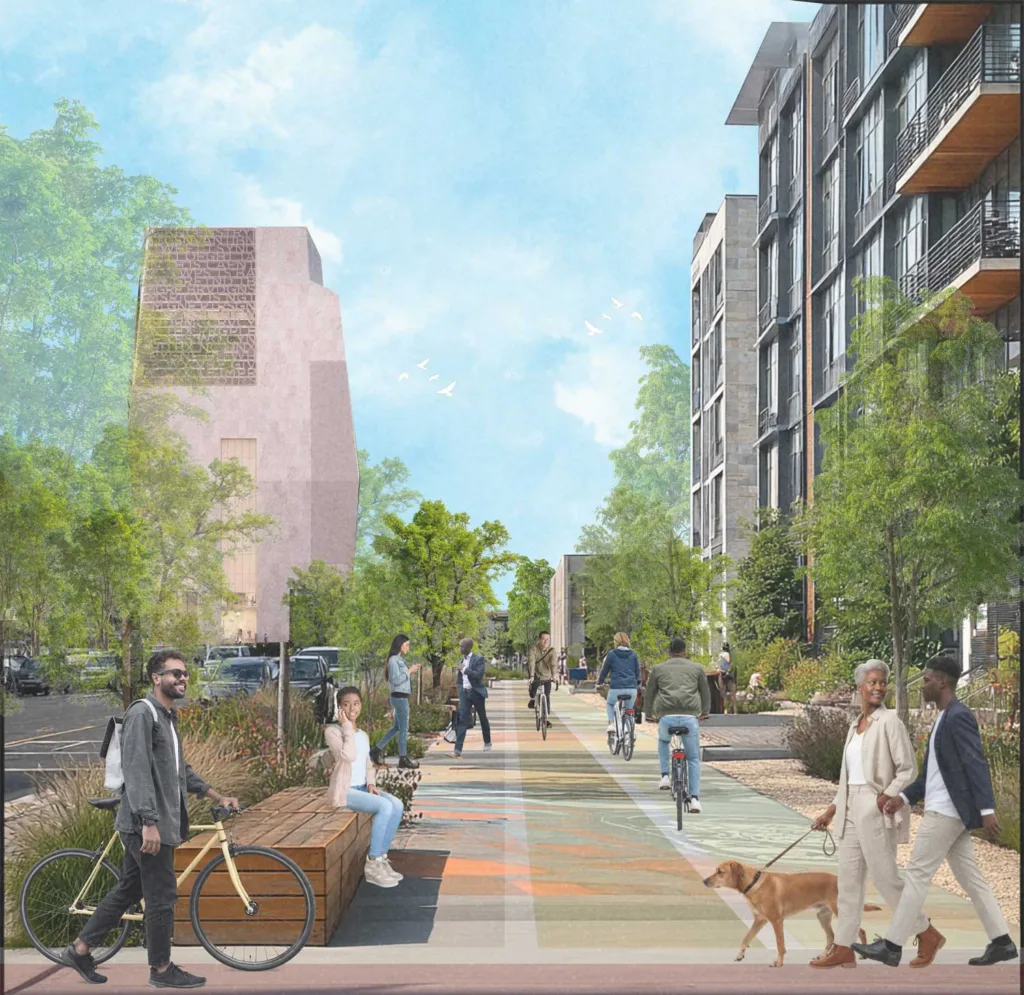
As an urban design and planning studio, the proposals the students produced work through loose and flexible building typologies (townhouses, live-work units, mid-rises, high-rises with amenity podiums) woven through a revived commercial corridor at 63rd Street. The studio paid strict attention to the modulation of residential density and commercial and institutional activity, arrayed in a gradient east–to–west. Public green space at a variety of scales is woven through the plans, often establishing a strong north–south circulation axis, currently absent from the interior of the site.
The ultimate purpose is an urban district that can hold onto its existing residents and attract spillover visitors from the OPC, says Woodlawn resident Dawveed Scully, Cox’s managing deputy commissioner during his time at Chicago’s Department of Planning and Development. “You don’t want people to just come to the Presidential Center,” Scully says. A vibrant mixed-use district and better connection to the surrounding city allows visitors “to find a place in the neighborhood that [they] can engage with and interface with, to break a bit of the stigma of going into Woodlawn. Otherwise, they might make their way to Hyde Park or stop at the Presidential Center and say, ‘This is nice,’ and go back downtown.”
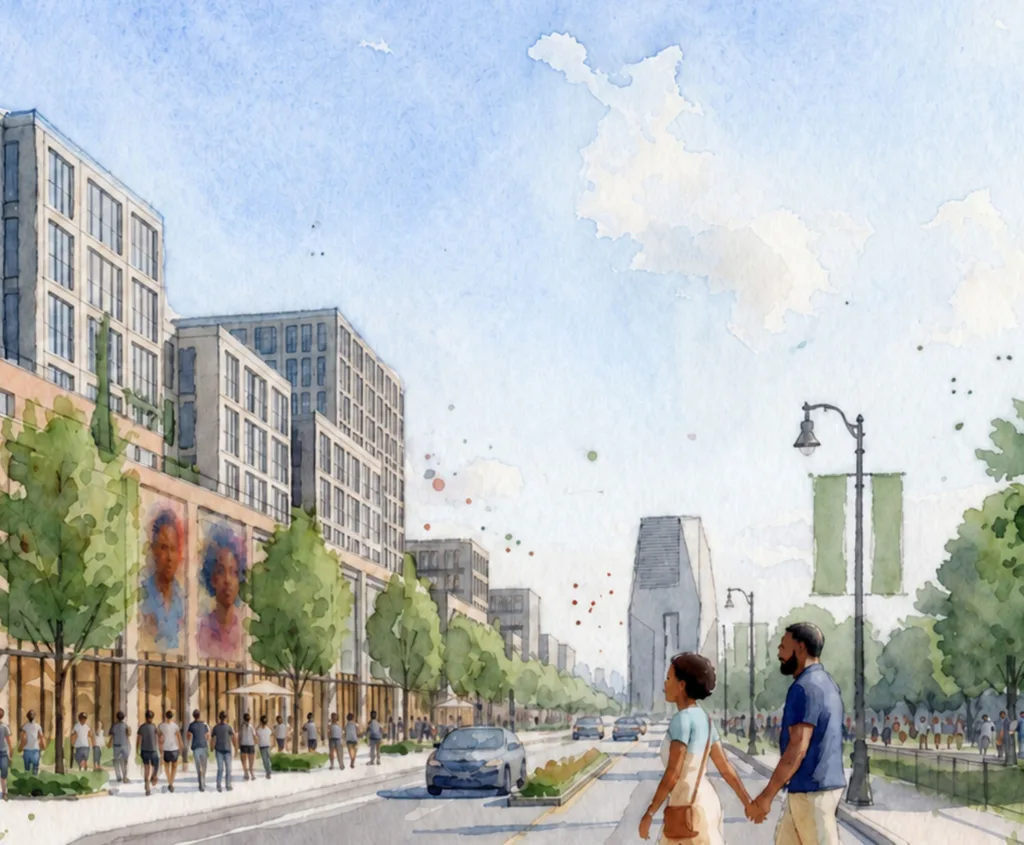
Cox’s students sketched profiles of potential residents and visitors, alternately new to the neighborhood or here for generations. There are entrepreneurs finding their niche in live-work units, small business owners repopulating street life along 63rd Street, young families with small children looking to urban heterogeneity to consolidate their programmatic needs in a tight circle, and retirees that want to stay close to their grandchildren. Instead of deploying these archetypes in isolation as passive consumers to be served, the most successful plans chart not just their programmatic preferences, but also the circulation routes through the district they use to meet them.
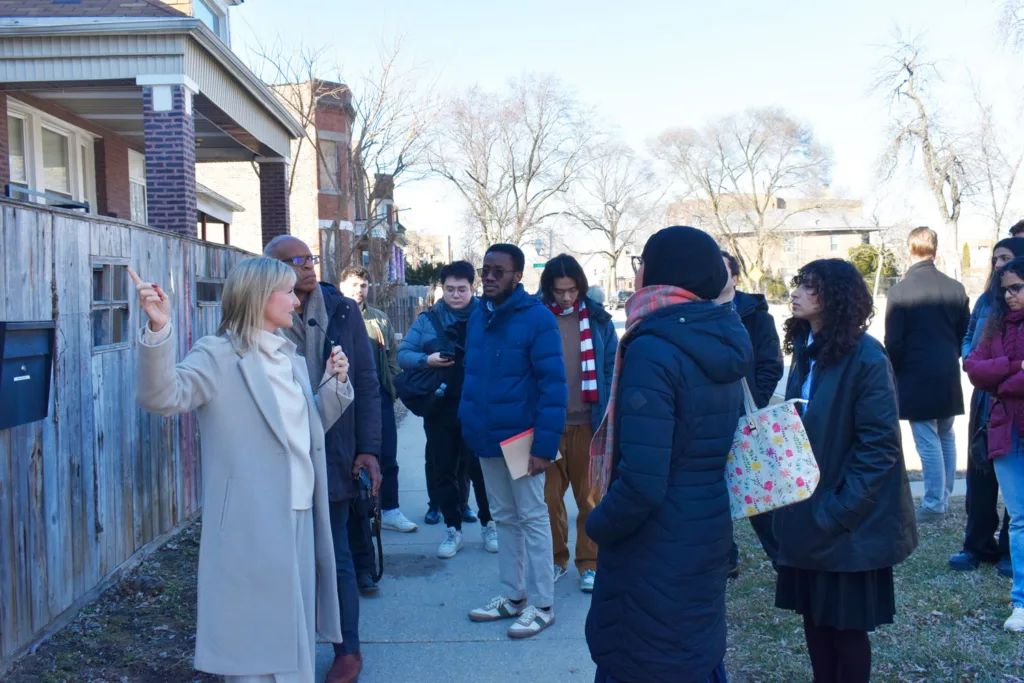
Multidisciplinary studio teams (each composed of urban design and real estate students) devised proposals that hinged on a week-long site visit to Chicago in late February, to immerse themselves in the concerns and culture of local stakeholders as much as possible. Students met with developers with varying degrees of interest in Woodlawn, but also local entrepreneurs like Loeb Fellow Cecila Cuff, former housing commissioner Marissa Novara, and former Chicago Tribune architecture critic and Nieman Fellow Blair Kamin.
The four weeks of desk research students focused on before the trip set “a baseline plan, and [then] you can find out why everything you thought was wrong,” says Devine.
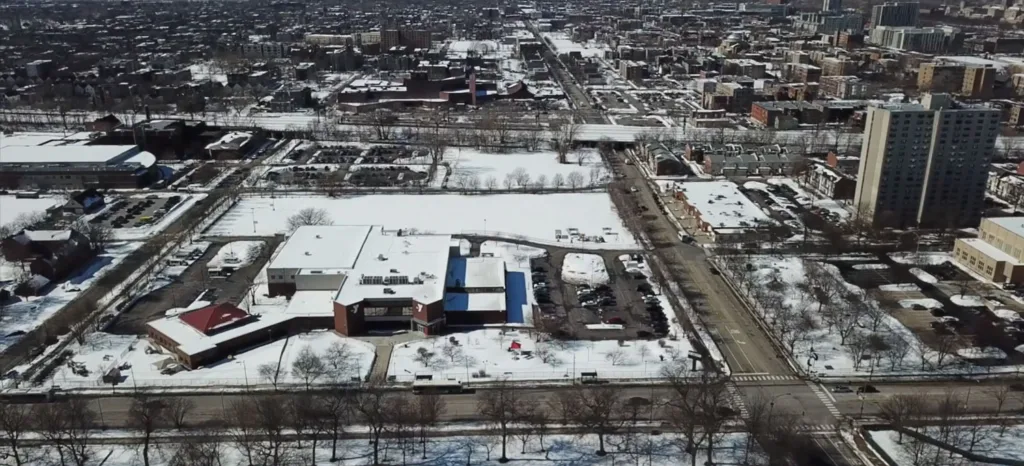
The proposals are phased gradually and often begin with improvements to existing community institutions like the YMCA on Stony Island Avenue, and neighborhood-level cultural amenities are tuned to local residents, not tourist visitors flocking to the OPC. A key demand absorbed during students’ time in Chicago was keeping the YMCA open continuously through construction. “They would not have understood that closing, even temporarily, would present a political challenge for them, and perhaps even a non-negotiable one, had they not met with the YMCA leadership and gained that kind of insight,” says Cox.
Students got a close look at how the commercial hollowing-out of disinvested neighborhoods looks and feels—the death spiral of too few things to see and do, leading to too few people on the street—and the corrosive impact this has on one’s sense of security and place. Let out to walk the site for a few hours, students realized there was no place to stop for coffee or even a bathroom. For neighbors, Devine says, there was “nowhere to re-invest or spend their own money.”
“That’s not something that you can learn through Google Street View,” says Cox.
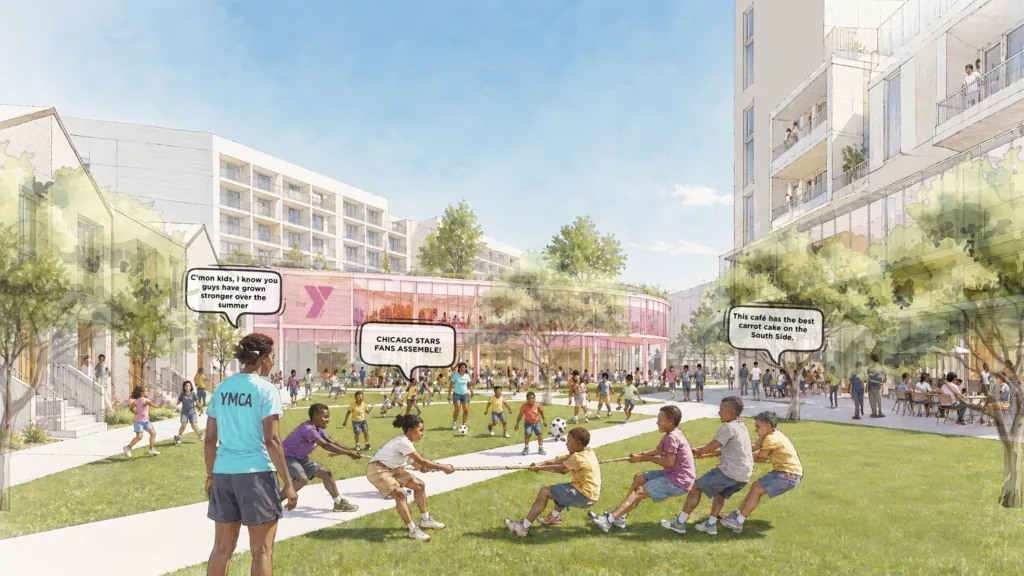
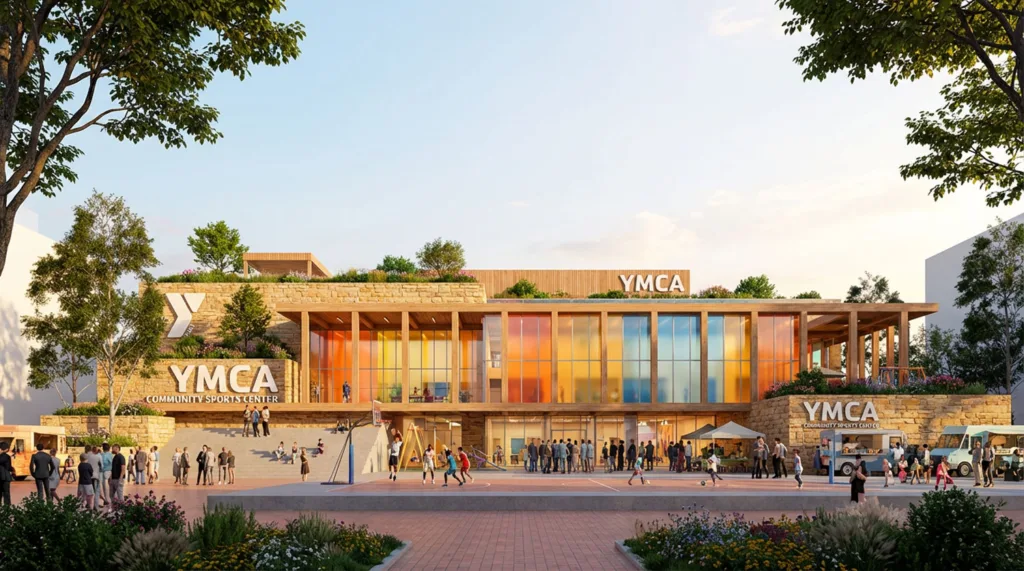
To ensure that the people who have kept their faith and homes in Woodlawn can stay, the studio came with a mandate for zero unit-to-unit displacement, and a minimum 20 percent affordable housing across the site, but some teams opted for up to 50 percent. And this is the zenith of the studio’s inherent tension between development efficacy and inclusive, civic ambition.
During the students’ trip to Chicago “hard-nosed” real estate professionals offered “sobering” warnings to the students, Cox says. Some were “unlikely to take the risk, frankly, that the Obamas did when they placed the OPC there. Not everyone comes to the real estate proposition with a social and cultural agenda. [Students] also saw the other side, meeting with people that were mission driven, and were willing to forgo some of the financial returns in favor of a cultural or social return. Students have to make a persuasive argument and negotiate those different perspectives.”
The benefit of these flexibly detailed and multi-phased plans is that they allow emerging and local community developers to see how their specific expertise can play a role in the greater whole, whether that’s developing housing, retail, or cultural spaces, says Cuff, a Chicago hospitality designer and regenerative development strategist who works predominantly on the South Side, and participated in the studio’s final review. “This creates a really tangible plan to allow community-based developers to play a part in a greater story.” In these communities, she says, neighbors have often been “developed at from people outside the community.”
Alternative financing arrangements, like land trusts, join the teams’ “lasagna menu of capital stacks,” says Cox, but public sector incentives will have to be part of the conversation. Much of the studio’s discourse involved the tricky business of quantifying the benefits of social and cultural inclusion, and climate sustainability. The detailed real estate pro-formas the teams produced are meant to monetize the benefits to the environment and society “in a way that investors can price it, understand it, and are more likely to then fund it,” says Devine.
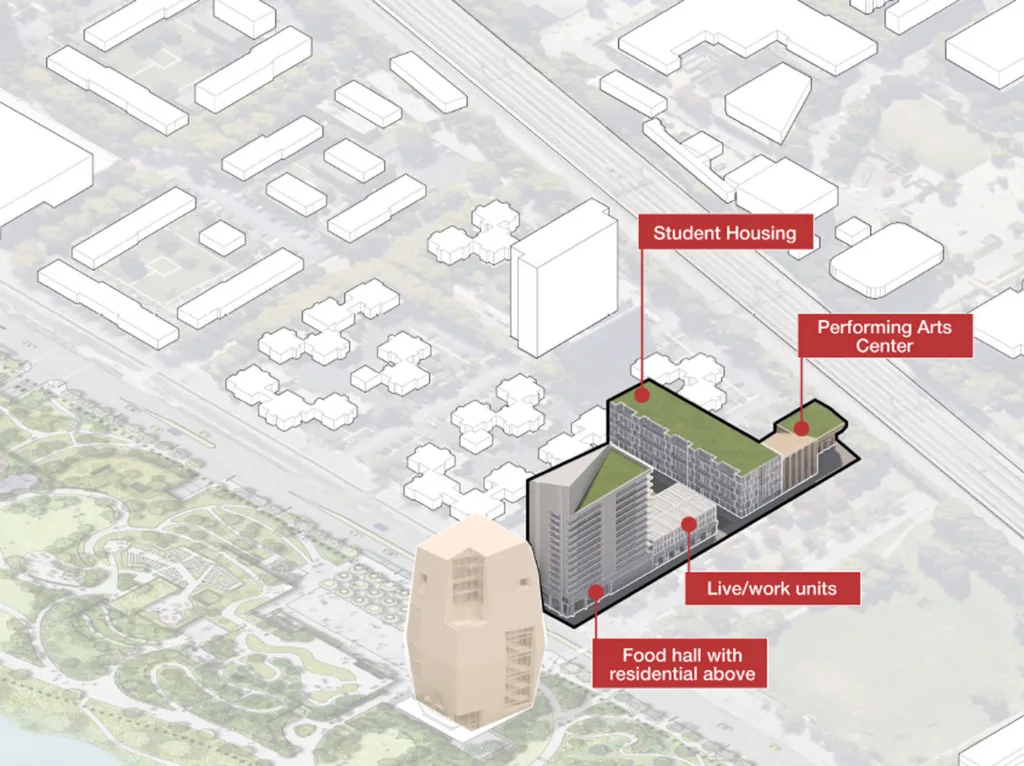
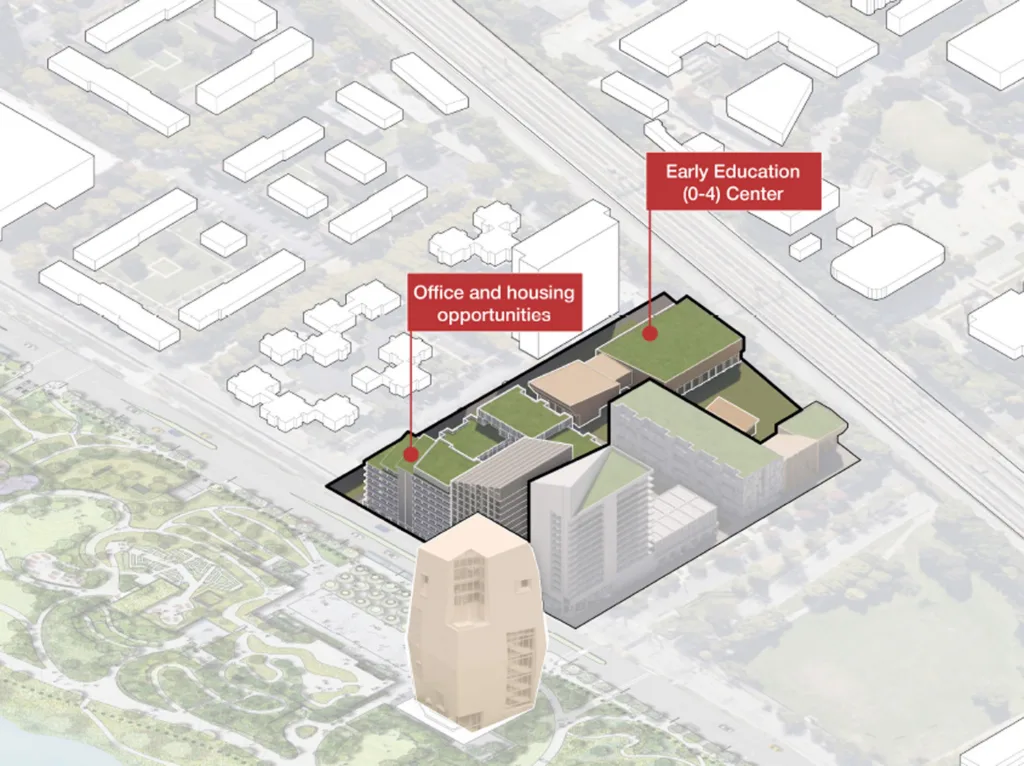
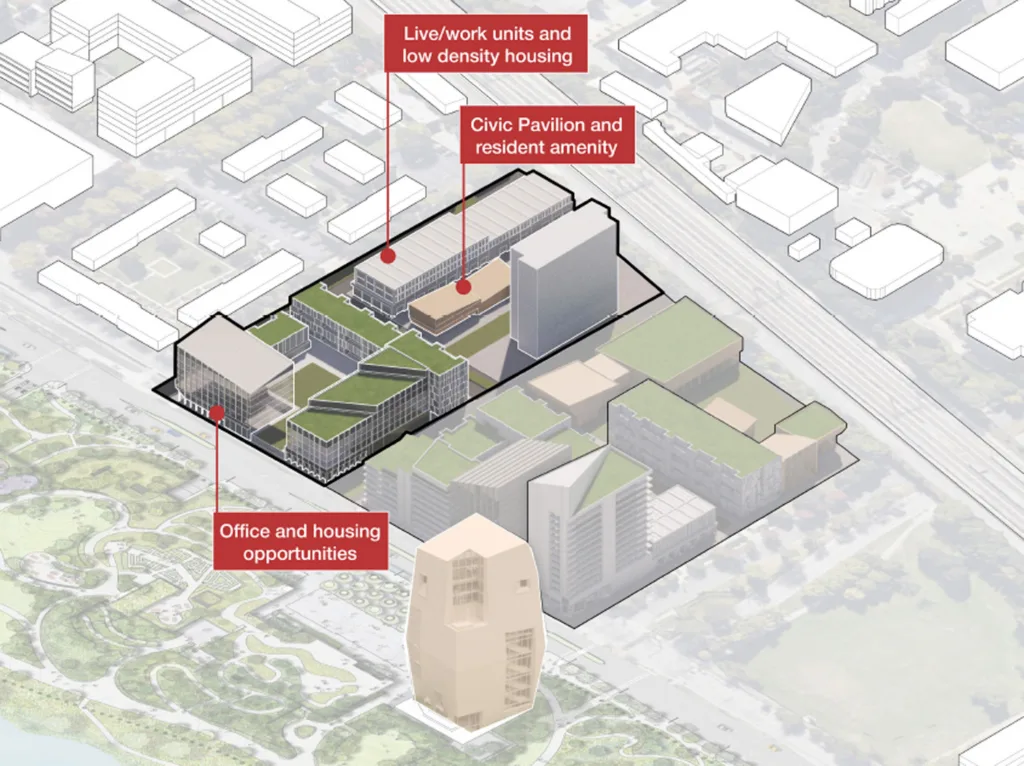
To minimize displacement and the gentrification that often follows large capital investments in marginalized neighborhoods, the proposals emphasize larger family-sized apartment units with two to three bedrooms, and internal courtyards for residents with small kids, as well as cloistered, pedestrian greenways. Building to building and block to block, this new urban fabric is rather diverse: townhouses next to duplexes, next to mid-rises and high rises, lined with street-level retail. “So much of our mindset in the studio was: How do you repair, restore, and rebuild in a way that provides greater options and integrates affordability into the very form of the building types?” Cox says.
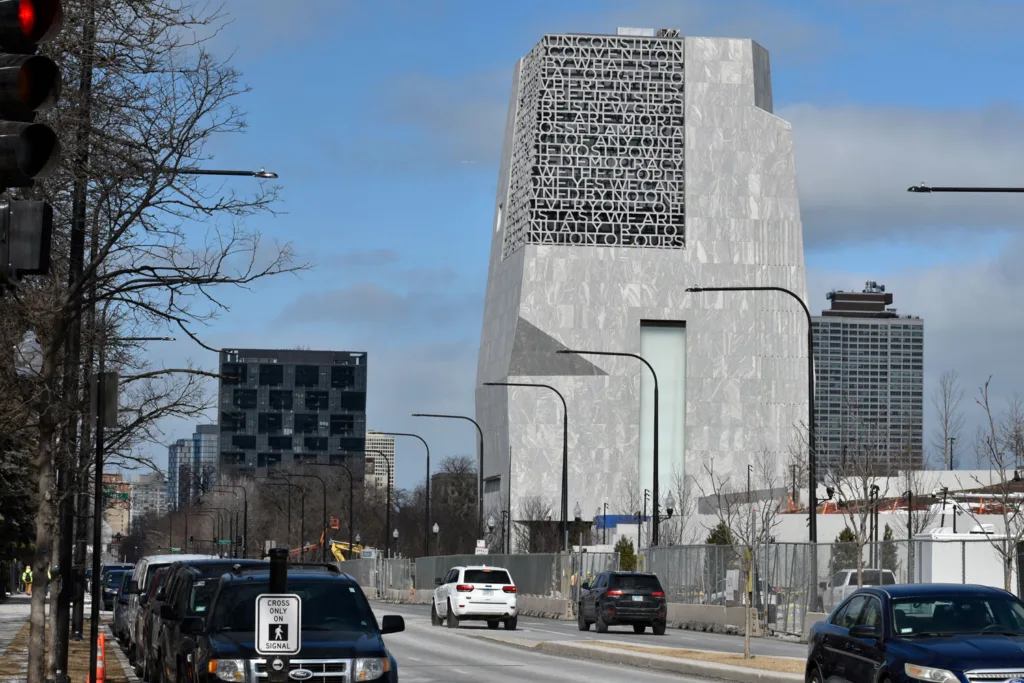
But from the top of GSD alumna Jeanne Gang’s Solstice Tower in Hyde Park (another site visit destination for the GSD students), as the granite monolith of the OPC came into view, students got a visceral lesson of how marketized amenities drive real estate. “Vistas became an important amenity that they saw tied to higher density,” says Cox.
And while there are few residents on the initial 11-acre site, the blocks to the north encompassing long-term plans host the 318-unit Jackson Park Terrace affordable housing development. The GSD students’ plans for Jackson Park Terrace incorporate them as renovated buildings as well as new construction, prompting hard conversations about how to make the very real sacrifice of domestic disruption—even when the total number of residential units would not drop—worth it for residents.
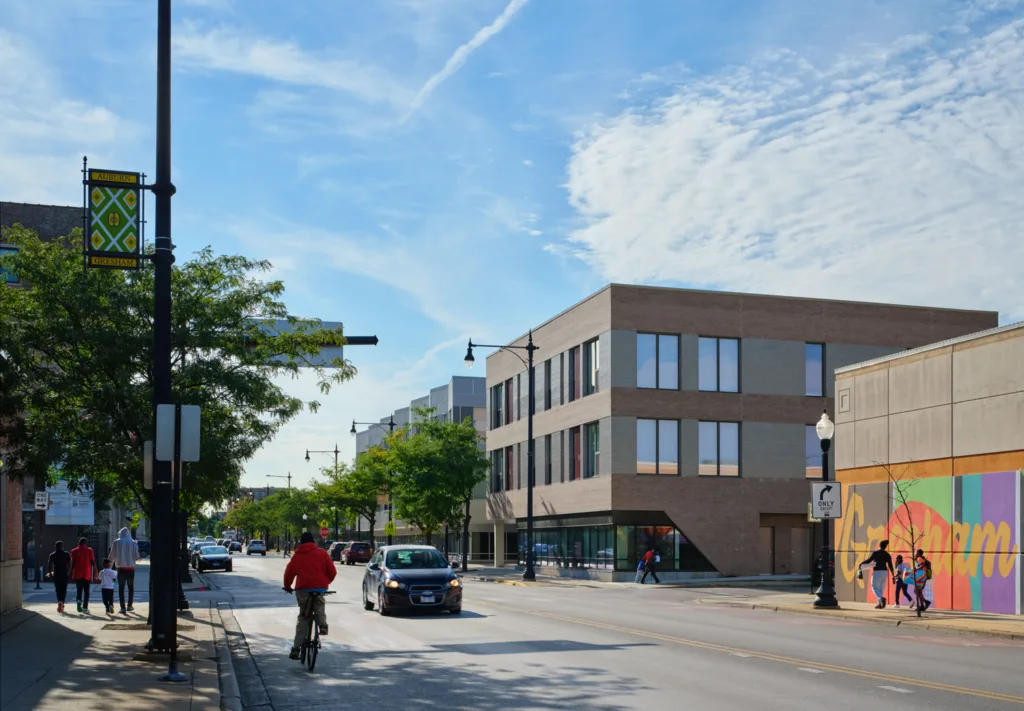
The existing vacancy onsite can help place new housing next to the old, as can Cox’s past experience in Chicago spearheading Invest South/West, former mayor Lori Lightfoot’s campaign to adaptively re-use historic structures on the South and West Sides as regenerative community infrastructure that can spur further waves of reinvestment in places starved of it. Working across 12 commercial corridors in 10 neighborhoods, Invest South/West sought to leverage intense collaboration between Cox’s design and planning department, the mayor’s office, emerging Black and Brown developers, and the wider private sector to instigate public sector–funded touchstones of development that would be best positioned to touch off concentric waves of further private sector investment.
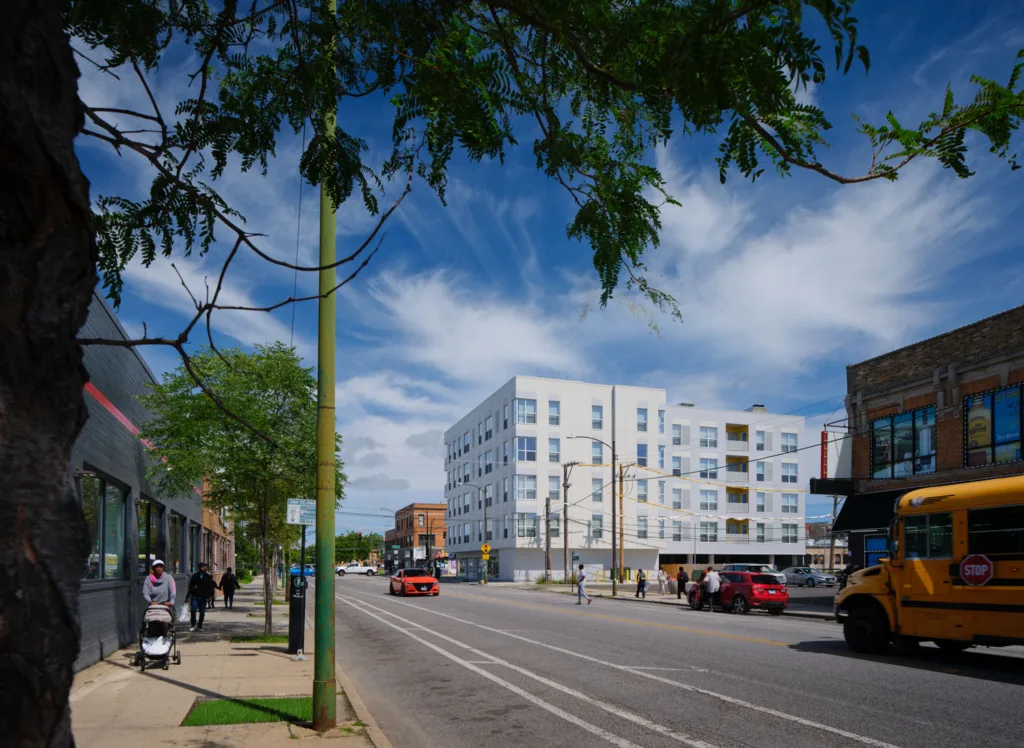
Cox and Lightfoot organized a competitive bid process that prized newer, emerging developers and the community groups they served, and assembling this constituency meant reaching much deeper into the developer strata than recent administrations were used to venturing. It was a data-driven approach, collating quantitative factors (transit proximity, concentration of business licenses, historic building fabric, existing amenities) to chart the most effective places to seed development. And through hundreds of meetings with community members, Cox and his team often found that baseline infrastructure and public safety improvements had to be addressed before neighbors could commit to supporting the adaptive reuse of their ailing commercial corridors. In one South Side neighborhood, the top priority was pedestrian safety, which was not on the city planner’s radar.
This deep, place-based research set a development agenda far afield from the preferences and habits of the usual suspects, and the mayor and Cox heard about it. “We pissed off a lot of people who were used to being the self-appointed spokespeople for a particular neighborhood,” said Mayor Lightfoot during a panel discussion at the GSD last year. “When we told them that we’re not just going to hand the money over to you and hope for the best, that there’s going to be a process, that it’s going to be competitive, that it has to contain these certain elements in order for you to get these dollars that have never been invested in these neighborhoods before, we made a lot of people angry with us.”
Building support for this initiative meant that Cox and Lightfoot had to introduce this emerging developer community to public sector work with the city (virtually none of the developers selected had received any significant city-funded projects, Lightfoot said) and introduce developers from outside of these neighborhoods, large retailers, and bankers to the South and West Sides’ entirety. These introductions took the form of bus tours of targeted neighborhoods that revealed to Lightfoot that “many of these folks, it was clear to me, had never set foot in a single one of these neighborhoods, never even thought about the possibility of bringing a branch bank [or] retail to any of these corridors. But when they saw the investment we had made, it changed people’s hearts and minds.”
The city began with an initial public investment of $750 million and ended with an even split between public and private money. Today, 9 out of 14 commissioned projects are either complete or under construction, including the first parts of a mixed-use cultural, commercial, and housing campus in the West Side neighborhood of Austin centered on a graceful 1929 Art Deco bank. “These efforts need to be sustained for a generation,” said Cox at the panel discussion.
“There are very few disciplines that teach you how to take society goals and make them manifest in a building or landscape,” says Cox. “Urban design forces a conversation about a particular group’s goals,” says Cox. “That’s why it is such a powerful political tool.”