Social Housing, Reconsidered
Four housing experts examine what social housing is, what it could become, and what stands in the way of realizing it.
Amid a deepening housing crisis—and mounting doubt about the adequacy of existing tools—social housing has reentered public debate with new urgency. What does social housing mean in the United States today? How does it differ from public or affordable housing as traditionally conceived? What does it encompass in practice? And what would it take to move from renewed interest to implementation at scale?
This roundtable, convened at the Harvard Graduate School of Design (GSD), brings together four housing experts: Chris Herbert, managing director of the Joint Center for Housing Studies and lecturer in urban planning and design; Susanne Schindler, research fellow at the Center; Becca Heilman, graduate research assistant at the Center and master in city planning candidate at the Massachusetts Institute of Technology; and Magda Maaoui, assistant professor of urban planning. Spanning policy, design, research, and practice, their perspectives trace a shared through line across these questions.
What emerges is a picture of social housing not as a single model but as an evolving field—shaped by international precedents, local experimentation, and ongoing debates over funding, governance, social equity, and design. As cities and states begin to test new approaches, the conversation points both to the promise of more expansive, inclusive housing models and to the substantial challenges that remain in realizing them.
A. Krista Sykes
What defines social housing, how does it fit into the current landscape of housing policy, and how does social housing differ from public housing policies of the past?
Chris Herbert
The social housing movement in the United States began to take shape seven or eight years ago, in the mid-2010s, when proposals advocating for social housing began to appear largely from organizations with a strong tenants’ rights focus. To me, that reflects the fact that housing affordability has expanded over the course of this century from being primarily a problem for very low-income households to one that affects a much wider range of people seeking affordable housing.
It also gave rise to the YIMBY movement—Yes In My Backyard—in places like San Francisco, where many educated young people moving to the city found themselves priced out. The movement reflects growing recognition that the way we currently provide housing is not working.
Many of the people thinking about how we might do things differently were inspired by developments in Europe, which is partly where the term social housing comes from. Although, in Europe the term is neither especially well defined nor universally used. One of the challenges is precisely that it does not have a single definition—people bring their own meanings to it.
Still, the idea usually includes two core elements. One is that housing is owned and managed with the goal of providing permanent affordability, rather than generating profit for an owner. That typically means public or nonprofit ownership. Another is that it serves a broader range of income groups than traditional subsidized housing, which in the US has generally been aimed at low-income households. It is social, in that sense, because it serves a wider income mix.
Beyond that, people attach additional aspirations—community building, renter empowerment, sustainability, resilience, green design, and labor fairness. These meanings tend to accumulate around the term.
Susanne Schindler
Social housing is not only about affordability. It’s also about the way housing is produced. The US system for income-restricted affordable housing is incredibly complex. It depends on private investors and often requires refinancing after a relatively short period, which is inefficient, even though it enjoys strong political support.
The current system does not reliably produce housing that sustains itself financially over the long term.
Chris
Adopting the term social housing is, in part, an attempt to reframe the conversation. In the US, one could ask: why not just call it public housing? The answer is that public housing carries a long history and a great deal of baggage, along with persistent misconceptions.
At the same time, there is an effort to distinguish this approach from the conventional Low-Income Housing Tax Credit (LIHTC) model—a federal program that uses tax incentives to encourage private investment—and everything that entails. The term social housing signals a fresh way of thinking about how housing might be provided.
Becca Heilman
One issue that shaped the recent redevelopment authority paper Susanne, Chris, and I wrote was where social housing fits within the existing ecosystem of actors. Do we need to create new institutional structures to carry it out, or can existing ones take on this role?
In California, for example, there was a proposed bill to create a new state-level authority for social housing development. At the local level, some cities rely on existing housing authorities, while Seattle created a new public development authority, Seattle Social Housing. A central question is who carries this out, and how nonprofits, public agencies, and the private sector might all be involved.
Magda Maaoui
In times of economic stress, people tend to look more openly, and perhaps more hopefully, at publicly funded and publicly supported projects, as well as at public leadership. That is true in Europe and, I think, it is increasingly true in the US, at least at the local and state level. It helps explain the current momentum.
A second reason is that social housing suggests more than housing, full stop. It carries the idea of the social—it is part of a broader social contract. Historically, that has meant housing integrated with civic, health, and other forms of infrastructure—elements not typically associated with private-sector or market-rate housing.
Krista
If social housing is gaining momentum, what are the main obstacles to putting it into practice? Across municipal, state, and federal levels, what stands in the way of building a more robust model that goes beyond traditional US public or affordable housing? And how much of the challenge is conceptual or political?
Susanne
At the most basic level, the obstacle is money. The conceptual barrier—the narrative, or even a basic understanding of what social housing means—is important. But the more immediate issue is funding: where it comes from, under what terms, and over what duration.
Who is investing? What is the interest rate on the loan, and who is issuing it? Is it public debt? Is it private debt backed by public insurance? That latter is often more politically palatable, because voters are not directly repaying the government; they are repaying a bank, with the government enabling the arrangement.
Recent programs have relied on bond financing or on one-time federal funding through the American Rescue Plan Act (ARPA) to seed revolving funds, which are continuously replenished through repayments or project revenues. Seattle, to my knowledge, is one of the few places with a dedicated social housing tax: a payroll tax on compensation above $1 million, paid by employers, with revenue flowing directly to a newly created social housing developer. That provides a predictable source of capital that can be used to borrow, invest, acquire property, and otherwise operate.
The key point is that social housing requires stable, dedicated funding.
Becca
To add to that, many of the domestic models we see are emerging at the local and state level. That may reflect a shift toward creating more sustainable funding sources. Rather than relying on limited congressional appropriations or LIHTC allocations, cities are experimenting with revolving funds and other financing mechanisms that can support housing over time.
Magda
We also need to think seriously about land, and about ways to reduce acquisition and land-holding costs, which are a major burden for social housing developers. That means looking both to emerging domestic practices and established international examples—for instance, strategies built around land banking and broader definitions of available land, including the conversion of existing structures and the adaptive reuse of largely public assets. This more expansive, 360-degree view of land management—and its potential for social housing authorities or developers—is a crucial part of making the model succeed.
A second issue, especially relevant in a design school, is the need to think beyond construction or transformation and consider the long term: maintenance and retrofit. Historically, short-term thinking has been a dangerous trap, and it can become another source of vulnerability for the model over time. The question is not only how to launch a project successfully, but how to sustain that success 30, 40, or 50 years into the future.
Chris
From my perspective, one major barrier to the broader adoption of social housing is simply the high cost of housing. If it takes hundreds of thousands of dollars per unit to make housing affordable—even for moderate-income households—then scaling becomes extraordinarily expensive, requiring significant political will to commit the necessary resources.
A second issue is the acute housing shortage for very low-income households. In that context, allocating public resources to moderate-income housing creates a zero-sum dilemma: when not everyone can be served, how do we decide who benefits? Part of the social housing movement’s strategy is to build a broader coalition around the need for affordability across a wider range of incomes. That wider support can help make policies like the Seattle tax politically possible. But the underlying question remains: who gets served, and can everyone be included?
A third challenge is the role of the public sector itself. If social housing depends on public leadership or ownership, it must contend with both the legacy of public housing and overarching distrust in public institutions. Convincing people that government can play an effective role remains a major hurdle.
Krista
Given those barriers, it could be helpful to turn to places that are beginning to test alternatives. Some of you have alluded to examples in the US and elsewhere that could be models for future social housing. What can make social housing successful?
Madga
Before turning to individual projects, I think it’s more useful to focus on a set of principles that shape successful efforts—although in practice, these goals are often unevenly interpreted or only partially achieved.
One essential principle is the sustained presence of the public sector in management. I’ve seen this repeatedly in French projects. When the public sector remains actively involved in maintaining projects over time, it provides a stronger guarantee of affordability than approaches that rely solely on market dynamics. It also makes it easier to preserve not just affordability, but deep affordability, supporting a fuller social mix over time.
Another principle is that, before focusing exclusively on new construction, or assuming that older projects should be demolished, we should think seriously about adaptive reuse and renovation. There is currently a major movement in Europe across cities, EU member states, and the European Commission advocating for renovation through subsidies, policy strategies, and charters oriented toward existing resources. That is a best practice reinforced at multiple levels of governance, and it could be highly compelling in the US context.
Susanne
Many models in other countries work for two reasons. First, income inequality is generally less extreme than in the US, and the question of public involvement in housing provision is historically less racialized. Second, the social safety net—healthcare, education, retirement—is generally more robust. In contrast, the role of homeownership in wealth building is deeply embedded in the American system and imagination, in part to make up for that missing social safety net.
These realities lead to a fundamental question: who is this housing for? Why should somebody who can afford market rent be eligible for social housing? Shouldn’t resources be reserved exclusively for the poorest households?
This is a major conceptual challenge. But some developments in New York City are interesting. For example, the Mamdani administration recently established a free city-run daycare center on the Upper East Side that is open to everyone. This has sparked debate: should it be located in a wealthy neighborhood, and should it be universally accessible? The administration’s position is clear—if a public program is to build broad political support, it must be understood as serving everyone. High-income earners pay more in taxes, and they should be able to send their children there.
In practice, higher-income households often opt out; they may choose not to live in social housing or use certain public services because they have other options. But it is still important to frame these programs as resources for everyone. That is a major political ask, but I think it’s worth testing.
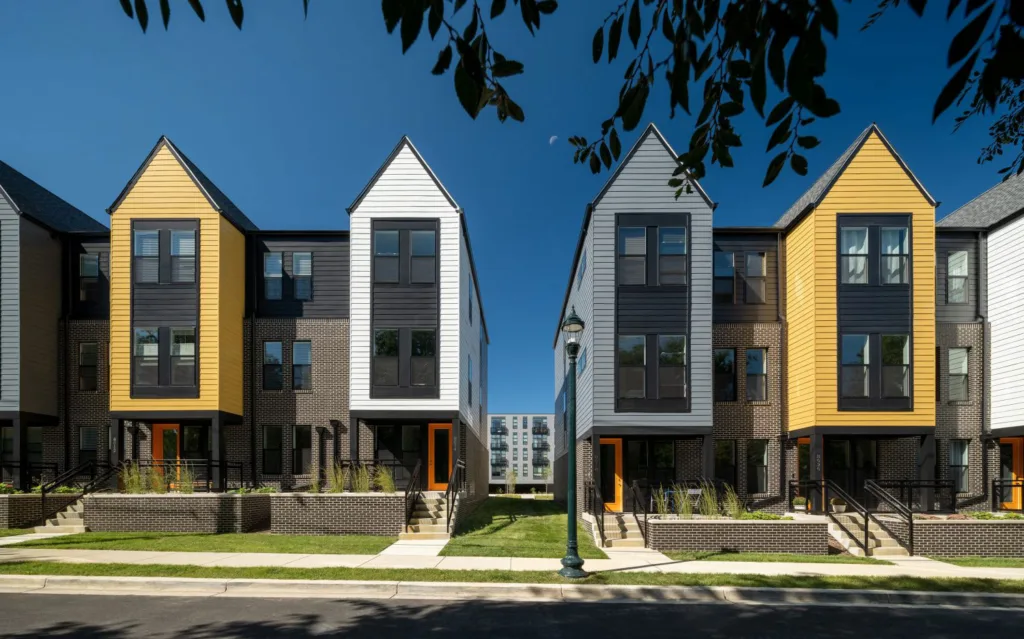
There is also the concept of cost rent, which is well established in countries such as Austria and Switzerland. With cost rent, rents are set based on actual costs—development, maintenance, reserves—rather than tenant income, unlike much of the affordable housing in the US. This makes projects more financially stable.
Cost rent is, in some ways, an easy idea to promote. It does not depend on subsidy, and it’s not designed to generate profit. At the same time, if underlying costs—land, construction, labor—remain high, cost rent can still approach market levels, making it unaffordable. What happens then?
Chris
A core principle to draw from social housing models abroad is the central importance of social equity. Housing is owned and operated so that returns flow back into the system, with affordability itself understood as the return.
Another defining feature is the relative simplicity of financial structures. What we would call the capital stack typically includes low-cost public debt, some commercial debt provided on favorable terms, and forms of social equity accumulated over time. This creates a system in which returns are realized through lower rents rather than maximized profit.
That is the essence of the cost rent model. If capital is cheaper—and if equity does not demand high returns—affordable housing becomes more feasible. The model is also more sustainable, since rents cover costs and are not tied to income volatility. It is also more egalitarian, since eligibility is broader and households are not differentiated as sharply by income.
In that sense, the structure of capital is foundational—it shapes everything else.
Krista
That raises the question of what these models look like in practice. As an architectural historian, when I hear “social housing,” I think of projects like Karl-Marx-Hof in Vienna or Co-op City in New York. In terms of design and organization, what does 21st-century social housing look like? Are we seeing new forms emerge?
Susanne
So far in the US, many programs—whether in Montgomery County, Maryland, Seattle, Chicago, or Atlanta—have not sought an alternative to what is being built commercially, often because they’ve entered projects as investors and co-owners after the developments have already been permitted. They bring public financing into the deal to make a portion of the housing affordable, but they have not been deeply involved in the planning stages.
Part of this is cost. Construction is extraordinarily expensive. Even in Seattle, where there are strong environmental and design ambitions, the new social housing development entity is turning to acquisition and conversion of existing properties because it is much cheaper than new construction.
Public housing authorities in cities like Los Angeles and Philadelphia have followed a similar strategy, purchasing relatively new market-rate developments—often around five years old—at a fraction of what new construction would cost. These properties are not subject to the same procurement constraints as new public development, and some market-rate tenants can remain in place while converting other units to more affordable rents.
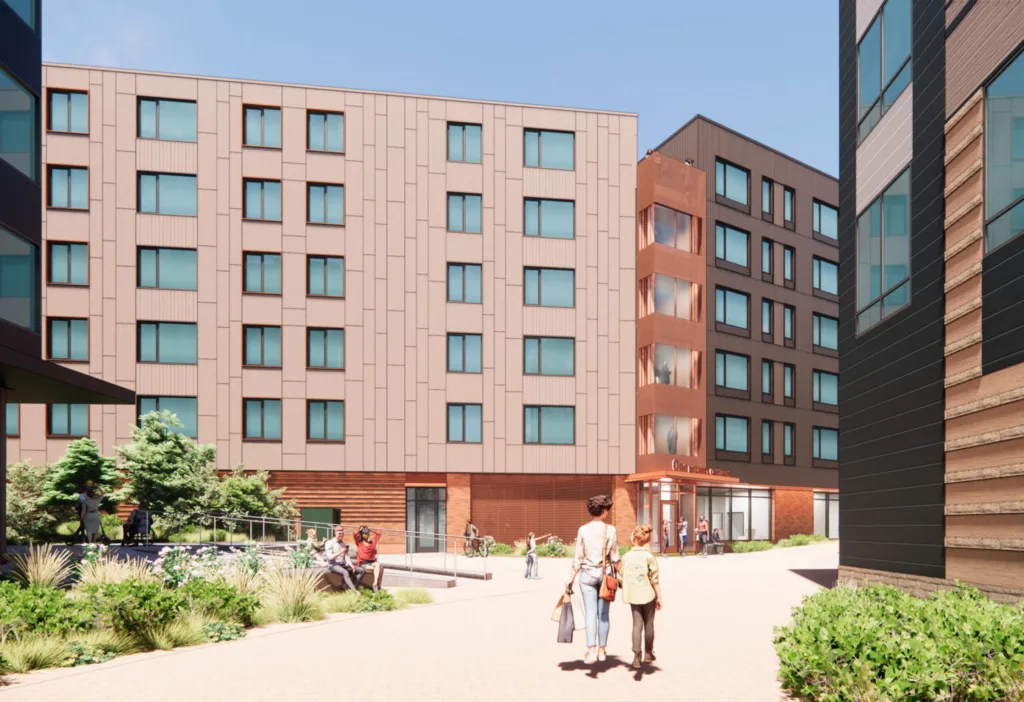
Taken together, we have not yet seen genuinely new housing models emerge in the US. That will likely take time.
Magda
In Paris, acquisition—rather than new construction—has been central to the social housing strategy. Around 2000, social housing accounted for roughly 13 percent of the city’s housing stock. Twenty-five years later, that figure is close to 24 percent. Much of that growth has come through incremental acquisition. This demonstrates how working with existing buildings and infrastructure can be highly effective, even in dense, built-out cities.
There are also other actors in this success story whose roles offer lessons for the future. It is not only the public sector; architects have also played an important role, often through highly mission-driven work that has produced exemplary models. For example, Anne Lacaton and Jean-Philippe Vassal successfully challenged demolition-driven urban renewal policies. They persuaded France’s national urban renewal agency—which was highly technocratic, top-down, and strongly committed to its existing model—that renovation could be a viable alternative to demolition and reconstruction, more cost-effective and less disruptive, allowing residents to remain in place even through renovation.
Their success is instructive; it shows something important about the range of stakeholders—including architects—who can advance this work. Building within existing constraints is not only a technical or financial question; it is also a political and institutional one.
Chris
In the US, the movement toward social housing has focused primarily on new construction, partly because the dominant narrative about housing affordability is that the crisis results from having built too little housing. As a result, those advocating for social housing often argue that, to make a meaningful contribution, we must add to overall supply.
Yet, as Susanne noted, acquisition is often far more cost effective and creates long-term public value. It should be central to efforts to expand social housing stock, particularly in the near term.
Cities such as Chicago and Seattle, which are launching these initiatives, do see acquisition as a way to start quickly. In many cases, however, they acquire relatively new developments that have stalled because of financing challenges, rather than buying existing housing more broadly.
My view is that, as the movement develops, acquisition will become an increasingly important part of building the sector. Social housing must reach scale to have real impact, and acquisition will likely be one of the key ways to achieve that.
Becca
From a planning perspective, there is also a strong interest in creating spaces of connection. Mixed-income developments can be an opportunity to build social cohesion, create infrastructures of care within communities, and think more intentionally about how housing is integrated into the broader urban fabric.
Magda
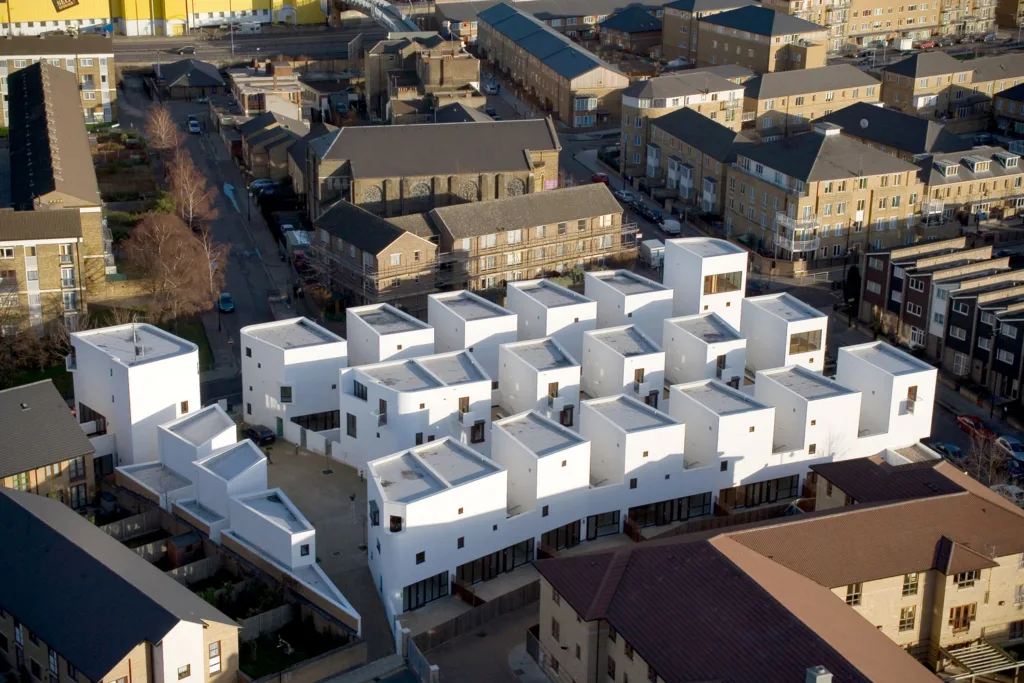
Yes, this is critical. Social housing is not just about units—it is about creating shared infrastructure and common spaces. That idea is central to much of the British housing developed by Peter Barber, whom the Center hosted last year. He underscored the idea that social housing can become a desired part of the city’s fabric—not only a collection of homes, but also a set of shared commons.

That notion of the commons accompanying social housing is a hallmark of much of the British housing Barber has developed, and it is a powerful model. More generally, shared spaces are often a key feature of successful housing projects. They suggest planning at the scale of the neighborhood rather than the individual parcel.
They also challenge the assumption that social housing must be cheaper looking, more compromised, or architecturally inferior—that it has to be made visibly less desirable because it is social housing, or that market-rate residents would resist being offered the same quality of space.
How people perceive social housing is crucial to whether a model succeeds or fails. When we describe social housing as “beautiful,” the term may initially sound superficial, but it is not. It speaks to whether residents feel that their dignity is preserved and honored when they are offered a social housing unit.
Susanne
I’ll add a sobering point. Even when advocates for higher-quality housing—say, in the context of the New York City Housing Authority (NYCHA) 10 or 20 years ago—could show that better design might actually cost no more, or even less, than the standard approach, the idea was often rejected. As noted by David Burney, former commissioner of the New York City Department of Design and Construction, the argument was that the housing should not look “too nice” because it was intended for poor people, and taxpayers would object to funding something perceived as too good.
You see a similar dynamic in debates over upzoning, whether in Cambridge or elsewhere. On one hand, opponents say the percentage of new income-restricted housing is not affordable enough and therefore does not serve the people most in need. On the other hand, if it were to serve those households more directly, many of the same critics would not want it nearby because of the kinds of residents they imagine it would bring. In that sense, the objection is often shifting but persistent.
If the housing is too attractive or too well designed, it is framed as an inappropriate use of public money. Yet beneath that is a more fundamental belief: that the public sector should not compete with the private sector. If the public sector were suddenly to offer apartments that are well designed, widely desirable, cheaper than the market, and open to everyone, many would see that as unfair competition with private housing.
These are deeply ingrained constraints, and in some cases codified in law and policy as well. Still, there are signs—such as Seattle—that the narrative may be shifting.
Krista
Given those embedded political, cultural, and even legal constraints—but also the sense that the narrative may be starting to shift—what can institutions like the GSD do to help move that change forward? The Center, for example, has done a great deal of work in this area. How can that research shape what happens at the GSD, and how can students coming out of the GSD help support the emergence of social housing?
Becca
It was really helpful to take classes that built a strong understanding of the US housing system while also creating opportunities for comparative work across other countries. That combination helped me better understand both the system we have and the possibilities we might build toward.
Project-based work is also especially valuable. In Chris’s class “(Re)Envisioning Social Housing in the US,” for example, we worked in teams to design a new social housing program for a municipality or state of our choice. That was an amazing opportunity to think through all the elements of what a new system could look like.
Creating more opportunities for that kind of project-based work is important. Academic space can be a place to imagine, test, and develop new ideas, and I think there is real value in fostering that.

Magda
One thing we share on the faculty side—especially those of us doing comparative work—is that we are deeply grounded in the contemporary American context, immersed in the challenges, constraints, and realities specific to Cambridge, to Massachusetts, and to the country. As a result, the comparative work we do moves beyond the simple circulation of so-called best practices. That approach often breaks down the moment a student enters a professional setting, where a client or employer may say, “We’re not Montreal. We’re not Copenhagen. We’re not Paris. What exactly am I supposed to do with those examples?”
I think there is growing momentum around a more realistic kind of comparative work—one that is genuinely useful to students after graduation. The goal is not to produce portfolios filled with abstract or overly polished ideas, but to equip students with something operational: ways of thinking and working that can be applied in practice.
One area where the GSD could play an important role is in valuing and elevating the jobs that help make more social housing possible. We should encourage students to see it as exciting and ambitious to work for a social housing developer, or to become designers, regulators, and public officials who operate in that space. Part of the task is to reinvigorate the sense that these professions matter, and that there is a real future in this work.
That is not easy. The current crisis, the lack of subsidy, and the broader political and economic conditions all make this work more difficult. But that may be precisely why it is such an urgent and timely challenge for the school.
Chris
As much as we can help advance these ideas by exposing students to new ways of thinking and giving them exercises that push beyond current models, we should also encourage them to consider places they might not otherwise look—places where there is real room for experimentation.
I’m thinking of two students in particular. One went to Chattanooga, Tennessee, where she helped develop a revolving loan program as a first step toward social housing in a deeply conservative state. It was probably not a place she initially imagined herself going, but the opportunity was there, and it proved to be surprisingly fertile ground. I have another student doing something similar in Bethlehem, Pennsylvania.
An important part of this is helping students see that meaningful opportunities for professional growth may lie beyond major cities like New York or Los Angeles.
Susanne
I would add one important caveat: even when a project clearly aligns with the broader goals of social housing, its promoters often avoid calling it that. In many red states, using the term social housing suggests socialism and even communism.
That said, a great deal is happening even in red or purple states. The public sector is taking a more direct role—as investor, regulator, and long-term steward of affordable housing—even if that work is not being described as social housing.
Chris
One of the most visible recent examples of a program that falls under this rubric appeared in a New York Times article by Conor Dougherty titled, “This Is Public Housing. Just Don’t Call It That.” The article focused on Montgomery County, Maryland, where the program is framed as mixed-income public development rather than public housing or social housing.
Krista
How do the residents of social housing contribute to this discussion, and how do researchers and policymakers engage with the people these programs are meant to serve?
Becca
I think a crucial element of the movement, which Chris also pointed to, is the role tenant groups have played in framing social housing around questions of resident control. The issue is not just resident engagement, or even resident participation in governance, but how to give people meaningful agency over their housing.
Magda
Grounding this discussion in the perspective of residents—their agency and their power over these projects—is crucial. Through my research and teaching, I have been involved with housing advocates in New York City, where there has been considerable momentum around Tenant Opportunity to Purchase Act (TOPA) and Community Opportunity to Purchase Act (COPA) proposals—anti-displacement policies that give tenants or nonprofits the right of first refusal to buy rental properties when owners sell. These efforts aim to re-center housing provision around tenant movements and organized resident groups.
The effort has not gotten off to a strong start this year, so I would not describe it yet as something developed enough to evaluate in terms of outcomes. But I do think it marks an essential area of experimentation in the American context—perhaps even more so than in parts of Europe. In Western Europe—and I am thinking especially of France—community-level organizing around housing is often less robust. In that respect, Europe may in some ways be looking to the US as a model.
That does not mean the broader conditions of scarcity and crisis can simply be overcome. But centering residents in the conversation reminds us how important their voices are in shaping successful housing projects. Again, to ground this in New York City, consider the controversy over “poor doors”—separate entrances for lower-income occupants of the affordable units in mixed-income buildings—and the lower-quality design often found in units serving households at different affordability levels. The pushback against these phenomena illustrates how stronger community engagement and resident participation in shaping projects can create greater accountability—and help move housing away from unequal, second-rate, or visibly differentiated forms of architecture.
Still, we need to remember that the 2015 ban on “poor doors” enacted by Bill de Blasio did not apply to projects already built or approved. Moreover, features such as amenity fees still de facto restrict lower-income tenants from having full access to the commons provided within the mixed-income projects in which they live.
Chris
Resident voice—and, I would add, community voice—is one of the most complicated aspects of this discussion. It is an important part of the movement as it has developed in the US, in part because that movement emerged largely out of a tenants’ rights framework. To Magda’s point, the question of resident control or empowerment does not occupy quite the same place in many of the more mature European systems.
I was recently in Vienna speaking with city officials, and they made the point that because there is such a strong culture of renters’ rights—rent control, multi-year leases, and something close to what we would call just cause eviction protections—there is less need for the same kinds of resident safeguards. In the US affordable housing context, by contrast, absent these kinds of broader tenant rights, resident voice is often understood as an essential check on the system, helping ensure that the quality of housing is adequate and that projects meet residents’ needs.
At the same time, there is a real tension here. How do you give residents voice and control when they may not always have the technical expertise needed to manage a property or make certain decisions? And not everyone wants that role; some people simply want a stable, decent place to live without having to worry about operational responsibilities.
Still, I would connect back to the broader idea of social housing. Giving residents and communities a greater voice in the purpose of housing and in what housing is meant to do helps create a culture in which housing is understood as more than shelter alone. It becomes a way of building community. That, I think, is an important part of the social housing movement—even if it is also one of the hardest aspects to define in practical terms.
Krista
We’ve been talking about affordability, tenant agency, and community—where do sustainability and equity begin to fit into this conversation about social housing?
Chris
As I said at the outset, there are several other key elements that people bring under the umbrella of social housing. In many places, resilience, sustainability, and environmental performance are central—Chicago’s program, for example, is explicitly called Green Social Housing.
Social equity is also crucial, in several senses: making housing accessible to a broad range of people, ensuring that it is located across a wide range of neighborhoods, and making sure that the people involved in producing it are paid fair wages. I think of these as concentric layers of social value that extend beyond affordability.
That is part of why social housing is not a single, fixed idea; it means different things to different people. Affordability may be the common denominator, but for many it is not enough on its own. The environmental dimension, the health dimension, and these broader equity concerns are all central to how housing is ultimately understood—and to what it is expected to provide.