Welcoming and Whimsical: The Peter J. Solmon (Class of 1960) Gate
In this excerpt from a new edition of Gates of Harvard Yard, published by Harvard University Press, Blair Kamin considers the most recent addition to the set of august portals that welcome students, scholars, and the public to Harvard University. Designed by Eric Höweler, founding principal of the Boston firm of Höweler + Yoon and professor of architecture at Harvard’s Graduate School of Design, the Solomon Gate, completed in 2020, embodies twenty-first-century design principles while evoking treasured literary traditions.
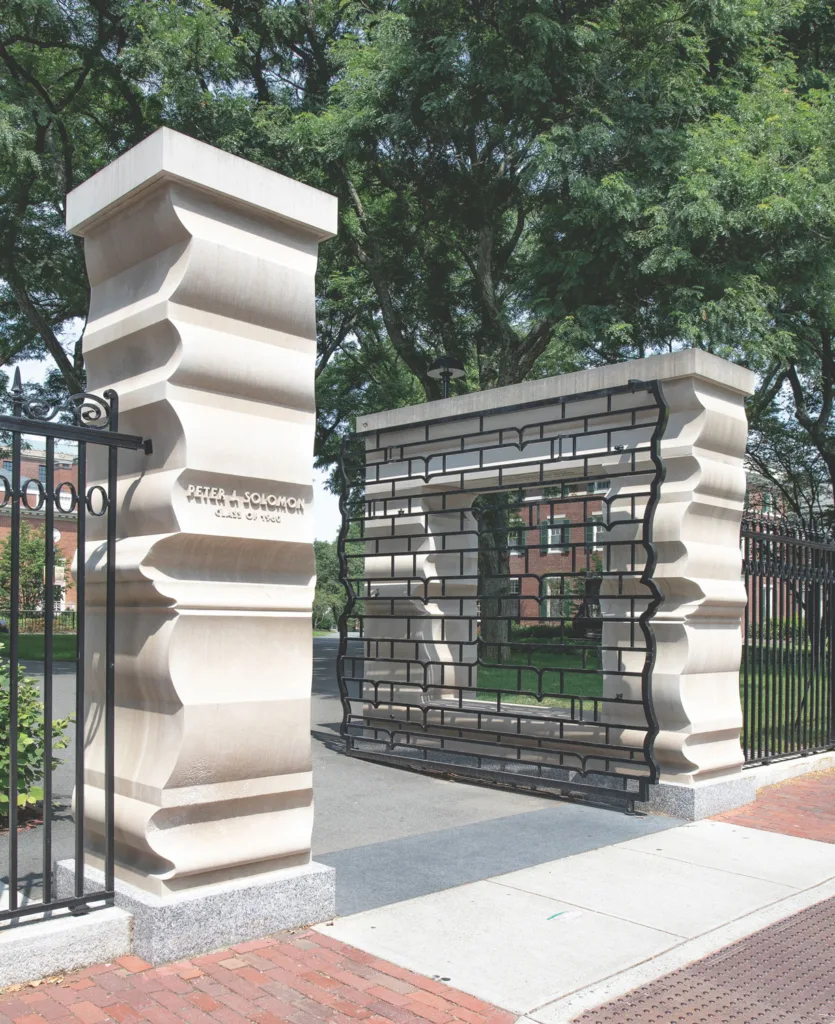
What, pray tell, are such fancifully drawn characters as Peter Rabbit and the Chesire Cat doing in the august environs of Harvard Yard? That’s the engaging mystery posed by the Peter J. Solomon (Class of 1960) Gate, the only Harvard Yard portal built in the twenty-first century and, by far, the most whimsical of the gates. Playful allusions to beloved children’s books shaped both its contours and details. While other Yard gates display small lighthearted touches, like the pilgrim’s hat on the Eliot (Class of 1908) Gate that nods to the Puritan forebears of former Harvard president Charles William Eliot, this one goes all in on de-parting from the Yard’s staid norms.
The whimsy is no accident. Completed in 2020, the Solomon Gate grew from an extensive, contemporaneous renovation of Houghton Library, Harvard’s main repository for rare books and manuscripts. That project’s chief funders—investment banker Peter J. Solomon (Class of 1960, MBA 1963) and his wife Susan—donated a collection of rare children’s books and illustrations to Houghton, among them Beatrix Potter’s The Tale of Peter Rabbit, Charles Perrault’s The Tales of Mother Goose, and a rare first edition of Lewis Carroll’s Alice’s Adventures in Wonderland.
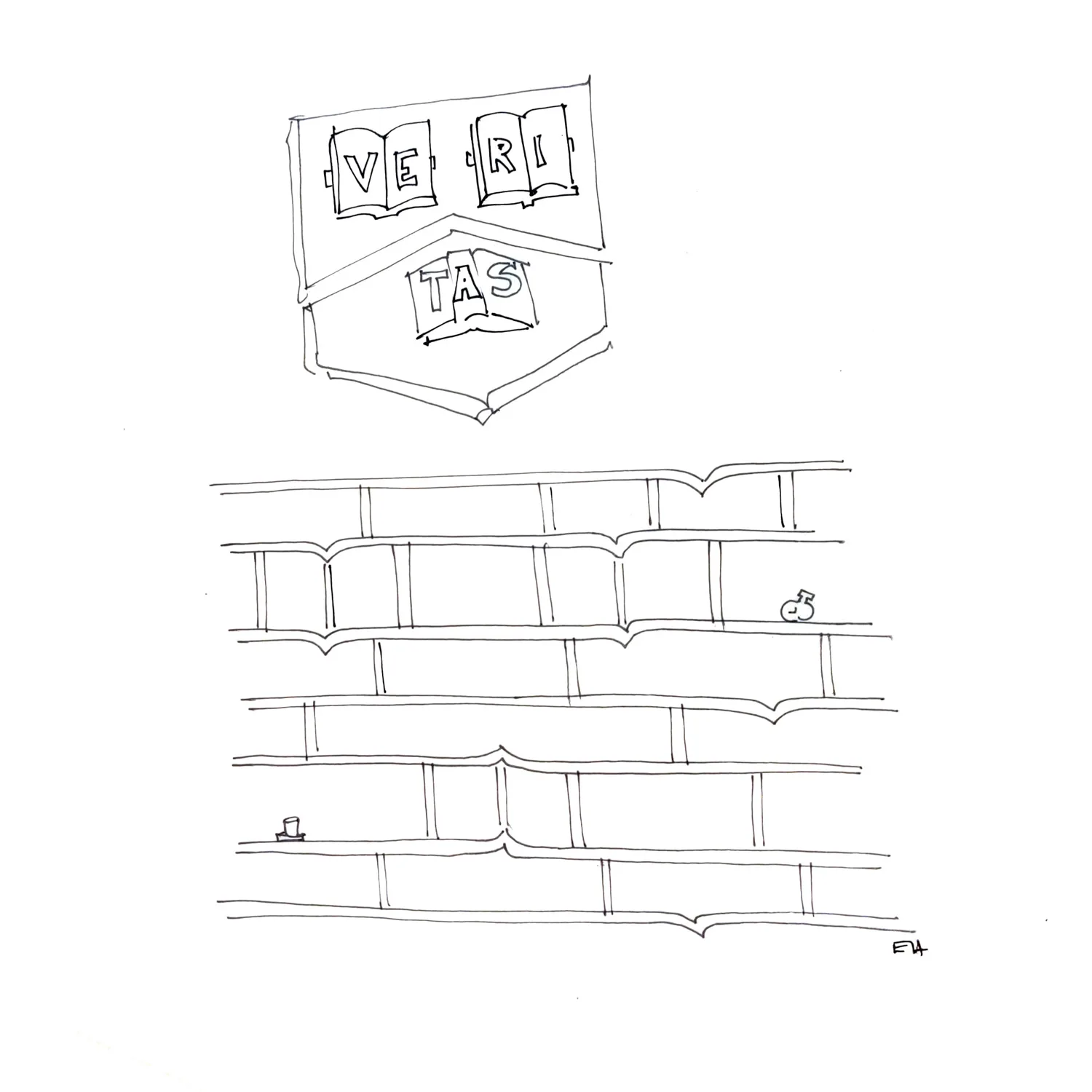
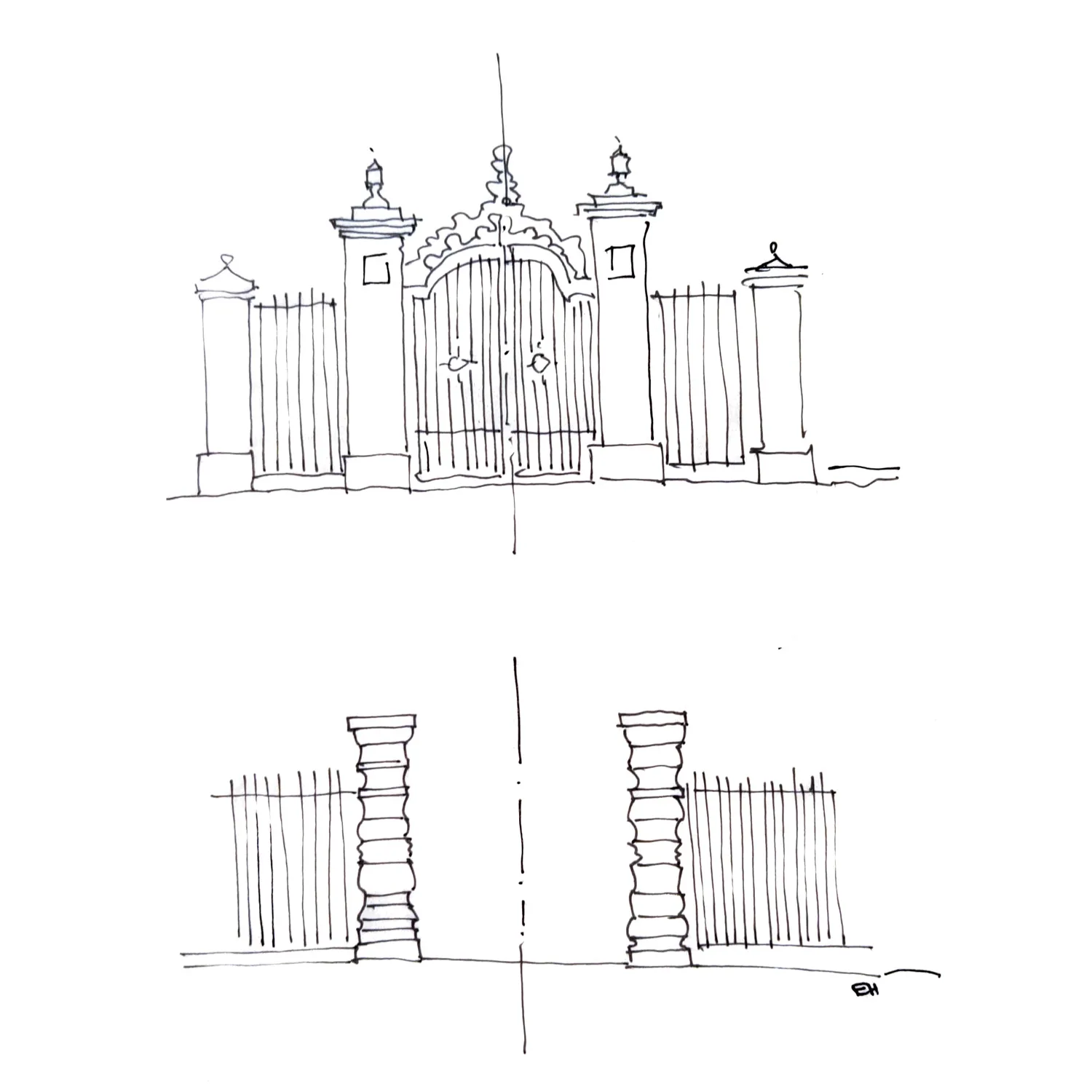
black and white drawings of bricks, a crest, and a gate.
The Houghton renovation made the library’s entrance accessible to disabled people, but Peter Solomon wanted the approach to Houghton to be figuratively, as well as physically, inviting. So he commissioned a new gate to replace the banal portal that led to both Houghton and the neighboring Lamont Library. In the spirit of the books that he and his wife gave, Solomon called for a gate that didn’t take itself too seriously—“less grandiosity, more curiosity,” as Harvard Magazine put it. As built, the design strikes a careful balance between literary fantasy and architectural solidity, as well as past and present. It simultaneously expresses the technology and attitudes of its time while remaining a loyal member of the Yard’s family of gates.
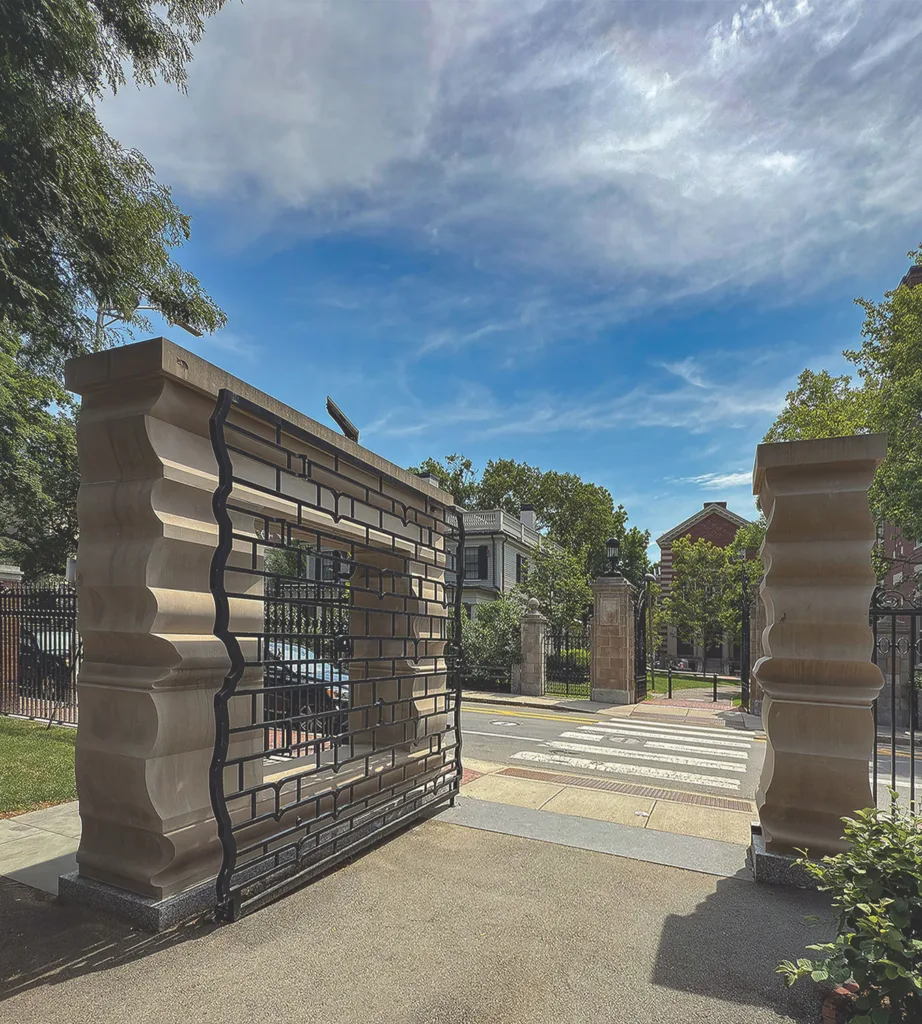
Instead of an abstract modernist palette of steel or concrete, architect Eric Höweler, founding principal of the Boston firm of Höweler + Yoon and a professor of architecture at Harvard’s Graduate School of Design, wisely employed materials found in the Yard’s historic gates: limestone, granite, and wrought iron. There is also historic resonance in the gate’s asymmetrical layout: on one side, a freestanding limestone pier; opposite it, a massive block of limestone, pier-like at first glance, to which the gate’s swinging section is attached. The plan purposely recalls the asym-metry of the idiosyncratic Dudley Memorial Gate, which occupied this site from 1915 to 1947. The Solomon Gate also echoes the material and scale of the limestone Hallowell Gate across Quincy Street.
fabrication photographs of the making of a gate
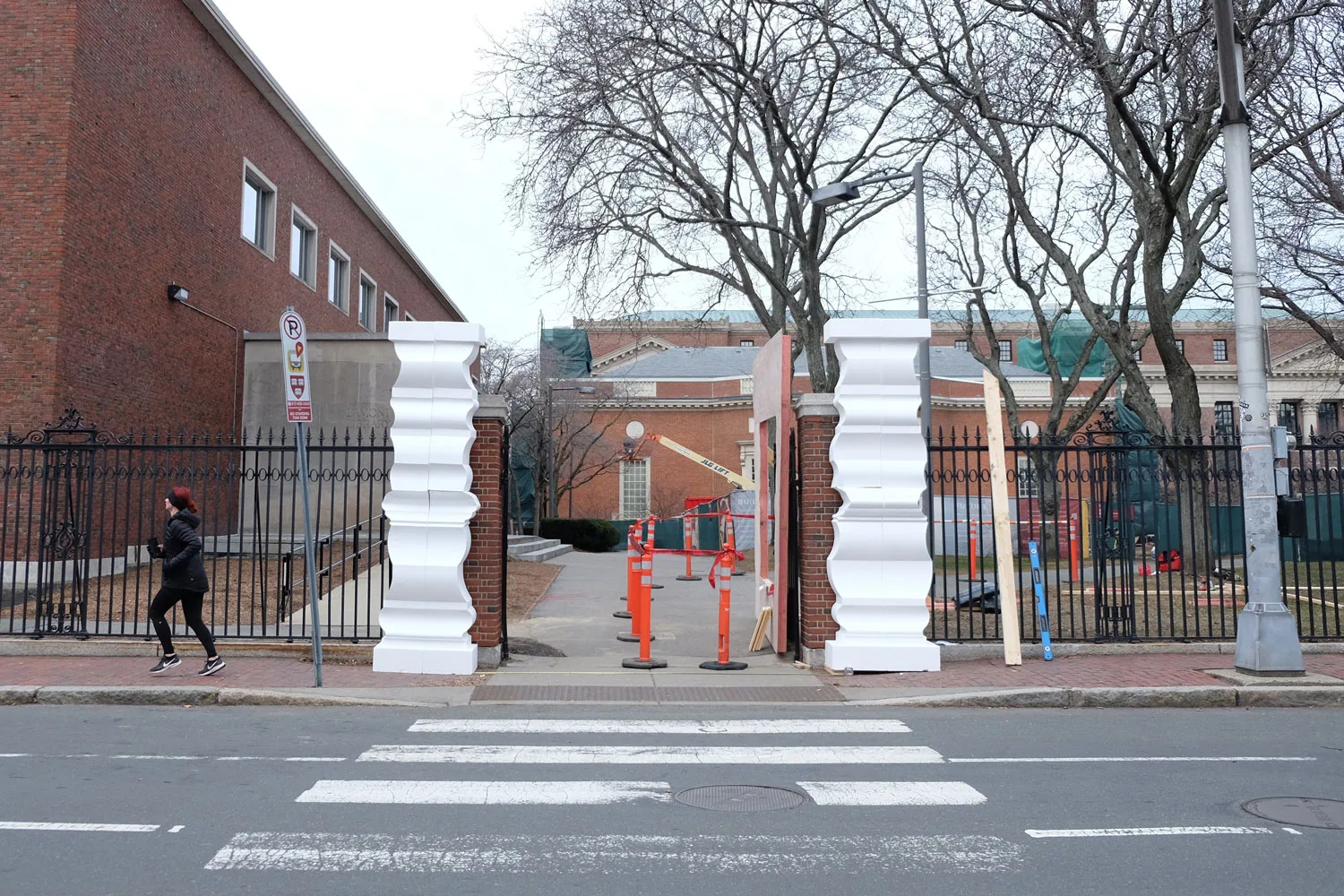
Yet the Solomon Gate is anything but a pallid postmodern imitation of the Yard’s robust early twentieth-century gates. The decision to leave its swinging section in the open position emanates from a distinctly twenty-first-century sensibility: Architects should be building bridges, not barriers. Furthering this welcoming approach, a window-like opening in the limestone block offers a wide ledge that doubles as a well-used bench. The bench, which offers a screened spot for conversation or contemplation, makes the gate a place as well as a passageway.
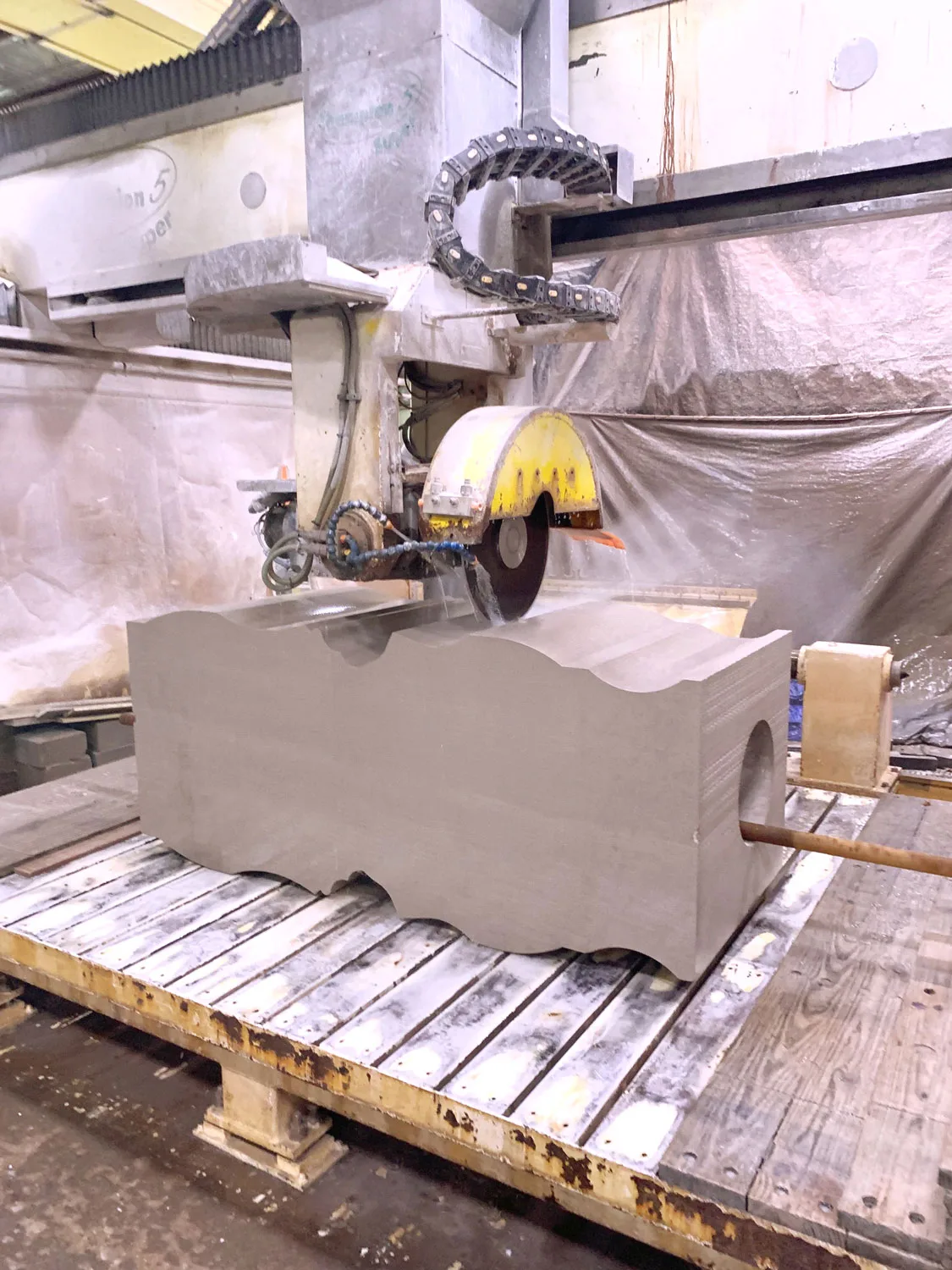
The portal’s piers, which were shaped with state-of-the-art robotic prototyping and fabrication techniques, also break with the architectural conventions of the Yard’s gates. Alternately concave and convex, the piers flaunt stacked, boldly sculpted curves inspired by the silhouette of Peter Rabbit, including the rabbit’s ears, pointy-nosed face, body, legs, and feet. The effect is intentionally strange, conjuring up the fantastical world of Wonderland, yet the playful aesthetic—call it Digital Baroque—doesn’t lapse into Disneyesque cartoonishness. This is still very much a Harvard gate.
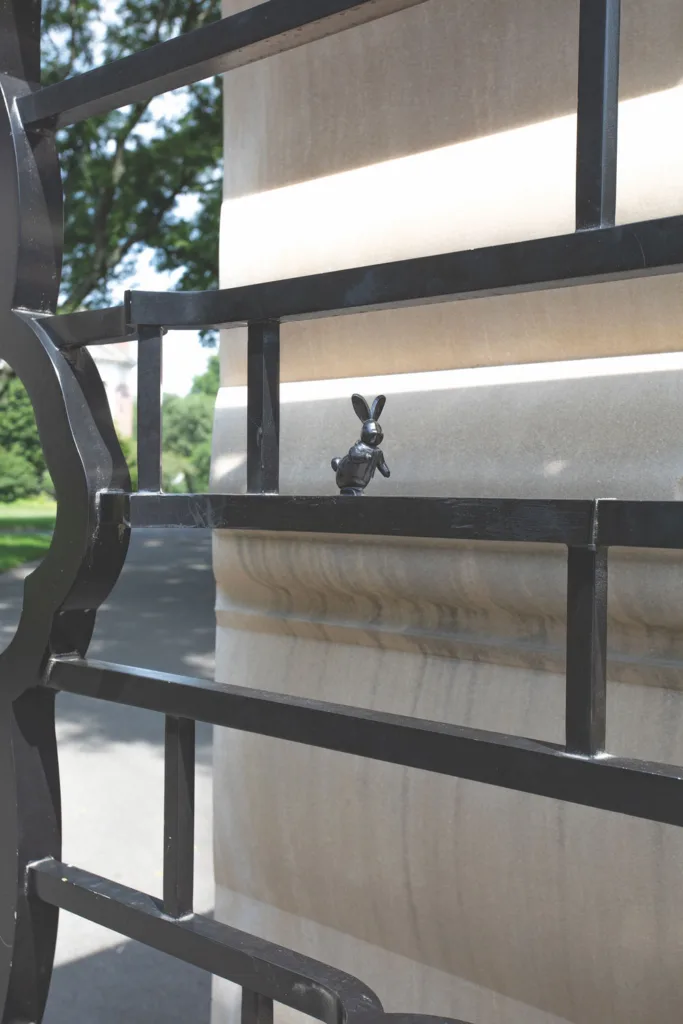
Consider the swinging section’s horizontal bars, which are unlike the vertical pickets of other Yard gates. The bars resemble bookshelves, calling attention to the gate’s role as the portal to two libraries. The bars also curl to make V-shaped indentations, evoking the three open books displayed on Harvard’s “Veritas” shield. In addition, the portal’s rabbit-inspired imagery facilitates membership in the Yard’s animal menagerie: an eagle on the Johnston Gate, rams’ heads on the Class of 1885 Gate, a pig’s head on the McKean (Porcellian Club) Gate, and lions’ heads on the Bacon (Class of 1880) and the Classes of 1887 and 1888 Gates. Modern architects typically disdain such figurative ornament, but Höweler embraced it, correctly realizing that it would engage passersby, especially children. Accordingly, the gate’s swinging portion is adorned with five tiny wrought-iron pieces inspired by the Alice stories and Peter Rabbit. The pieces represent the Red Queen’s crown, the Mad Hatter’s top hat, the White Rabbit’s watch, Peter Rabbit, and the Chesire Cat.
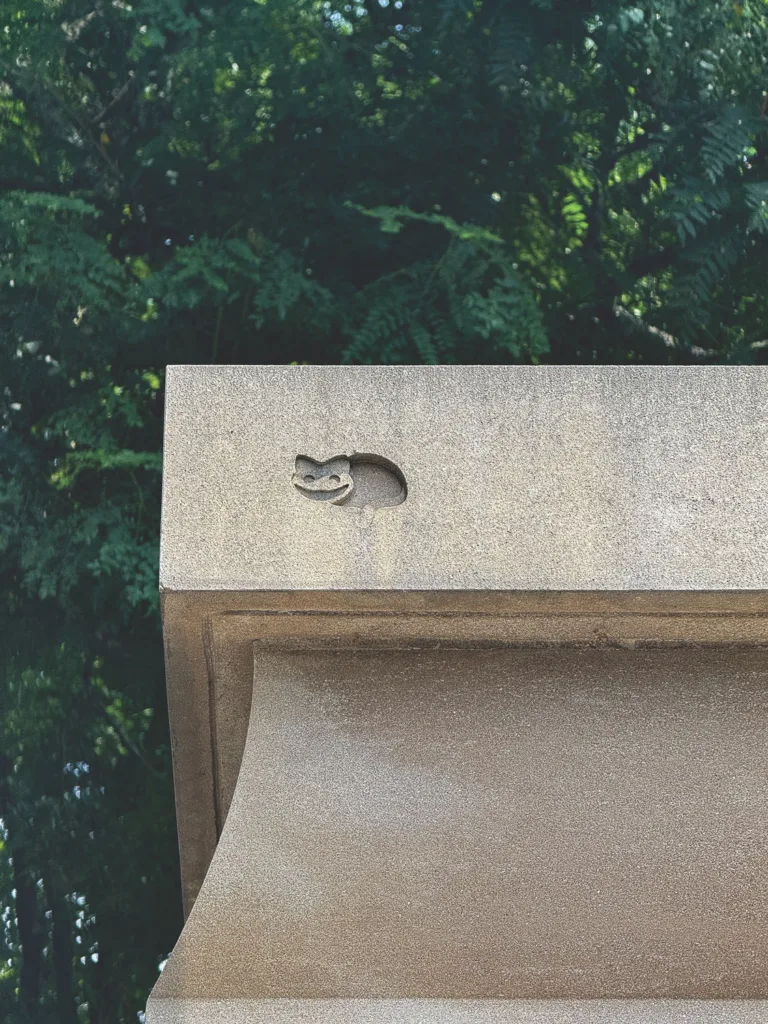
The same five figures appear in indented form at various spots in the limestone, giving children a chance to match the pairs in a game of discovery. In a final tribute to Carroll, sitters who gaze up to the soffit of the gate’s window-like opening are rewarded with a view of raised limestone letters that spell out timeless advice from Through the Looking-Glass:
ALWAYS SPEAK THE TRUTH
THINK BEFORE YOU SPEAK
AND WRITE IT DOWN AFTERWARDS