What A City Can Learn from the People Who Break Its Rules
Urban disobedience is an emerging framework for understanding citizen agency, urban informality, and spatial justice.
“It is not desirable to cultivate a respect for the law, so much as for the right.”
—Henry David Thoreau, “Resistance to Civil Government” (1849)
Are you an urban disobedient? The answer is probably yes—as it is for most people who live in cities. We alter routes, reinterpret spaces, negotiate unofficial arrangements, and participate, knowingly or not, in the continuous remaking of urban order. The more consequential question is not whether we obey every rule but what our detours do: what failure they expose, what claim they make, what alternative they rehearse, and whom they affect.
Consider a scene that repeats every morning in cities around the world (in some more than in others): pedestrians arrive at a point where they must make a decision. The official crossing—a footbridge, say—lies well off the path they need to take. Do they comply and cross as directed, or disobey and cross where it is closer? The official route is safe in theory, but in practice it is longer, less convenient, or inaccessible.
Planners usually call this noncompliance. Traffic engineers may call it risky behavior. Municipal authorities may see it as evidence of weak enforcement; journalists may cover it as a symptom of poor civic culture. But the improvised path contains information. It tells us where people actually need to go, what burdens a design imposes, and whose time, body, or mobility the system values. It may be an infraction, but it is also a message—a loud one, though few in authority seem willing to hear it.
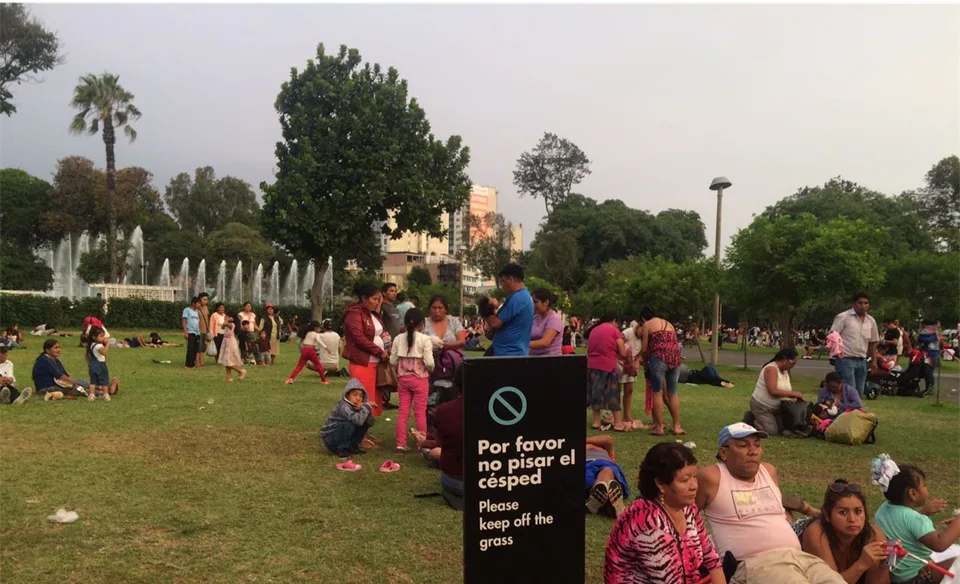
This message is the starting point for a framework I call Urban Disobedience: the practices through which individuals and communities challenge, circumvent, reinterpret, or transform urban rules, infrastructures, and institutions when these conflict with their needs, rights, or perceptions of justice. Some actions are deliberate and political: occupying a plaza, stopping an infrastructure project, defending a park, or painting a temporary guerrilla-style bicycle lane. Others emerge through necessity rather than declaration: building a home where formal housing is inaccessible, trading on the street when entry to the formal economy is blocked, or adapting infrastructure that does not support everyday life. Still others are so ordinary that they appear politically insignificant: crossing outside a designated area, sitting where sitting is discouraged, or using a space for a purpose its designer did not anticipate.
These practices differ in scale, intention, duration, and consequence. What connects them is not simply illegality. It is the collision between the formal city and the lived city, and the possibility that rule-breaking can reveal something that neither the rule nor its makers can see.
The City as It Is Designed, and the City as It Is Lived
Cities are full of commands. Curbs, fences, signs, property lines, zoning categories, permits, surveillance systems, policing practices, and transit fares tell us where we can go and what we can do. Architecture also commands without words. A bench divided by metal bars discourages lying down. A highway cuts a neighborhood off from the river. A monumental staircase assumes a particular kind of body. A public space ringed by commerce asks people to become customers and forget that they are citizens first.
Rules are indispensable to collective life. They coordinate movement, protect public health, limit harmful uses, and mediate conflict among strangers. But rules are not neutral merely because they are written, engineered, or built. They carry assumptions about legitimate users and uses; they distribute time, safety, visibility, land value, and inconvenience. They also preserve earlier political choices long after those choices have disappeared from public debate.
This is why informality cannot be understood only as the absence of planning. Scholars including Ananya Roy have shown that informality is not a separate sector outside the state; it is a mode through which urbanization is produced and governed. Authorities decide which departures from regulation will be tolerated, regularized, celebrated, or demolished. The luxury development that negotiates an exception and the self-built settlement that violates a land-use rule are both entangled with formal power, but they do not encounter it on equal terms.
Urban Disobedience makes this asymmetry visible. It asks not only whether a rule was broken, but who made the rule, whom it protects, who can obtain an exception, and who bears the cost of compliance. It moves the analytical focus from the isolated act to the urban relationship that produced it.
This perspective belongs to a broad intellectual lineage. The theory of civil disobedience asks when breaking the law may serve justice and democratic legitimacy. Henri Lefebvre’s idea of the right to the city—and later interpretations of it by David Harvey and many urban movements—frames the city as something inhabitants should participate in producing, not merely consume. James C. Scott’s work on everyday resistance illuminates actions that evade domination without taking the form of a public manifesto. Insurgent planning, particularly in the work of Faranak Miraftab, directs attention to practices that exceed officially invited participation and create new political spaces. Research on insurgent citizenship, urban social movements, tactical urbanism, public-space conflict, and spatial justice offers further ways of understanding how people negotiate the conditions imposed upon them.
Urban Disobedience does not replace these traditions. Its purpose is to place them in conversation around a deceptively simple object: the urban rule and the human action that refuses it. This makes it possible to compare practices usually separated into different fields: informal settlement, protest, mobility behavior, tactical design, and the everyday appropriation of public space.
Four Ways of Refusing or Resisting the City
A working typology can help us see both affinities and differences. Structural disobedience transforms the city over long periods. Self-built neighborhoods, informal markets, and land occupations often emerge when housing, employment, or urban services are inaccessible through official systems. Their inhabitants do more than protest an exclusionary city: they materially produce another one. The result may be precarious or unequal, and it may reproduce internal forms of exclusion. Yet it can also generate systems of mutual support, new claims to citizenship, and eventual institutional recognition. What begins as an unauthorized settlement can become a neighborhood; what begins as an unlicensed service can expose a public need.
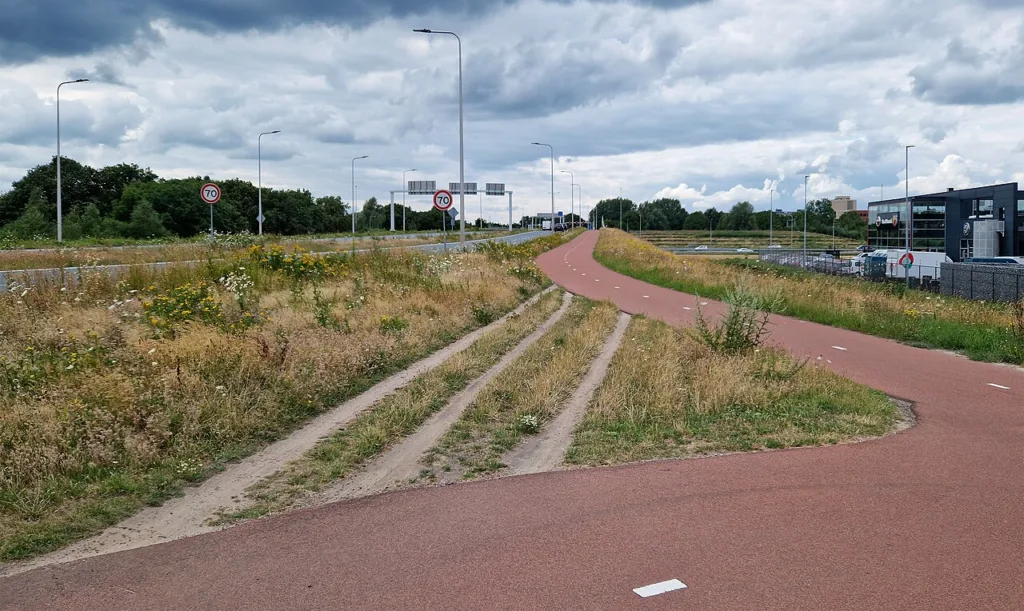
Everyday disobedience consists of repeated, often uncoordinated actions. Pedestrians bypass a footbridge. Vendors return to a prohibited corner. Residents picnic or play where regulations or social codes discourage them. No single act necessarily seeks policy change, but accumulation creates a pattern. Desire lines are perhaps the clearest physical trace: the ground records a collective critique before a public meeting ever does. Everyday disobedience is weak as a declaration but powerful as evidence.
Tactical disobedience is temporary and demonstrative. Residents convert parking spaces into social space, install unsanctioned seating, paint a crosswalk, or mark a bicycle lane. Such interventions do not merely demand an alternative; they stage it at full scale. They allow people to experience a different allocation of space and make an abstract policy dispute tangible. Their strength lies in prototyping. Their danger is that an attractive intervention can be celebrated as innovation while leaving the underlying distribution of power unchanged.
Political disobedience directly confronts a decision, institution, or project. Communities defend public space, resist displacement, block a road, occupy a building, or contest infrastructure imposed without meaningful consent. These actions make conflict visible. They challenge the comforting planning fiction that consensus has been achieved merely because a legal procedure was followed.
The categories overlap. A self-built settlement may be structural, everyday, and political at once. A temporary intervention may become a permanent policy. A habitual act may acquire a collective voice. The typology should therefore be used as a set of lenses, not boxes. The more important questions concern the trigger, the actors, the institutional response, and the distribution of outcomes.
Disobedience as Civic Feedback
The conventional response to rule-breaking begins with enforcement: How can the city make people comply? Urban Disobedience reverses the question: What would the city learn if it first treated repeated noncompliance as feedback?
This does not mean that every violation should be legalized. It means that patterns deserve diagnosis. If many pedestrians risk crossing at the same location, the relevant finding may not be that they are irresponsible. The street may have been optimized for vehicle flow at the expense of access, directness, the needs of disabled people, or daily routines. Enforcement can suppress the symptom while preserving the design failure.
The same reasoning applies at larger scales. When informal housing expands, it signals more than a deficit of titles or inspections. It may reveal a mismatch between wages, land markets, credit systems, planning standards, and the locations of opportunity. When residents occupy or defend a park, the conflict may reveal distrust in decision-making, unequal access to green space, or the conversion of public value into private gain. When people create an improvised bicycle route, they are not only breaking a rule; they may be testing demand, visibility, and spatial reallocation.
This does not mean that every violation should be legalized. It means that patterns deserve diagnosis.
Feedback is valuable, but it is neither infallible nor conclusive. A behavior tells us that friction exists, but not automatically what should replace the current arrangement. A desire line might identify a needed crossing; it might also pass through ecologically sensitive land. Informal commerce may provide livelihoods and essential services while narrowing accessibility or exposing workers to danger. Protest may expand democratic debate while shifting burdens onto people with little influence over the contested decision. Diagnosis therefore requires evidence, context, and judgment.
Still, a city that refuses to read such signals impoverishes its own intelligence. Formal participation captures only a fraction of urban experience. Public hearings often occur after the central choices have been made; surveys reach some residents and miss others; official data categories reproduce official assumptions. Urban Disobedience is not a substitute for democratic planning, but it is an observatory of what invited participation fails to register.
From Enforcement to Institutional Learning
What might a learning institution do differently? First, it would document before punishing. Repeated infractions would trigger an inquiry into spatial patterns, affected populations, accessibility, time costs, safety, and the history of the rule. Planners would ask whether noncompliance is sporadic opportunism or a durable response to a structural mismatch.
Second, it would distinguish urgency from permanence. Some signals require an immediate, reversible experiment: a temporary crossing, adjusted signal timing, movable seating, a weekend street closure, or a protected bicycle segment. Small trials can test whether the disobedient practice has identified a better arrangement without pretending that every tactical action contains a finished design.
Third, it would create pathways for translation. Cities regularly oscillate between repression and co-optation: eliminate the unauthorized practice or absorb its most marketable appearance. A more democratic response would bring the people producing the alternative into the process of evaluating and adapting it. Institutional recognition should not erase authorship, displace the original users, or convert a collective claim into a branding exercise.
Fourth, it would examine its own selective enforcement. Which informalities are tolerated because they serve powerful interests? Which are criminalized because their participants are poor, racialized, migrant, young, queer, disabled, or otherwise treated as out of place? The legitimacy of urban regulation cannot be separated from the unequal manner in which it is applied.
Finally, it would preserve room for conflict. Drawing on Chantal Mouffe’s theory of agonistic pluralism, as well as scholarship on democratic contestation in planning and design by Sophie Bond, Carl DiSalvo, and others, we can recognize that disagreement is not necessarily a design defect to be resolved. Sometimes conflict is precisely what makes competing claims to the city visible. Some urban claims are genuinely incompatible. The task of democratic institutions is not to fabricate consensus, but to make conflicts legible and contestable without turning opponents into enemies or exposing vulnerable groups to harm.
The Ethical Boundary
The language of disobedience is seductive. It can romanticize transgression, confuse visibility with virtue, and overlook who pays for an action. Powerful actors also break rules. Developers evade restrictions, motorists appropriate sidewalks, businesses enclose public space, and groups use occupation or intimidation to exclude others. These actions may be disobedient in a descriptive sense while undermining spatial justice. Urban Disobedience therefore cannot be a label of automatic legitimacy. To keep the framework honest, I propose three initial tests.
The first is public interest: Does the action respond to a demonstrable need or expand a collective capability, rather than merely secure advantage for those already powerful?
The second is proportionality: Are the means and foreseeable harms proportionate to the injustice, exclusion, or failure being confronted? Could the action achieve its purpose while reducing danger or burden to others?
The third is inclusivity: Whose rights and voices are expanded, and whose are constrained? Does the practice open access and political agency, or create a new enclosure? Special attention must be given to people who cannot easily avoid the consequences.
These tests do not produce mechanical verdicts. Public interest is contested; harms are uneven; inclusion can conflict with urgency. But the questions prevent the framework from collapsing into a celebration of illegality. They also apply to the rule itself. A government that demands obedience should be able to explain the public interest, proportionality, and inclusivity of the system it enforces.
An Atlas of Urban Disobedience
Taking this research further requires comparison. To that end, I propose developing an Atlas of Urban Disobedience: an instrument for documenting cases across cities and learning from recurring patterns without stripping them of their local histories.
Each case would begin with a common set of questions. What rule, infrastructure, institution, or ideology triggered the action? Who participated, and who was absent? Was the practice structural, everyday, tactical, political, or a combination? How did authorities respond: through repression, neglect, negotiation, adaptation, or appropriation? What changed, for whom, and for how long? Did the action expand rights and collective well-being, or produce exclusion and harm?
The atlas is not intended to become a catalog of heroic violations. Its value would lie in what comparison reveals: when informal practices become recognized rights, when tactical experiments become durable infrastructure, when institutional absorption neutralizes political claims, and when apparent citizen innovation transfers public responsibility onto communities without resources. It should document failures and ambiguities as carefully as victories.
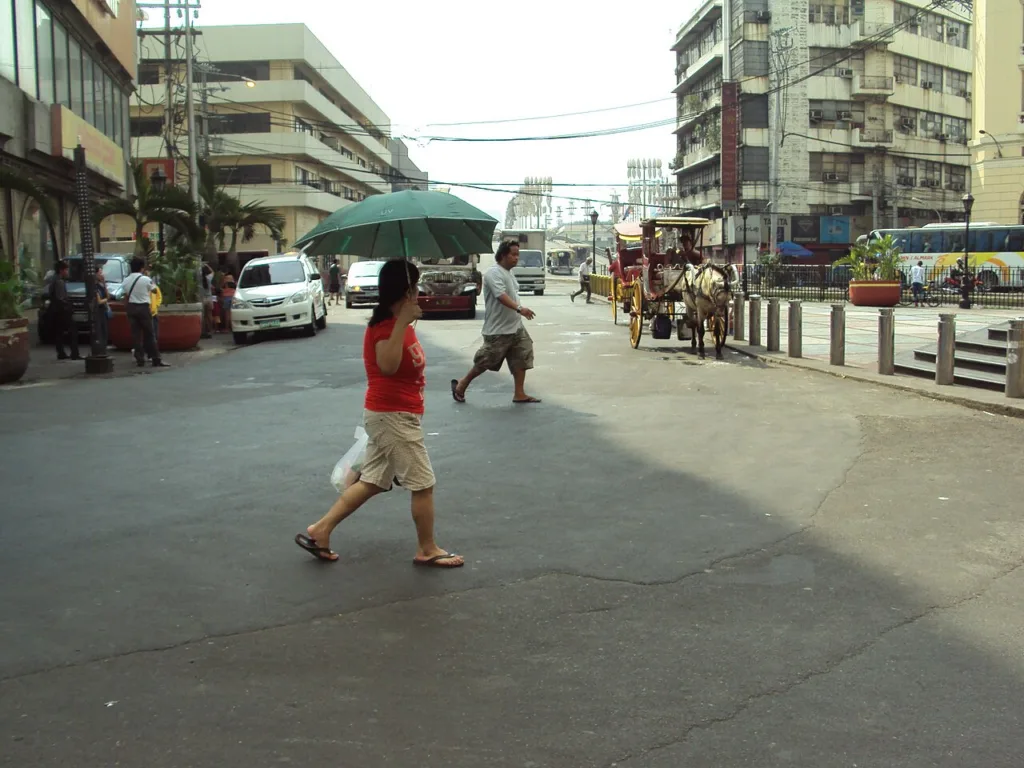
Such a project could connect forms of urban knowledge that rarely meet. A crossing improvised in Lima, a struggle over public space in Santiago, a self-built district in Delhi, and a guerrilla bicycle lane in San Francisco may seem to have little in common. Yet comparison can reveal shared conflicts between formal order and lived necessity, as well as the radically different legal and political conditions that shape their outcomes.
So, Are You an Urban Disobedient?
If so, the implications reach well beyond individual behavior. For planners, architects, and policymakers, recognizing urban disobedience requires a measure of humility. The designed city is always incomplete. People will exceed programs, refuse categories, and reveal contradictions that a plan could not anticipate. The answer cannot be to abandon rules, nor to treat every act of resistance as good design. It is to recognize that cities possess a distributed capacity for criticism and invention, and that this capacity often appears first in unauthorized form.
The footprints beneath the pedestrian bridge are not a complete plan. They do not resolve safety, accessibility, traffic, ecology, or competing claims. But they are a beginning: a collectively drawn question addressed to the city. Why must the official path be this way? Who was it designed for? What would happen if we began from where people are actually trying to go?
Perhaps the city’s greatest design lessons are hidden precisely there: in the moments when people refuse to follow its rules, and in the future they begin to trace when they step off the prescribed path.
References
Bond, Sophie. “Negotiating a ‘Democratic Ethos’: Moving beyond the Agonistic–Communicative Divide.” Planning Theory 10, no. 2 (2011): 161–86.
DiSalvo, Carl. Adversarial Design. Cambridge, MA: MIT Press, 2012.
Harvey, David. Rebel Cities: From the Right to the City to the Urban Revolution. London: Verso, 2012.
Lefebvre, Henri. Le droit à la ville. Paris: Anthropos, 1968.
Miraftab, Faranak. “Insurgent Planning: Situating Radical Planning in the Global South.” Planning Theory 8, no. 1 (2009): 32–50.
Mouffe, Chantal. “Deliberative Democracy or Agonistic Pluralism?” Social Research 66, no. 3 (1999): 745–58.
Roy, Ananya. “Urban Informality: toward an Epistemology of Planning.” Journal of the American Planning Association 71, no. 2 (2005): 147–58.
Scott, James C. Weapons of the Weak: Everyday Forms of Peasant Resistance. New Haven, CT: Yale University Press, 1985.
Scott, James C. Seeing like a State: How Certain Schemes to Improve the Human Condition Have Failed. New Haven, CT: Yale University Press, 1998.
Thoreau, Henry David. “Resistance to Civil Government.” 1849. Reprinted as On the Duty of Civil Disobedience. Project Gutenberg, 2018.